
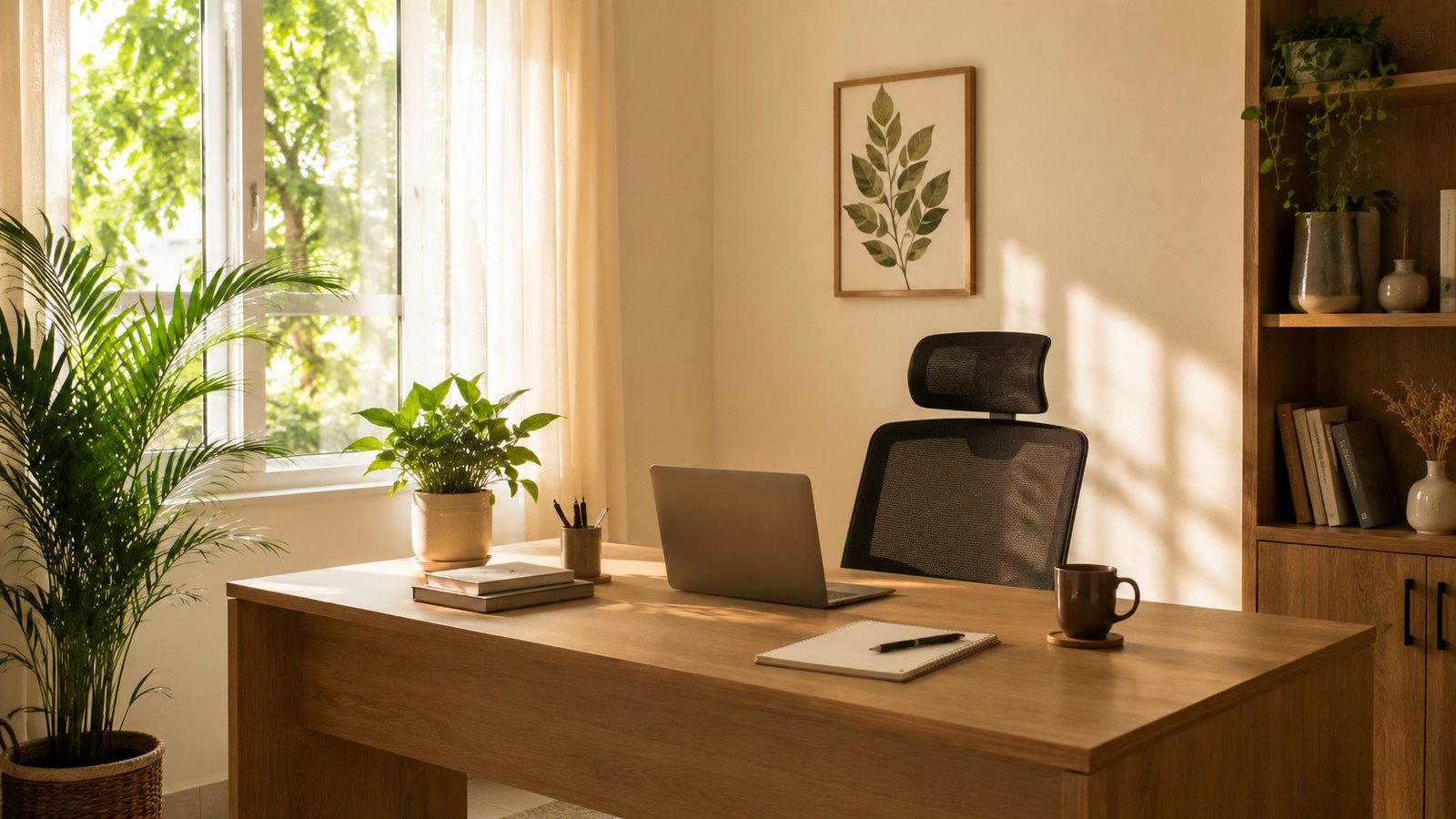
For two years, I felt completely stuck at work.
I was putting in the hours. I was doing everything right — meeting deadlines, taking on extra projects, staying late, building good relationships with my team. And yet, every promotion cycle seemed to pass me by. Every good opportunity went to someone else. Every time I walked into my manager's cabin hoping for the conversation, I walked out feeling smaller than when I went in.
It wasn't lack of effort. It wasn't lack of skill. It just felt like my career had hit some invisible wall — and no matter how hard I pushed, the wall pushed back.
Then a friend who'd been quietly studying Vastu noticed something the next time she visited my home. She walked into my study, looked at my desk, and asked, "Why are you sitting with your back to the door?"
I shrugged. "Because that's where the desk fits."
She smiled and said, "Try turning it around for a few weeks. Sit facing the North or East. See what happens."
I was skeptical. Honestly, more than skeptical — I thought it was a bit silly. But the desk was easy enough to move, so one Sunday afternoon I shifted it. Now I sat facing North, with a clean wall behind me and a window to my left.
Three months later, I got the promotion I'd been chasing for two years.
Was it a coincidence? Maybe. But once I started reading about what Vastu actually says about desk direction at work, I realized I'd been unknowingly working against myself for years. And the science of it — yes, there's real logic underneath — made me a believer.
Here's what I learned, and what changed everything.
Why Your Desk Direction Matters at Work

In Vastu Shastra, the direction you face while working is one of the most important factors in your career growth. The logic isn't mystical — it's surprisingly practical.
Every direction in Vastu is connected to a specific kind of energy. When you spend 8 to 10 hours a day facing a particular direction — making decisions, having conversations, planning your next move — you're constantly absorbing that direction's energy. Sit facing the right way, and the energies of clarity, growth, and authority quietly support you all day long. Sit facing the wrong way, and you spend years pushing uphill without realizing why.
Add to this a simple human truth: when you sit with your back to the door, a subtle part of your brain is always alert — watching for someone walking up behind you. You may not notice it consciously, but it drains focus, depletes patience, and over time, drains confidence. Vastu has known this for thousands of years; modern psychology calls it "decision fatigue" and "the exposed-back effect." Either way — it matters.
The Best Direction to Face While Working: North or East 🧭✅
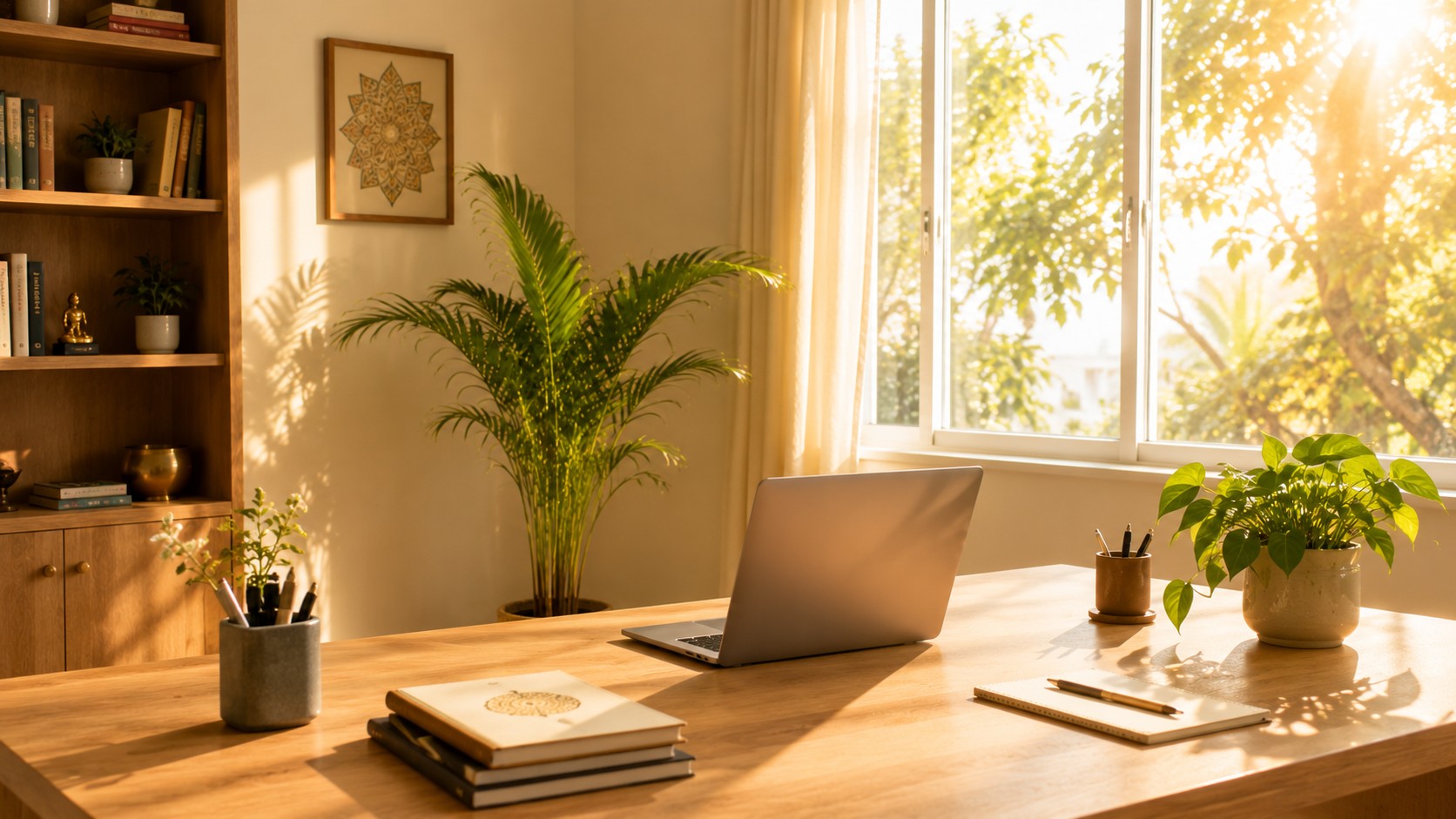
The two ideal directions to face while working are:
🥇 North — The Direction of Wealth and Career Growth
The North is governed by Kubera, the god of wealth, and by the planet Mercury, which rules business, communication, and quick gains. Facing North while you work is believed to:
- Attract new opportunities and career growth
- Improve financial decisions
- Boost your ability to negotiate and communicate
- Bring favorable attention from seniors and clients
If your work involves money, sales, business development, or negotiation — facing North is gold.
🥈 East — The Direction of Knowledge and Clarity
The East is associated with the rising sun, fresh energy, and the planet Sun itself — symbolic of authority, recognition, and intellect. Facing East while you work is believed to:
- Improve focus, concentration, and learning
- Enhance creativity and problem-solving
- Bring recognition for your work
- Support students, writers, designers, researchers, and creative professionals
When in doubt between the two, choose North if your work is about wealth and opportunity, and East if your work is about ideas, learning, or creativity. Either way, you're aligning with energies that support your growth.
The Direction to Avoid: Facing South 🚫
This is the big one — and it's where most struggling careers quietly suffer.
Facing South while you work is considered the most unfavorable direction in Vastu for career growth. The South is associated with Yama (the god of restraint and limitation) and is linked to obstacles, stagnation, and resistance.
People who face South while working often report:
- Hard work going unnoticed
- Promotions and opportunities slipping away
- Constant feeling of being "stuck" despite effort
- Mental fatigue and decision-making struggles
If your desk currently has you facing South — even if everything looks fine on the surface — this is the single biggest change you can make for your career.
(West is considered neutral — not ideal, but not harmful. If your room layout forces you to face West, it's workable.)
The "Back to the Door" Mistake 🚪
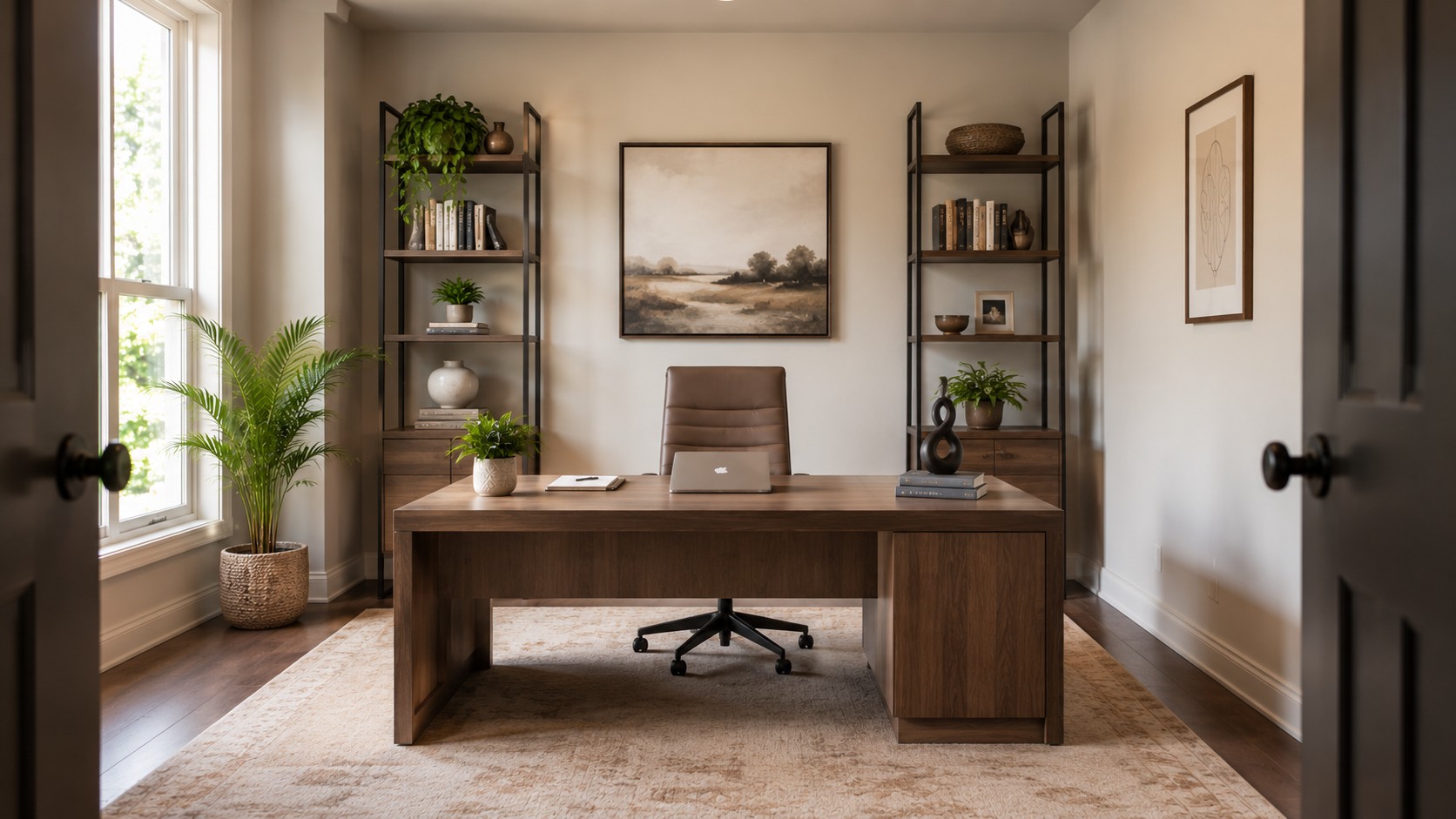
This one isn't about a specific direction — it's a layout rule that matters across all cultures and even has solid psychological backing.
Never sit with your back to the door.
When your back is to the entrance, your subconscious never fully relaxes. A small part of your brain stays alert for anyone walking up behind you. This is exhausting, even if you don't realize it — and it directly affects your focus, your patience, and the quality of your decisions.
The ideal layout: sit so that you can see the door from your desk, ideally diagonally across from it (not directly in line with it, which is too "exposed"). This is called the "command position" in both Vastu and Feng Shui — and it's used by everyone from corporate executives to royalty for a reason.
What Should Be Behind You: A Solid Wall 🧱
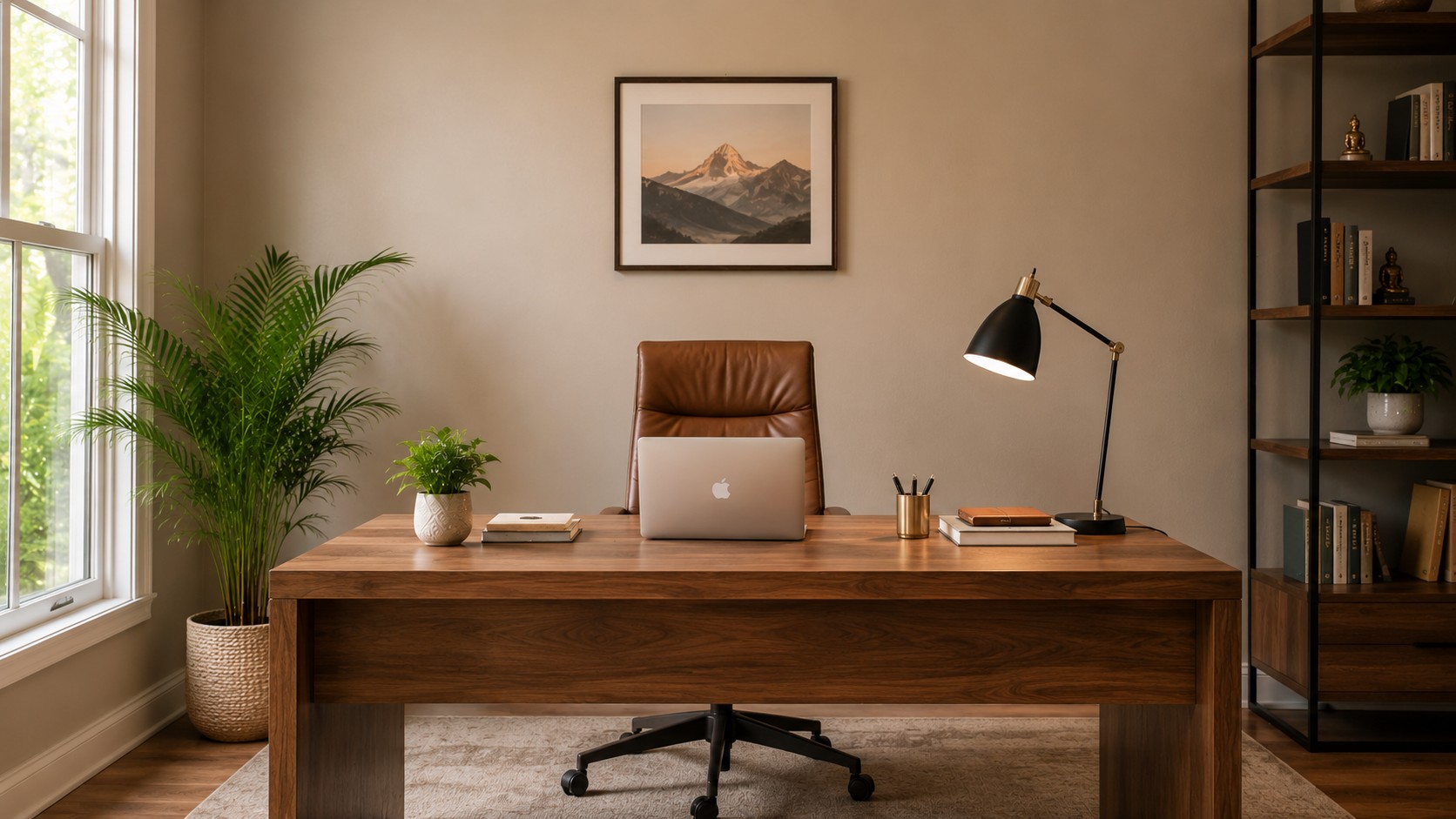
The space behind you matters almost as much as the direction you face.
Vastu recommends having a solid wall behind your chair, not a window or an open space. A solid wall represents support, stability, and backing — both literally and symbolically. It's believed to bring you the support of seniors, mentors, and decision-makers in your career.
A window behind you, on the other hand, is considered weakening — it symbolizes a lack of support, opportunities "flowing past" you, and an unstable foundation.
If a window behind your chair is unavoidable, keep it closed and curtained while you work. A heavy curtain or blind helps create that "solid backing" energy artificially.
5 Quick Desk Vastu Tips for Career Growth 🚀
Beyond direction, here are small touches that quietly support your work:
- Keep the desk clean and uncluttered. A messy desk = a messy mind. Clear it at the end of every workday.
- Place a small healthy plant on the East or South-East of your desk — green = growth.
- Avoid sitting under a beam or sloping ceiling. Both create pressure energy that weighs on your career over time.
- Don't face a wall directly if you can help it — it can create a feeling of being "blocked." If you must, keep something inspiring on the wall (an image of mountains, a goal board, or an open landscape painting).
- Light a small lamp or use warm lighting on the South-East of your desk — fire energy supports drive, ambition, and momentum.
What If You Can't Change Your Desk at the Office? 🏢
This is the most common question I get. "I work in a corporate office. I can't just rotate my desk."
Totally fair. Here's what you can do:
- Reorient your monitor and keyboard. Even if your physical desk can't move, sometimes you can subtly turn your monitor so you spend most of your work hours looking North or East.
- Add a small plant on the right corner of your desk to gently shift the energy.
- Sit slightly turned in your chair when doing focused work — face the favorable direction even if your desk doesn't.
- Optimize your home workspace fully. Many of us now do focused work from home — so make sure your home setup is perfectly Vastu-aligned, even if the office isn't.
- Cover the back of your chair with a solid scarf or jacket if there's a window behind you — small fix, surprising difference.
You don't need a complete office overhaul. Small shifts, done consistently, are what create the change.
---
## 🗺️ Find Out Where YOUR Ideal Workspace Should Be
Knowing you should face North or East is the first step. But where IS the North in your home? Which corner of your office should hold your desk? Should your home workspace be in the living room corner — or the spare bedroom?
We built a free tool where you can **upload your floor plan and see your home mapped according to Vastu directions** — including the best zones for your workspace and the exact direction your desk should face.
👉 [Upload your floor plan and find your career zone here](https://brahmavastu.in/)
Just a photo or scan (PNG, JPG, or JPEG) — and your work setup becomes precise. Stop guessing where to face. Start aligning.
---
Final Thoughts: Effort Matters, But So Does Alignment 💫
I'm not going to tell you that turning your desk will magically get you promoted. That's not how it works. The promotion still requires the skill, the effort, the relationships, the timing — all of it.
But what I will tell you is this: when your environment is quietly working with you instead of against you, all that effort starts paying off in ways it didn't before. Opportunities you'd missed start landing in your lap. Conversations that used to go nowhere suddenly open doors. The "wall" you'd been pushing against begins to give way.
That's what Vastu really is — not magic, but alignment. Aligning your effort with the silent forces of your environment so that every hour of work counts a little more than it did before.
So if you've been feeling stuck at work, before you doubt yourself or quit your job — try moving your desk. Face North or East. Put a wall behind you. Keep it clean. Give it three months.
You might just be amazed at what your career has been waiting to do. 💫
Have you ever changed your desk direction or workspace setup and noticed a difference? Share your story in the comments — and if this article gave you hope, forward it to someone whose career feels stuck. Sometimes the smallest shift opens the biggest doors. 🙏