
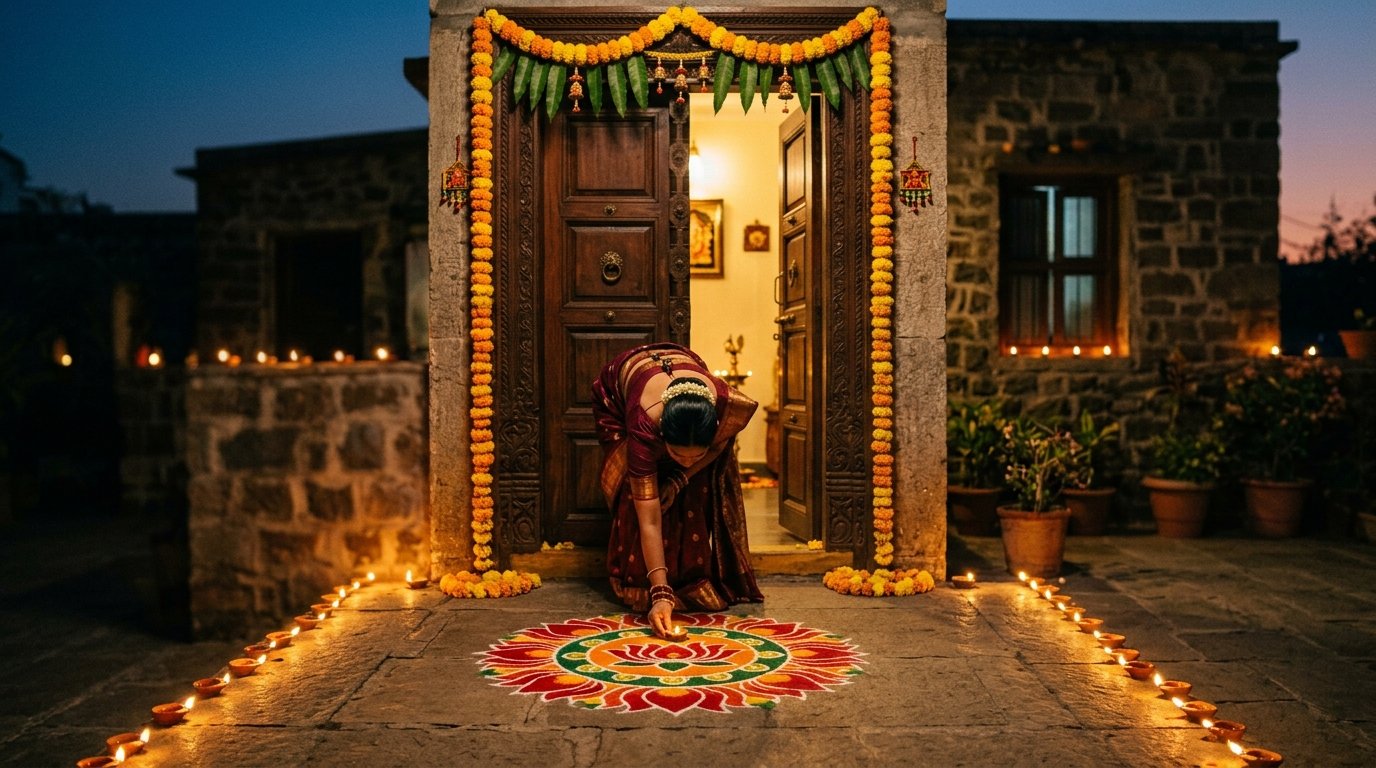
Every year, in the weeks before Diwali, something remarkable happens in crores of Indian homes simultaneously.
Curtains come down for washing. Ceiling corners meet a broom for the first time in months. That drawer — the one everything gets stuffed into — finally gets sorted. Old newspapers leave. Broken things are either fixed or released.
Ask any family why, and they'll say: "Diwali ki safai." Just cleaning.
But Vastu Shastra sees what's actually happening: the largest coordinated energetic reset in the world. An entire civilization, once a year, removing stagnation from its homes before inviting Lakshmi — the goddess of wealth, who tradition insists visits only clean, lit, honored spaces.
Diwali 2026 falls on Sunday, 8 November, with Dhanteras on 6 November. This guide makes sure your home isn't just decorated for it — it's prepared for it.
Part 1: The Pre-Diwali Cleanse (Start 2–3 Weeks Before)
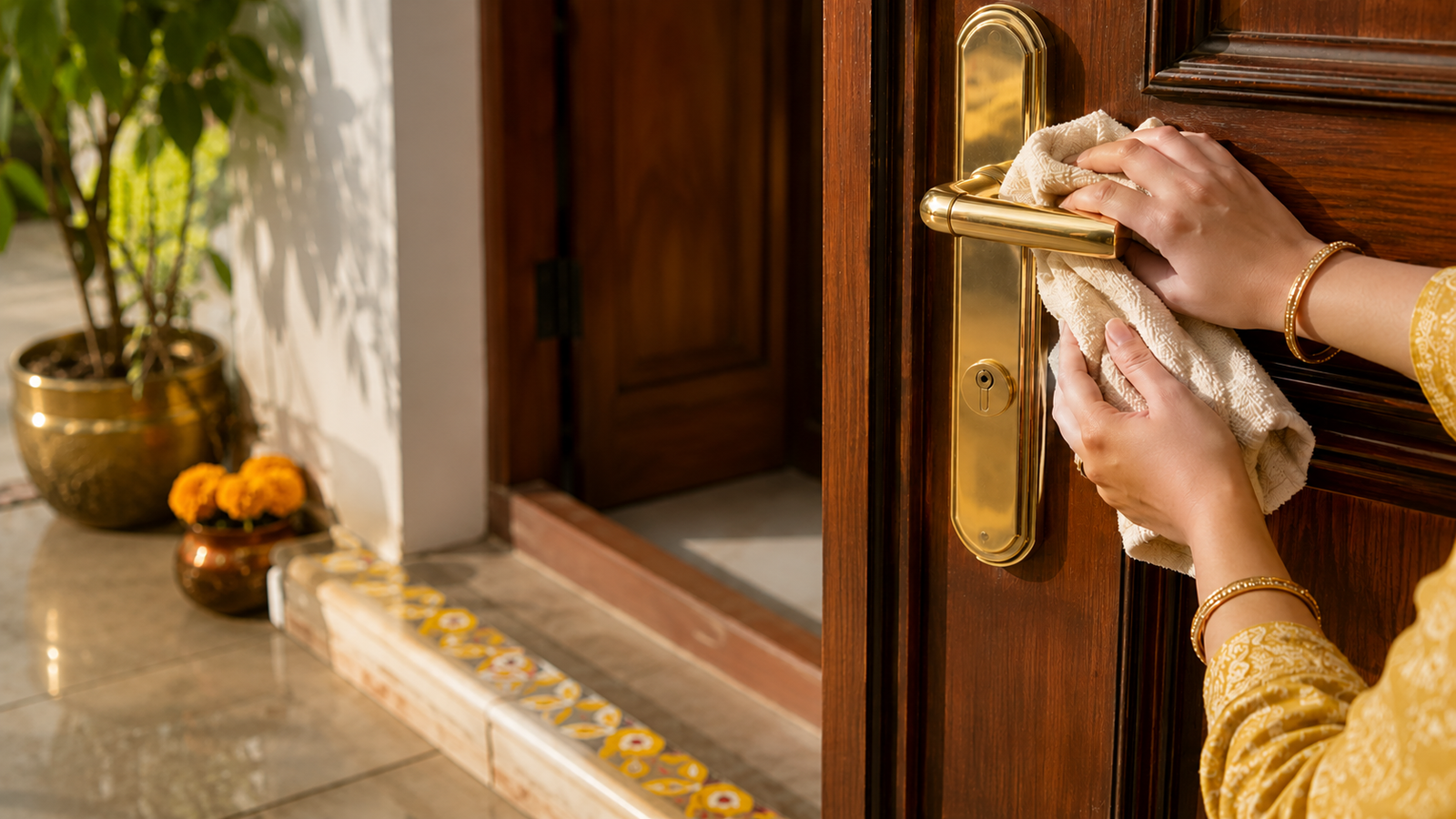
Cleaning for Diwali is not aesthetic. It is functional Vastu. Work in this order:
1. Declutter before you clean. Stagnant objects hold stagnant energy: clothes unworn for two years, broken electronics, expired medicines, chipped crockery, dead plants. Release them first — donate what serves others, discard what serves no one. (Why clutter matters so much is covered in our Negative Energy guide.)
2. Repair everything broken. Dripping taps (wealth literally leaking, in Vastu's oldest metaphor), jammed doors and squeaking hinges (obstructed opportunity), fused bulbs (dark corners of life). Tradition says Lakshmi pauses at the threshold of a home where things are broken.
3. Clean zone by zone:
- North-East first — the sacred corner, and the future Lakshmi Puja zone
- North — Kubera's wealth direction (your North Corner article readers already know why this zone repays every minute of care)
- Main entrance — scrub the door, polish the handle, clean the nameplate, wash the threshold
- Kitchen — degrease fully; Annapurna and Lakshmi are sisters in the Indian imagination
- South-West — where heavy clutter accumulates; clear it so the home's stability zone can breathe
4. Salt-water mop once, then plain water afterward. Finish with a natural fragrance — camphor, sambrani, or fresh flowers, not synthetic room fresheners.
Part 2: The Diya Placement Map
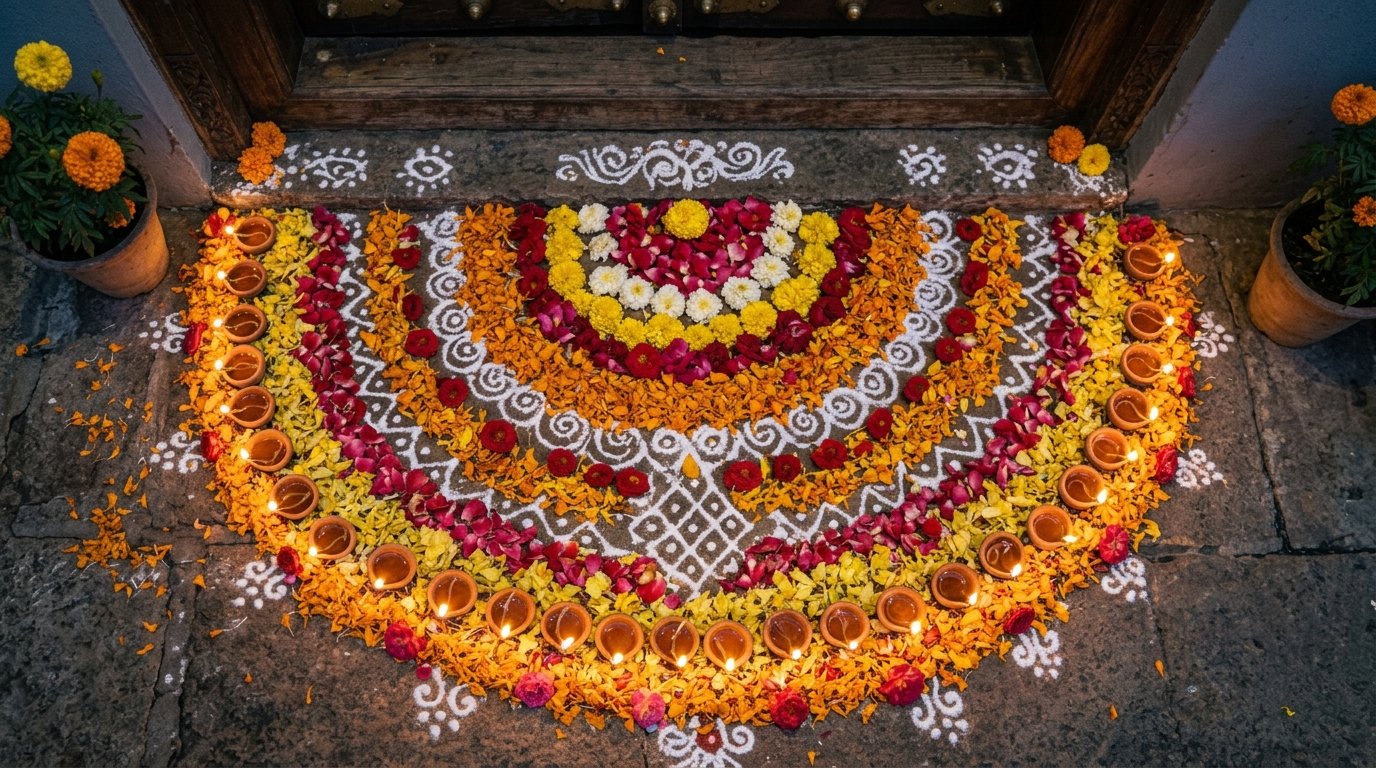
Diyas are not decoration. Each lamp placed in a specific zone activates that zone's energy. Here is the placement map for Diwali night:
- Main entrance (both sides of the door): the most important diyas of the night — they invite Lakshmi across your threshold. Keep them burning the longest.
- North-East corner: one diya honoring the divine zone.
- North: diyas for Kubera — wealth direction.
- Kitchen: one diya near the stove after cooking is done — gratitude to Agni and Annapurna.
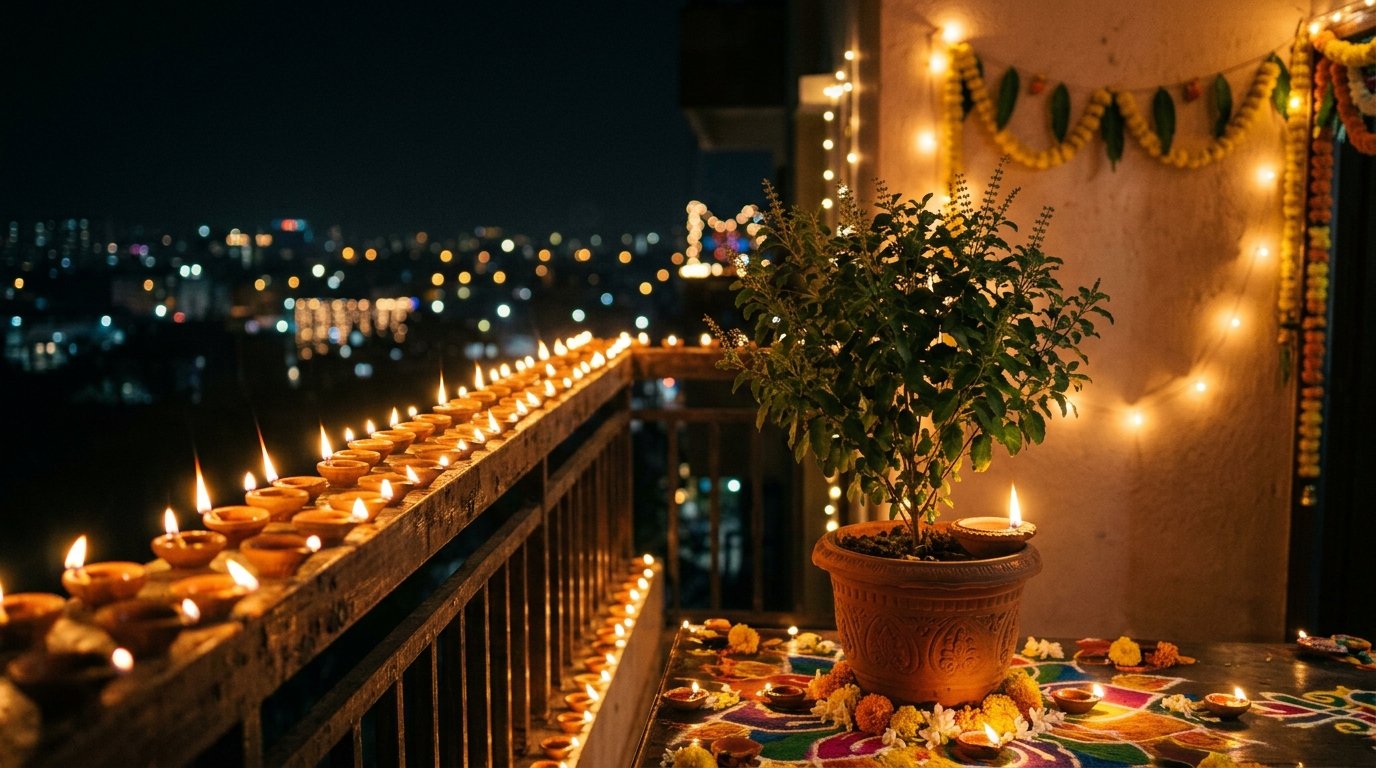
- Near the Tulsi plant / balcony: one diya; Tulsi is Lakshmi's beloved.
- Near the water storage / underground tank if accessible: one diya honors the water element.
- Every dark corner of the home: this is the real instruction of Diwali — no corner remains dark tonight. Darkness harbors stagnation; the festival's entire premise is that light reaches everywhere.
- One diya facing South, at the threshold, on Naraka Chaturdashi (Choti Diwali): the traditional Yama Deepam — the single exception to the "avoid South" rule, lit for protection and longevity of the family.
Diya discipline: use oil or ghee lamps for the puja zones (electric lights are fine for decoration, but the puja and threshold lamps should be real flames), place lamps on stable surfaces away from curtains, and never leave flames unattended in an empty home.
Part 3: Rangoli, Torans & the Welcoming Threshold
- Rangoli belongs directly before the main door — its traditional purpose is to hold auspicious energy at the entrance and signal welcome. Favor traditional motifs: lotus (Lakshmi's seat), footprints walking inward (Lakshmi entering, never exiting), swastik, kalash. Use natural colors, rice flour, or flower petals.
- Toran of fresh mango leaves and marigold across the door frame — refresh it if it dries before Diwali night.
- The nameplate should be clean and readable — Vastu holds that opportunity (and the Goddess) should be able to find you by name.
- Ensure the doorbell works and the entrance light is warm and bright. The entire threshold experience — this is your Main Door guide in festival form — should feel like the home is smiling.
Part 4: Lakshmi Puja Setup — The Heart of Diwali
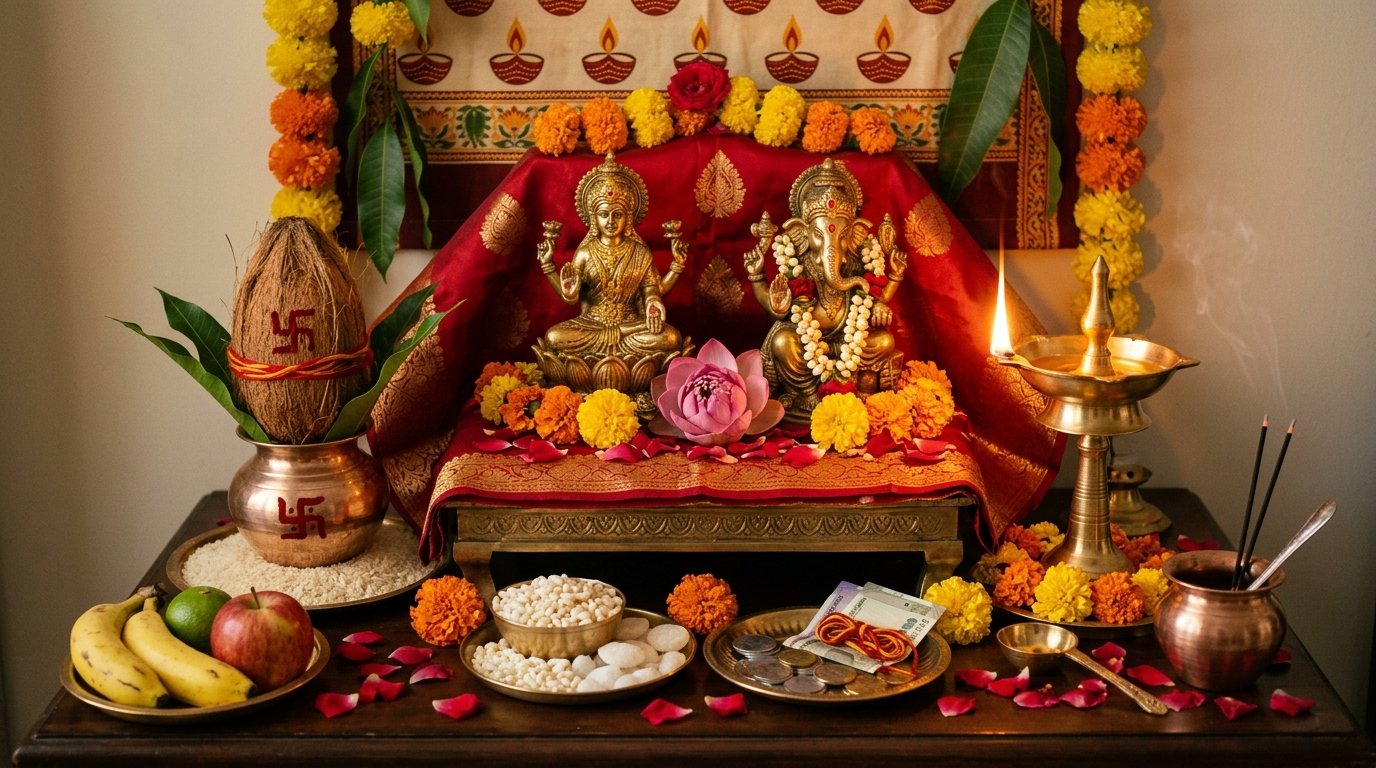
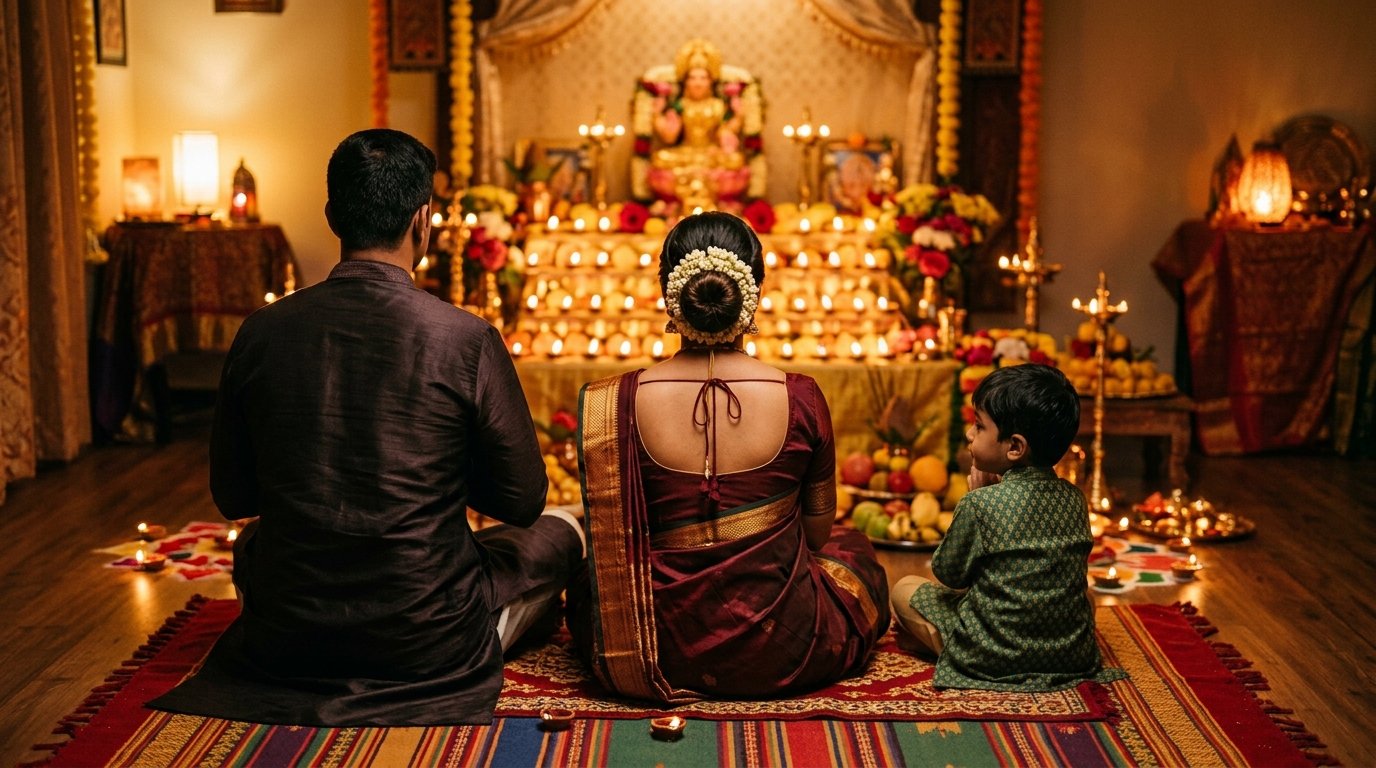
Zone: North-East of the home (or the pooja room). Timing: the evening Pradosh Kaal muhurat — check the exact local timing for 8 November 2026 closer to the date.
The altar:
- A raised platform (chowki) with fresh red or yellow cloth — never the bare floor.
- Lakshmi seated at center, Ganesha to her left (worshipped first, as always). Many families add Kubera and Saraswati.
- Idols/images face West or South, so the family faces East or North while praying.
- A kalash with water and mango leaves at the North-East of the altar; the main ghee diya at the South-East of the altar (Agni's corner — the same elemental logic as the Navratri Akhand Jyoti).
- Offerings: kheel-batasha, fresh marigold and lotus if available, coins washed in milk-water, and the account books or laptop for Chopda Pujan if yours is a business family (our Struggling Business readers — this ritual is especially yours).
After the puja: place one puja-blessed coin and a fresh "seed note" into the family locker — the single most tradition-backed day of the year to do it. Full method in our Locker Vastu guide, and keep your everyday carry aligned too (see the Wallet Vastu article).
Part 5: Dhanteras — The Buying Day, Done Right
On Dhanteras (6 November 2026), tradition favors bringing home metal — gold, silver, brass, or copper — and new utensils. Vastu's additions:
- Whatever you buy, bring it through the main door, not a side entrance.
- Place new precious metal purchases in the locker or North zone on Diwali night after the puja.
- Buying a broom on Dhanteras is a beloved folk tradition — the humble instrument of the great cleanse gets its day of honor. Store it lying flat, hidden from the main view, never standing upright at the entrance.
Common Diwali Vastu Mistakes
- Decorating a home that was never actually decluttered — lights over stagnation
- Leaving the main entrance dim while the living room glows
- Rangoli footprints pointing outward (symbolically walking Lakshmi out the door)
- Puja performed facing South
- Dead or dying plants left on the balcony through the festival
- Loud, chaotic gambling-and-quarrel energy in the home on Diwali night — tradition is explicit that Lakshmi is chanchala (restless) and leaves homes of conflict as quickly as she enters
📐 Want Your Diwali Diya Map Personalized?
Every layout hides its own dark corners and its own precise North-East. Check or send us your floor Plan and we'll return a marked Diwali map — exact Lakshmi Puja zone, diya positions for every room, and the threshold setup for your specific entrance direction.
Final Thoughts
Diwali's genius is that it makes an entire family do, joyfully and together, everything Vastu spends the rest of the year recommending: declutter, repair, clean, light every corner, honor the threshold, and sit together facing the light.
The decorations come down in a week. But a home that was truly prepared — not just decorated — carries the reset for months.
May your home be among them. Shubh Deepavali! 🪔✨