
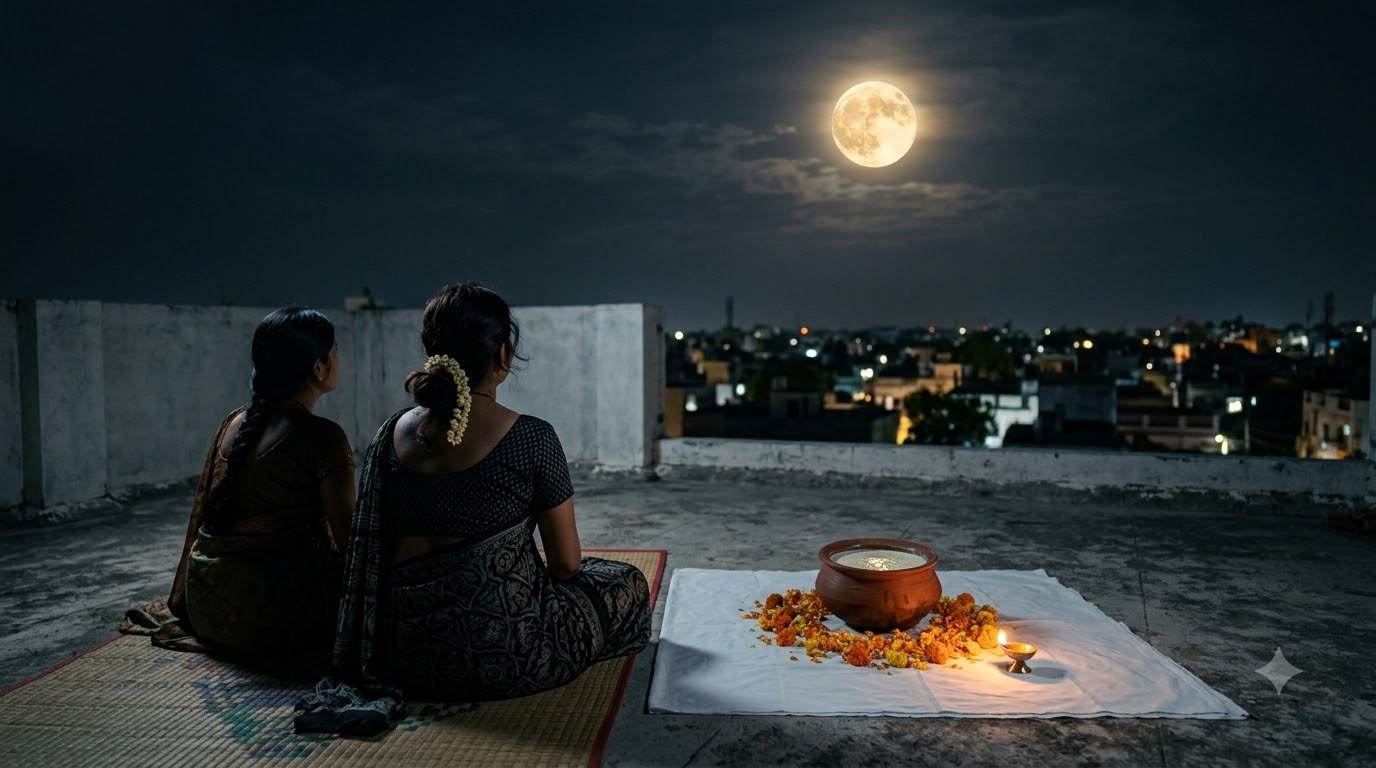
There is exactly one night in the Indian calendar when the tradition says the moon is not merely beautiful but medicinal.
Kojagiri Purnima. Sunday, October 25, 2026.
Also called Sharad Purnima — the full moon of autumn — this is the night when, according to the tradition, the moon reaches its closest, brightest, most potent position of the year, and the moonlight itself carries amrit: nectar, divine medicine, the concentrated grace of Chandra, the moon god.
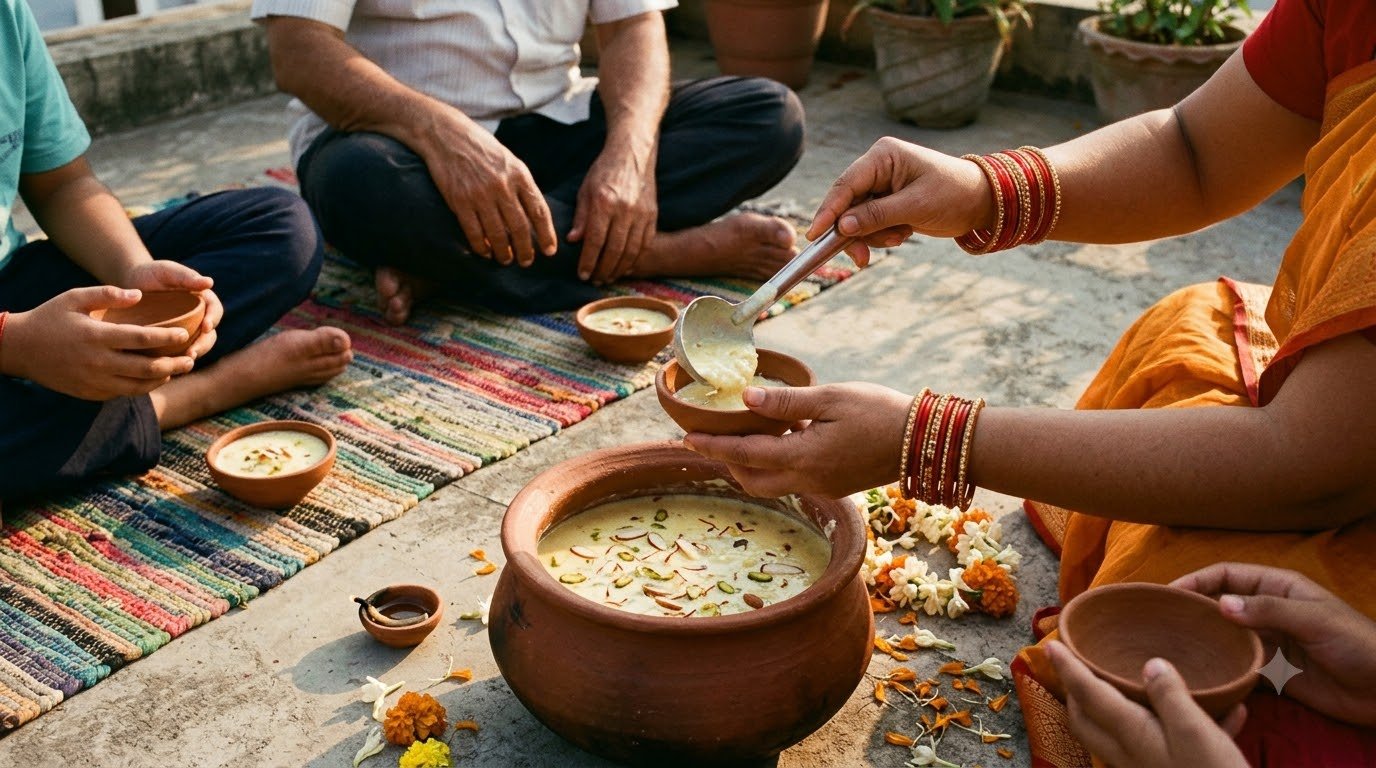
Kheer is placed in the open air to absorb that moonlight through the night. Families stay awake, singing, worshipping, sharing food by moonlight. Lakshmi, the tradition says, walks the earth on this night asking: "Ko jagarti?" — "Who is awake?" And blesses those she finds keeping vigil.
This is, quietly, one of the most beautiful festivals in the Indian calendar — and one of the most deeply connected to the home's relationship with moonlight, the water element, and the Vastu principle that the home is not just a shelter but a living participant in the natural world.
This guide covers what the night asks of the home: where to place the kheer, how moonlight enters and moves through Vastu zones, the Lakshmi vigil, and what the tradition's understanding of moon energy offers the modern home.
The Date and the Moon
Kojagiri Purnima 2026: Sunday, October 25.
The moon rises at sunset and is at its fullest through the night. The tradition's practice centers on the hours between moonrise and midnight — the window when the moon is highest and its light most direct. In 2026, moonrise times vary by city; check your local panchang for the exact time in your location.
The name Kojagiri comes from the Sanskrit Ko jagarti — "Who is awake?" — the question Lakshmi asks as she walks the earth on this night. The festival's central practice is the vigil: staying awake, being present, being found awake when the Goddess passes.
Sharad Purnima is the same festival by its seasonal name: the full moon of Sharad, the autumn season. In Maharashtra it is Kojagiri; in Bengal it is Lokkhi Puja; in Odisha it is Kumar Purnima; in many North Indian traditions it is Sharad Purnima. The moon, the kheer, and the vigil are the common thread across all.
The Kheer Ritual: Vastu and the Moon's Medicine
The Kojagiri kheer is the festival's most distinctive and most Vastu-connected practice.
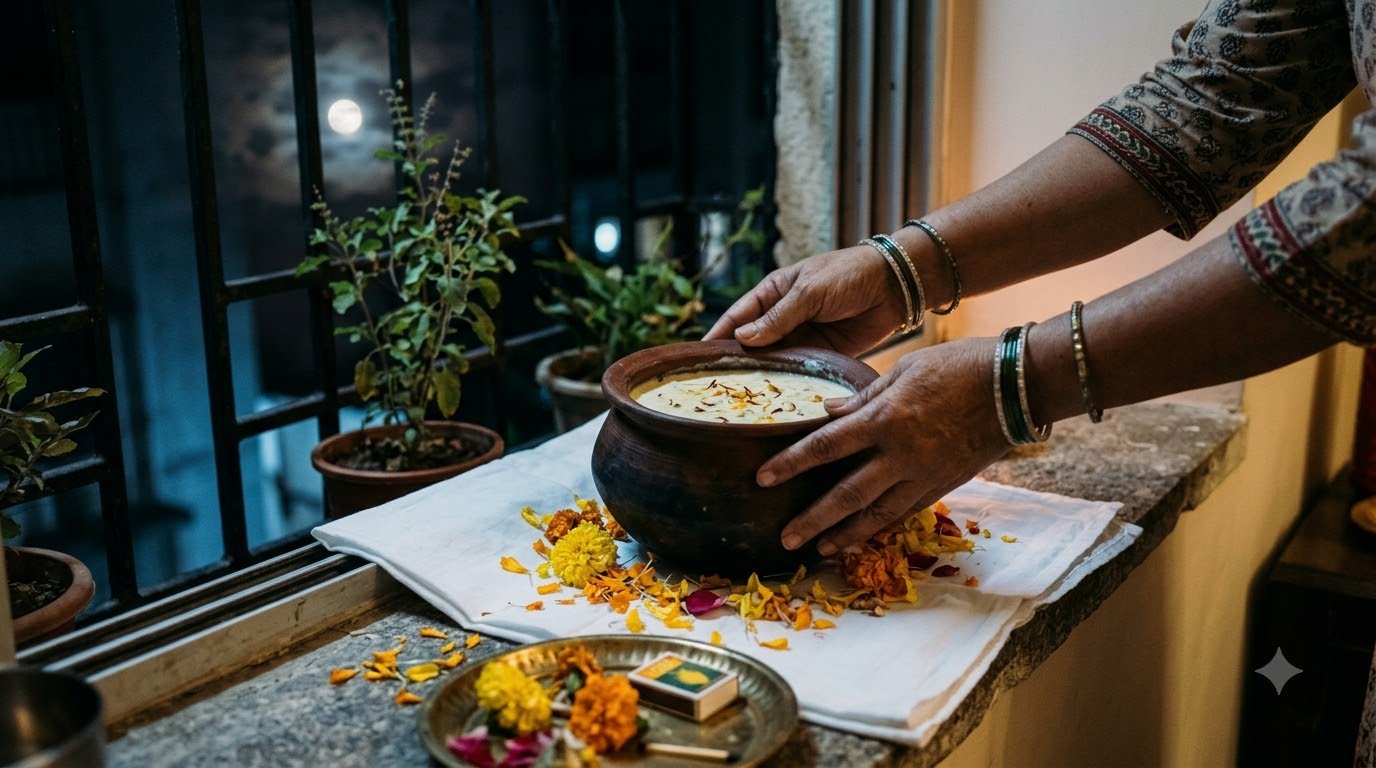
The ritual: Rice kheer — made with full-cream milk, rice, and sugar, simply and purely — is cooked before sunset, placed in a clean clay or silver vessel, and set in an open space where moonlight can fall directly on it through the night. By morning, the tradition holds, the kheer has absorbed the moon's amrit and become genuinely medicinal — good for digestion, for eyes, for skin, for the nervous system. It is shared first thing in the morning, before any other food.
The Vastu dimension: where you place the kheer matters. The moon's energy in Vastu is associated primarily with the North-West direction — Vayu's corner, the direction of air, movement, and the social world — and with the North-East, the Ishan corner, the home's most spiritually potent zone. Both are appropriate for the kheer placement.
For homes with an open terrace, balcony, or courtyard: the best placement is wherever moonlight falls most directly and most continuously through the night. The moon moves from East to West; a space open to the sky in the North or North-East receives moonlight through most of the night.
For apartments without outdoor access: a clean windowsill where moonlight can enter directly is entirely appropriate. The tradition understands the constraint; the intention and the moonlight together are what matter.
What the vessel is made of: clay (mitti) is the tradition's preferred vessel — it is porous, cooling, and considered the most receptive of the natural materials. Silver is the tradition's second choice, connected to the moon's own element. Steel or modern vessels are functional; the tradition simply notes that clay and silver receive the moon's energy most directly.
How Moonlight Moves Through a Vastu Home
This is Kojagiri's deepest Vastu teaching — one that is not often written down but is embedded in the tradition's understanding of the home's relationship with the sky.
Every home has a relationship with the sun: Vastu's directional system is built on the solar axis, the East-West movement of light that gives the home its energy spine. But the home also has a relationship with the moon — and that relationship is different in quality.
Solar energy is activating, directional, drying, warming. It enters from the East, strengthens through the South-East, reaches its peak in the South, and declines toward the West. It is the energy of action, achievement, and form.
Lunar energy is cooling, receptive, diffuse, and non-directional in the solar sense — it comes from wherever the moon is in the sky. It is the energy of rest, intuition, emotional ease, and the water element. Its natural home zones are the North (the direction of wealth and flow), the North-West (air, movement, social connection), and the North-East (divine grace, clarity, spiritual depth).
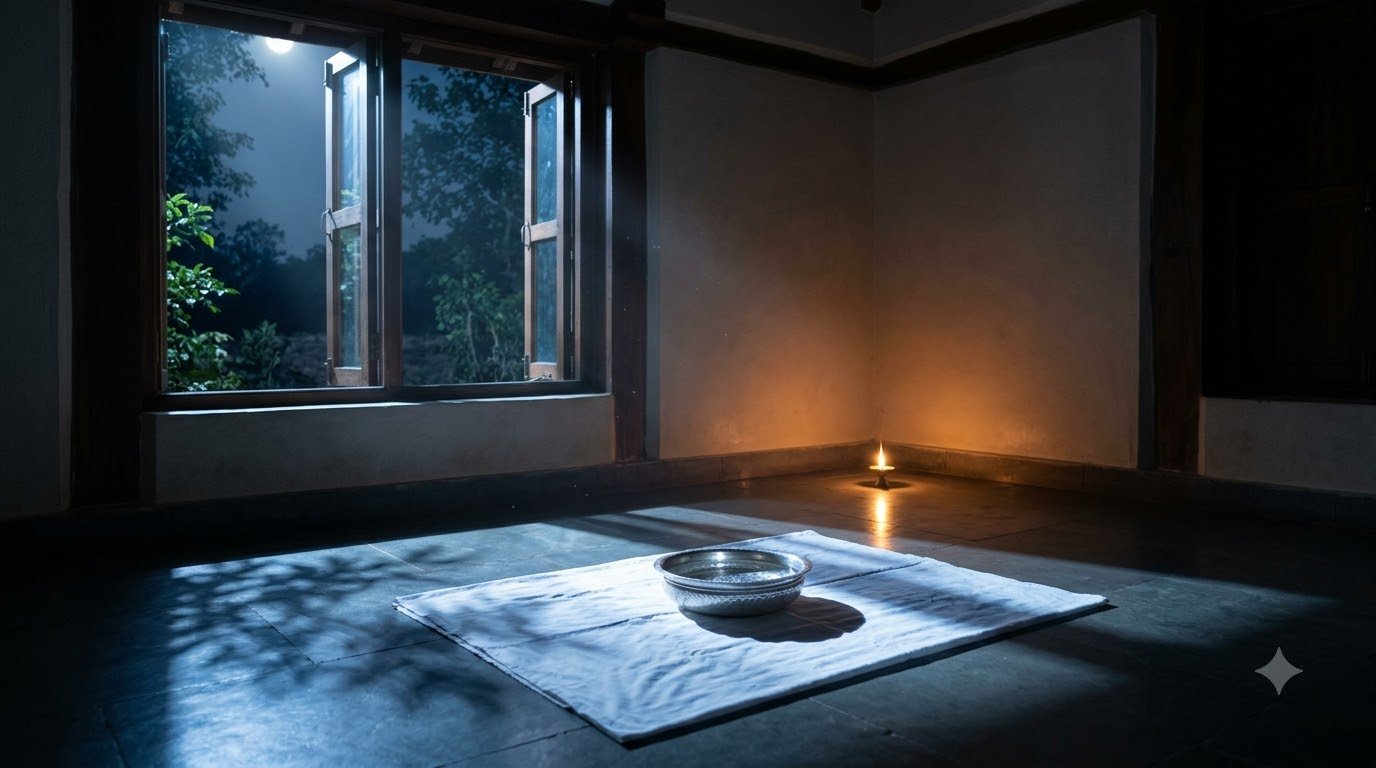
On Kojagiri Purnima, the moon is at its most powerful. Opening the home to that lunar energy — literally opening windows on the North and North-West sides to let moonlight enter — is the Vastu practice the festival is naturally aligned with.
Practical applications for the night:
- Open North-facing and North-West-facing windows after moonrise
- If you have a puja room in the North-East, light an extra diya and leave the window open to the sky if possible
- The bedroom, if it faces North or North-West, is particularly receptive to lunar energy on this night — a peaceful, restorative sleep follows naturally
- Remove heavy curtains on the moon-facing sides for the night; let the light move through the home as it was designed to
The Lakshmi Vigil: Who Is Awake?
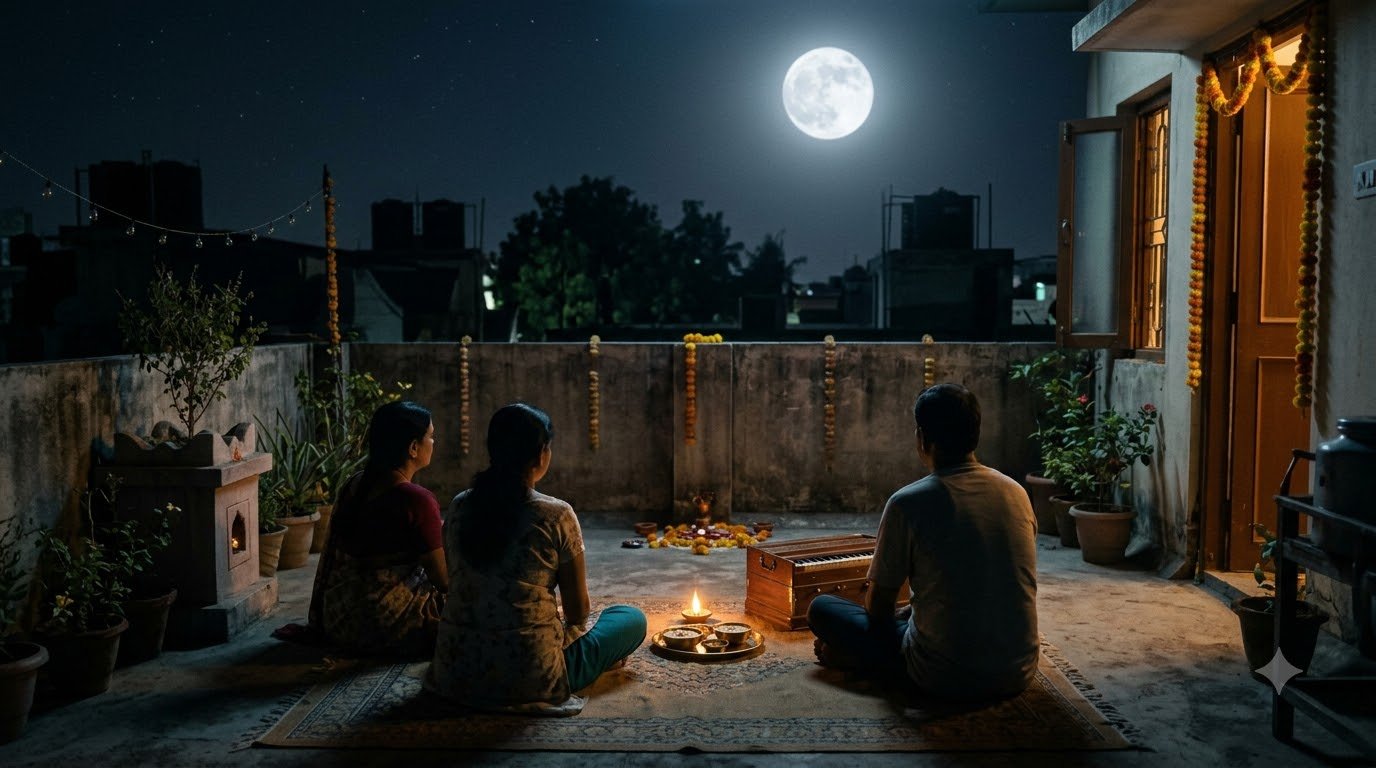
"Ko jagarti?"
The tradition's image of Lakshmi walking the earth on this night asking "who is awake?" is one of the most beautiful in the festival calendar — and its Vastu implication is specific: the home that is alert, alive, and luminous on Kojagiri Purnima is the home Lakshmi finds when she passes.
What does "awake" mean for the home?
- Lit: diyas at the entrance, in the puja room, in the North-East corner. Not the overhead LED; the warm, living flame. The home that is lit by fire on this night has a different quality than one lit by electricity.
- Clean: Lakshmi does not enter a disordered home. The pre-Diwali cleaning we suggested starting after Dussehra extends naturally through Kojagiri: the home should feel freshly cared for on this night.
- Inhabited and joyful: families gathering, music playing, the kheer being shared — the home that is socially alive on this night embodies the vigil. This is not a solemn fast; it is a celebration. Singing, storytelling, laughter — all appropriate and all aligned with the festival's spirit.
- Grateful: placing a small Lakshmi image or symbol in the North-East or near the main entrance for the night, acknowledging the abundance already present before asking for more, is the tradition's most consistent preparation for Lakshmi's arrival.
The Moon and the Water Element: A Vastu Connection
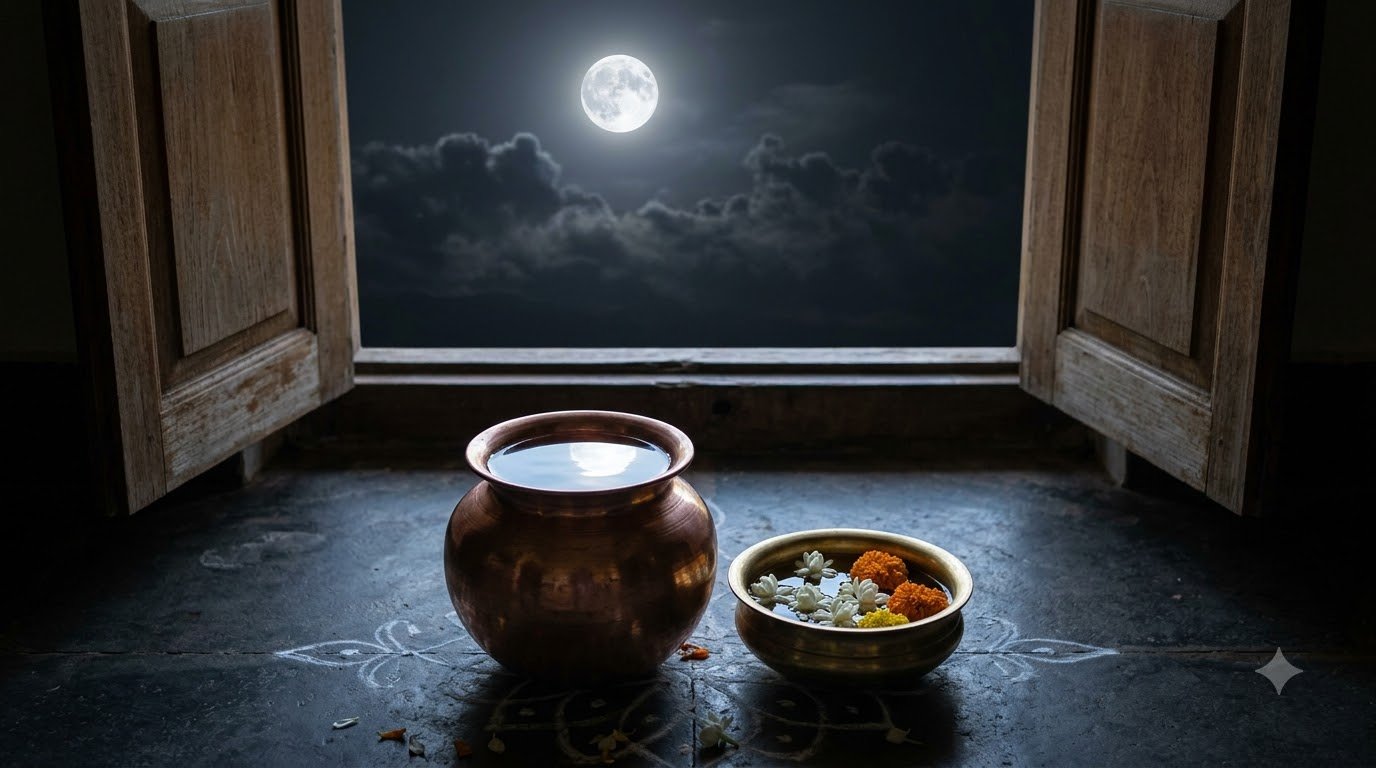
The moon governs the water element in Vastu — and in Ayurveda, and in nearly every ancient cosmological system that has thought carefully about the relationship between celestial bodies and earthly life.
On the night of the full moon, and especially on Kojagiri Purnima, the water element in the home is at its most receptive and potent.
This has practical implications:
Water in the North — already the wealth and flow direction in Vastu — is particularly active on this night. If you have a water feature, aquarium, or even a clean copper vessel of water in the North zone, Kojagiri Purnima is a good night to refresh it, clean it, and allow it to receive the moon's energy.
The body's water element: Ayurveda considers Sharad Purnima moonlight particularly beneficial for the eyes and skin. The traditional practice of allowing moonlight to fall on the face and eyes (not staring directly at the moon, but sitting in moonlit space) is considered a gentle tonic. This is not superstition — the cooling, full-spectrum light of a clear autumn full moon is genuinely soothing, and the practice of moonbathing has physical as well as symbolic value.
The kheer as medicine: the tradition's claim that Sharad Purnima kheer is medicinal aligns with Ayurvedic understanding: milk is cooling and nourishing (sattvic), rice is easily digestible, the moonlight infuses the mixture with cooling lunar energy, and the autumn-night air — cool, clear, post-monsoon — adds its own quality. The kheer eaten in the morning is, at minimum, a light, pure, easily digestible meal on a morning after a late night. The tradition's elaboration is worth taking seriously.
Five Vastu Practices for Kojagiri Purnima Night
1. The moonlit home: open North and North-West windows after moonrise. Let lunar light move through the home's most receptive zones. Remove heavy curtains for the night.
2. The kheer placement: cook before sunset, place in a clean clay or silver vessel, set where moonlight falls directly. Clay pot on the terrace or balcony, silver bowl on the North-facing windowsill.
3. The Lakshmi preparation: clean the entrance and puja room before moonrise. Light diyas at the entrance and in the North-East corner. Place a Lakshmi image near the entrance for the night.
4. The water refresh: clean and refresh any water feature, aquarium, or copper vessel in the North zone. The water element is particularly active tonight.
5. The vigil itself: stay awake, at least through the hours around midnight. Sit in moonlit space if possible — the terrace, the balcony, or near an open window. Let the home be alive and joyful. Sing. Share food. Be found awake.
Kojagiri in the Festival Arc: Between Dussehra and Diwali
Kojagiri Purnima falls exactly five days after Dussehra and fourteen days before Diwali — the precise midpoint of the festival season's most intense stretch.
In the festival arc, it serves a specific function: the pause of fullness between the victory (Dussehra) and the light (Diwali). The moon is full; the home is mid-preparation; the harvest is in; and for one night, instead of striving or preparing or beginning, the tradition asks simply to be present, to be awake, and to receive.
This is the Vastu principle of pratyahara — receptivity — made into a festival. The home that has been preparing (since Navratri), that has been beginning (since Dussehra), pauses on Kojagiri to simply be luminous, present, and open. And then the preparation resumes toward Diwali, with renewed energy, having spent one night in the moon's medicine.
The home has now:
- Been worshipped through nine nights of Navratri
- Blessed its sacred corner with the Aparajita Puja on Dussehra
- Opened to the moon's nectar on Kojagiri
- Fourteen days remain to prepare for Lakshmi's Diwali arrival
Karva Chauth falls on October 29 — four days after Kojagiri. We'll cover it in Article #64.
Common Kojagiri Mistakes
Placing the kheer where moonlight doesn't actually fall. This sounds obvious but is frequently done — the vessel placed on a covered balcony, inside a window with glass closed, or in a room with no sky access. The kheer needs open sky. If no outdoor space is available, the open window is essential.
Using a steel vessel out of convenience. It works, but if you have a clay pot or a silver bowl, this is the night to use it.
Sleeping through the vigil. The whole point of Kojagiri is the jagarti — the staying awake. Even a few hours of moonlit wakefulness after the family meal honors the festival's core intention.
Missing the pre-Diwali connection. Kojagiri is not a standalone night; it is the festival season's mid-point pause. Using it to also complete the "Dussehra to Diwali" home preparation — checking what remains to clean, repair, or refresh before November 8 — is both practical and aligned.
Letting the kheer sit past morning. The kheer absorbs the moon's energy through the night and is meant to be eaten first thing in the morning. Kheer left in the sun through the day loses both its ritual and its practical value.
📐 Know Where Your Moonlight Falls
The kheer goes where moonlight falls directly. The North and North-West windows open at moonrise. The North-East receives the diya and the vigil's prayer. Knowing exactly which walls and windows belong to which direction in your specific home makes Kojagiri's practices land precisely.
We built a free tool where you can upload your floor plan and instantly see it mapped according to proper Vastu directions — so you know exactly where to place the kheer, which windows to open, and which corner to light for the vigil.
👉 Upload your floor plan and find your moonlight zones in 30 seconds
Just a photo or scan (PNG, JPG, JPEG). The moon rises Sunday evening. Know your home before it does.
Final Thoughts
Ko jagarti?
Who is awake?
On the night of Kojagiri Purnima, the moon is at its most generous, the kheer is absorbing the year's most potent moonlight, and Lakshmi is walking the earth asking that question.
The home that answers — lit, clean, joyful, alive, open to the sky — receives what the tradition has always promised the vigil offers: the blessing of being found present at the moment of abundance.
Place the kheer where the moon can find it. Open the windows toward the night sky. Light the diyas. Stay awake a little longer than usual.
The moon rises Sunday. The nectar falls freely. 🌕✨