
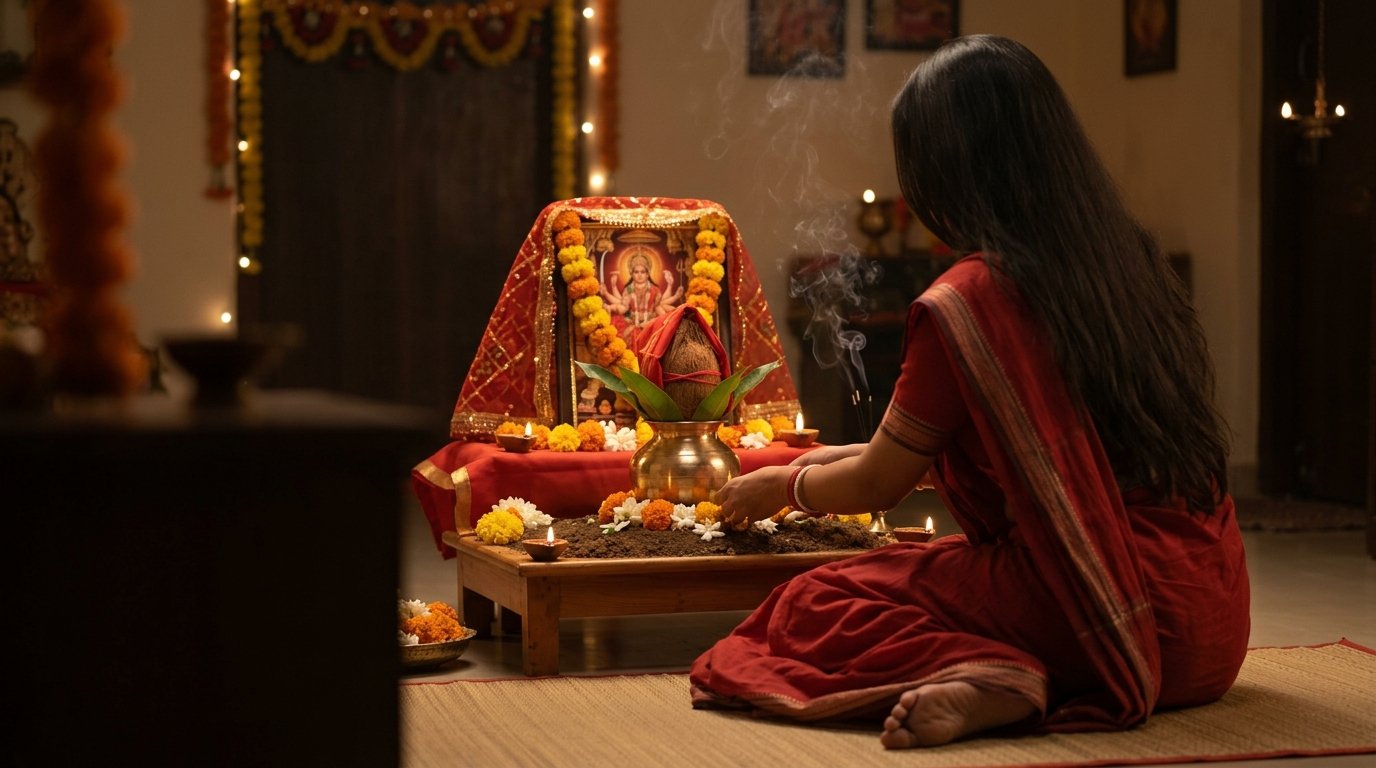
Nine nights. One flame that must not go out. And a home that, for those nine nights, holds the presence of the Goddess herself.
Navratri is unlike any other festival in the Indian calendar. Diwali is a celebration; Ganesh Chaturthi is a welcome. But Navratri is a vigil — a sustained, disciplined, nine-night invitation to Shakti, the primal energy of the universe, to reside in your home.
Sharad Navratri 2026 begins on Sunday, 11 October and concludes with Vijayadashami on 20 October.
And because the festival is sustained — not a single evening of pooja but nine continuous days — the Vastu of your setup matters more than for almost any other observance. A slightly misplaced diya on Diwali is a small thing. An Akhand Jyoti burning in the wrong zone for nine days is not.
This guide covers everything: where the kalash sits, where the eternal flame burns, how to prepare the home beforehand, and the small daily disciplines that keep the nine nights potent.
Before the Goddess Arrives: The Pre-Navratri Reset
Tradition holds that Lakshmi and Shakti alike enter only clean, honored spaces. In the week before Ghatasthapana:
- Deep-clean the North-East zone of the home first — this is where the kalash will sit.
- Mop floors with rock-salt water once, then plain water thereafter. Salt draws out the accumulated heaviness of the year — the full method is in our Negative Energy article.
- Repair before you decorate. A dripping tap, a jammed door, a fused bulb — fix these before hanging a single toran. The Goddess is welcomed into a functioning home.
- Declutter the entrance. Shoes scattered at the main door are the single most common obstacle to festival energy. Clear the threshold completely.
Ghatasthapana: Where the Kalash Must Sit
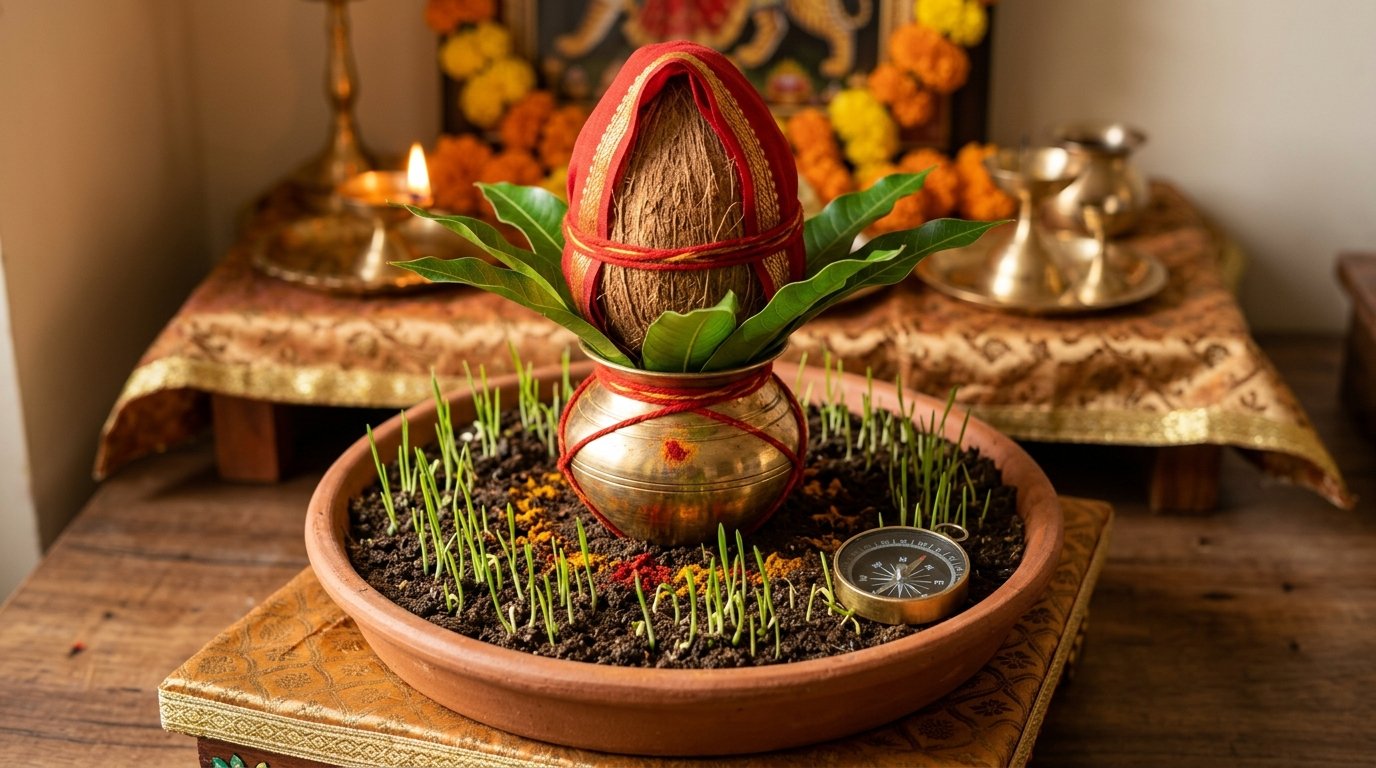
The kalash (ghata) is the seat of the Goddess for all nine nights. Its placement is the single most important Vastu decision of Navratri.
The rule is clear: North-East (Ishanya).
Place the kalash in the North-East corner of the pooja room, or if you have no dedicated pooja room, the North-East corner of the living room. The North-East is the zone of water and divinity — precisely the two elements the kalash embodies.
Setup essentials:
- The kalash sits on a bed of river sand or clean soil spread on a wooden platform — never on the bare floor. Barley (jau) seeds are sown into this soil; their nine-day sprouting is read as a living indicator of the home's blessings.
- Fill the kalash with clean water, place mango leaves at its mouth, and rest a coconut wrapped in red cloth on top.
- The devotee performing daily pooja should sit facing East or North.
- The Goddess's image or idol behind the kalash should be placed so she faces West or South (devotees thus face East or North) — the same orientation logic from our Pooja Room guide.
Never place the kalash: in a bedroom, under a staircase, against a bathroom wall, or in the South-West zone.
The Akhand Jyoti: Nine Days of Fire, Placed Correctly
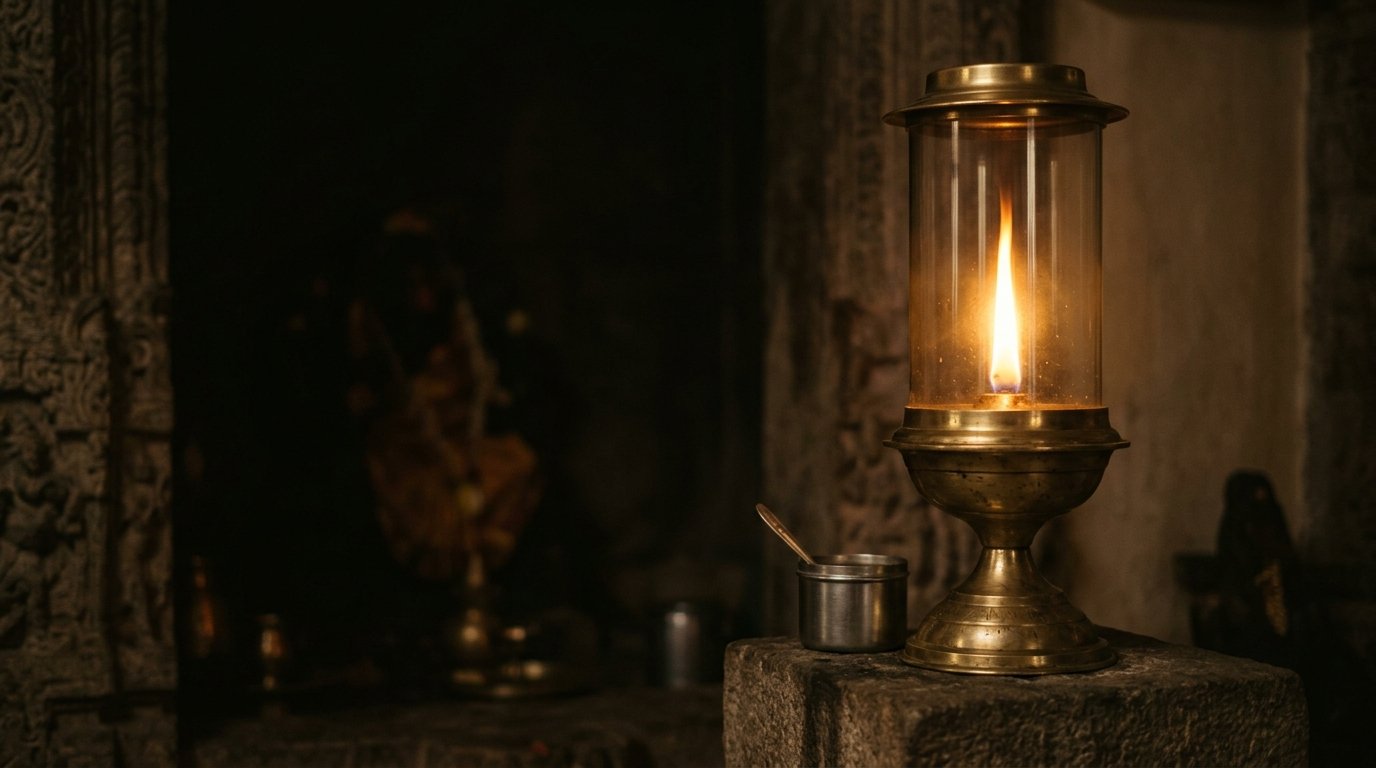
The Akhand Jyoti — the unbroken flame — is Navratri's most demanding discipline, and its placement follows the element it embodies: fire.
Place the Akhand Jyoti in the South-East (Agneya) portion of your altar — to the right side of the Goddess as you face her. South-East is the zone of Agni; a sustained flame burning there for nine days strengthens the home's fire element rather than disturbing it.
Practical rules families learn the hard way:
- Use a large brass or clay diya with capacity for hours of ghee or sesame oil, and keep a second smaller diya nearby — if the main flame must be refueled, the small flame preserves continuity.
- Protect the flame from fans and draughts with a glass chimney or by choosing a naturally still corner. Never switch off the ceiling fan "mostly" — either the flame is protected or it is not.
- Safety is dharma. Keep the diya on a metal or stone base, away from curtains, and never leave the house completely empty with the flame burning. A home that burns down honors no one — the shastra itself places raksha (protection) above ritual.
- If a nine-day flame is genuinely impractical for your household, a morning-and-evening lit diya, lit with full presence, is a far better observance than an unattended fire hazard.
The Nine Nights: Colors, Zones, and Daily Rhythm
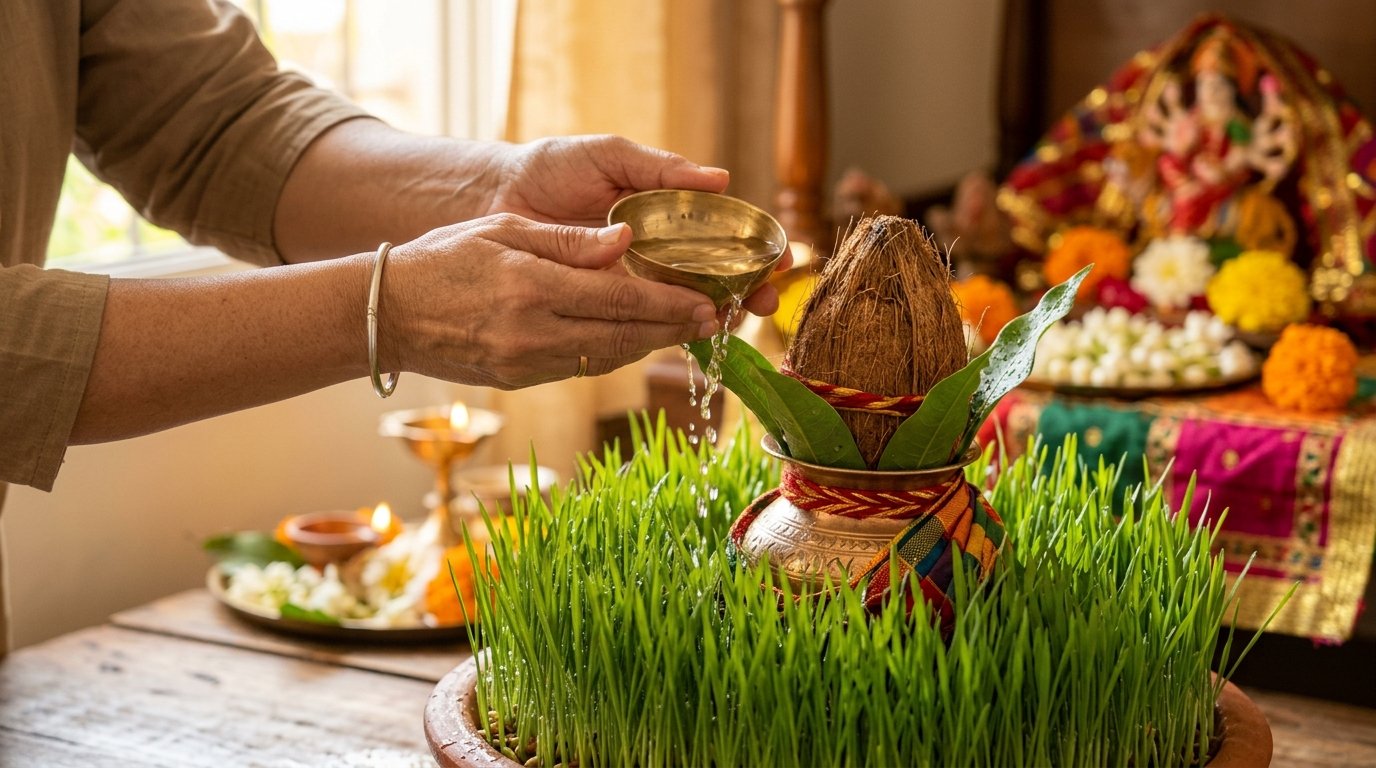
Each Navratri day carries a traditional color, and dressing the altar (or the family) in the day's color is a beautiful practice. Beyond colors, keep this daily rhythm:
- Morning: refresh the kalash water sprinkle, offer fresh flowers, light incense, sprinkle a little water on the barley bed.
- Evening: aarti at a consistent time; the whole family facing East or North.
- Throughout: the altar zone stays clean, footwear-free, and phone-free.
Fasting and the kitchen: Navratri cooking (vrat food) is sattvic by design. Vastu adds one note — keep the kitchen's South-East burner (the Agni corner of the stove) the primary one used during these days, and keep the kitchen exceptionally clean. Kitchen Vastu details are in our Kitchen guide.
Garba/dandiya at home: if you host, clear the Brahmasthan (center of the home) for the dancing circle — the one time of year the center of the home should be filled with movement, music, and joy.
Kanya Pujan and Ashtami/Navami
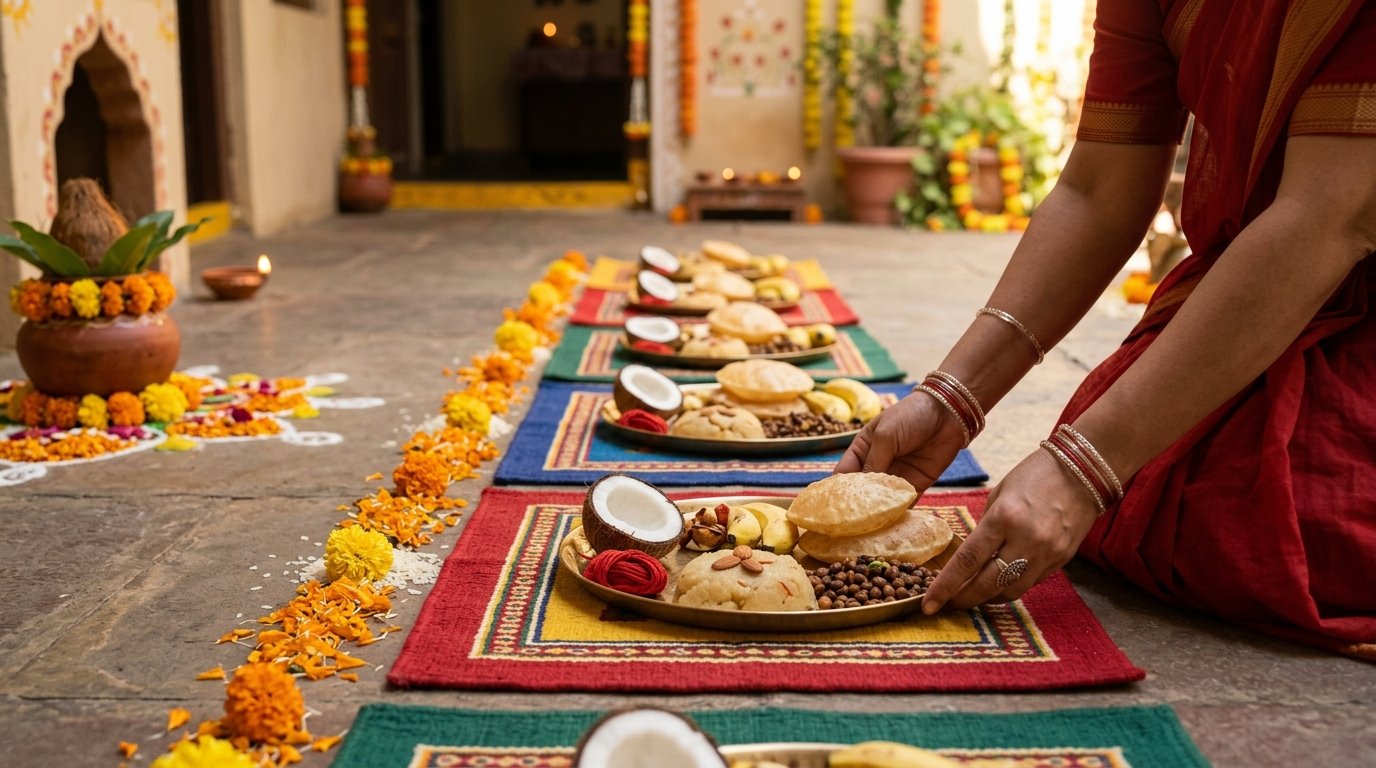
On Ashtami or Navami, when young girls are honored as embodiments of the Goddess:
- Seat the kanyas facing East, on clean mats raised off the bare floor.
- Wash their feet with water from a clean brass vessel — this act, done sincerely, is considered among the most purifying things that can happen inside a home all year.
- Serve food prepared fresh that morning in the sattvic kitchen.
After Vijayadashami: Closing the Nine Nights
- The sprouted barley (jawara) is distributed among family members and immersed in water or returned to soil — many families place a few blades behind their ears or in the family locker as a blessing of growth. (Yes, the locker — see our Locker Vastu guide for why that placement is more meaningful than it sounds.)
- The kalash water is sprinkled through the home's rooms — a nine-night charged cleansing.
- The coconut is offered as prasad. Nothing from the altar is discarded in a dustbin; organic items return to soil or water.
- Let the altar zone rest for a day before rearranging.
Common Navratri Vastu Mistakes
- Kalash placed on bare floor without the sand/soil bed
- Akhand Jyoti in the North-East (water zone) instead of South-East — fire in the water corner is a genuine elemental clash
- Flame left unprotected under a running fan
- Devotees facing South during aarti
- Home locked and empty with the Jyoti burning (unsafe and traditionally prohibited)
- Decorating a cluttered, unrepaired home — decoration is not preparation
📐 Want Your Navratri Altar Mapped Before the Festival?
The right North-East for the kalash and the right South-East for the Jyoti differ in every floor plan — and in many apartments, the intuitive spot is wrong. Send us your floor plan and we'll mark your exact Ghatasthapana zone, Jyoti position, and aarti orientation before the nine nights begin.
Final Thoughts
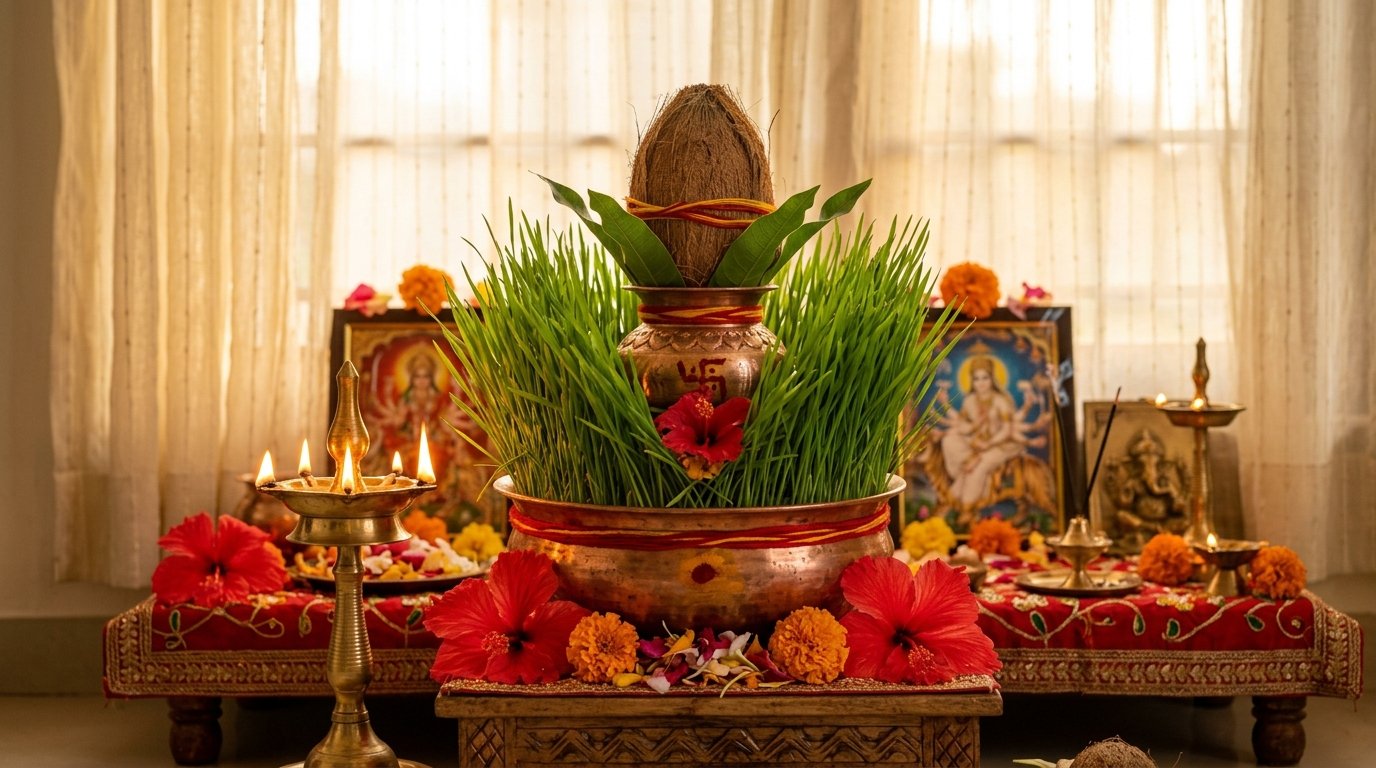
Nine nights of a lit flame, a sprouting seed bed, and a daily appointment with the divine — Navratri is Vastu in motion. It asks the family to keep one corner of the home perfect, not for an evening, but sustained.
Families who observe it sincerely often say the same thing afterward: the house feels different. Lighter. Steadier. More awake.
That is Shakti. And she stays longest in homes that prepared a proper seat for her.
Jai Mata Di. 🙏🪔