
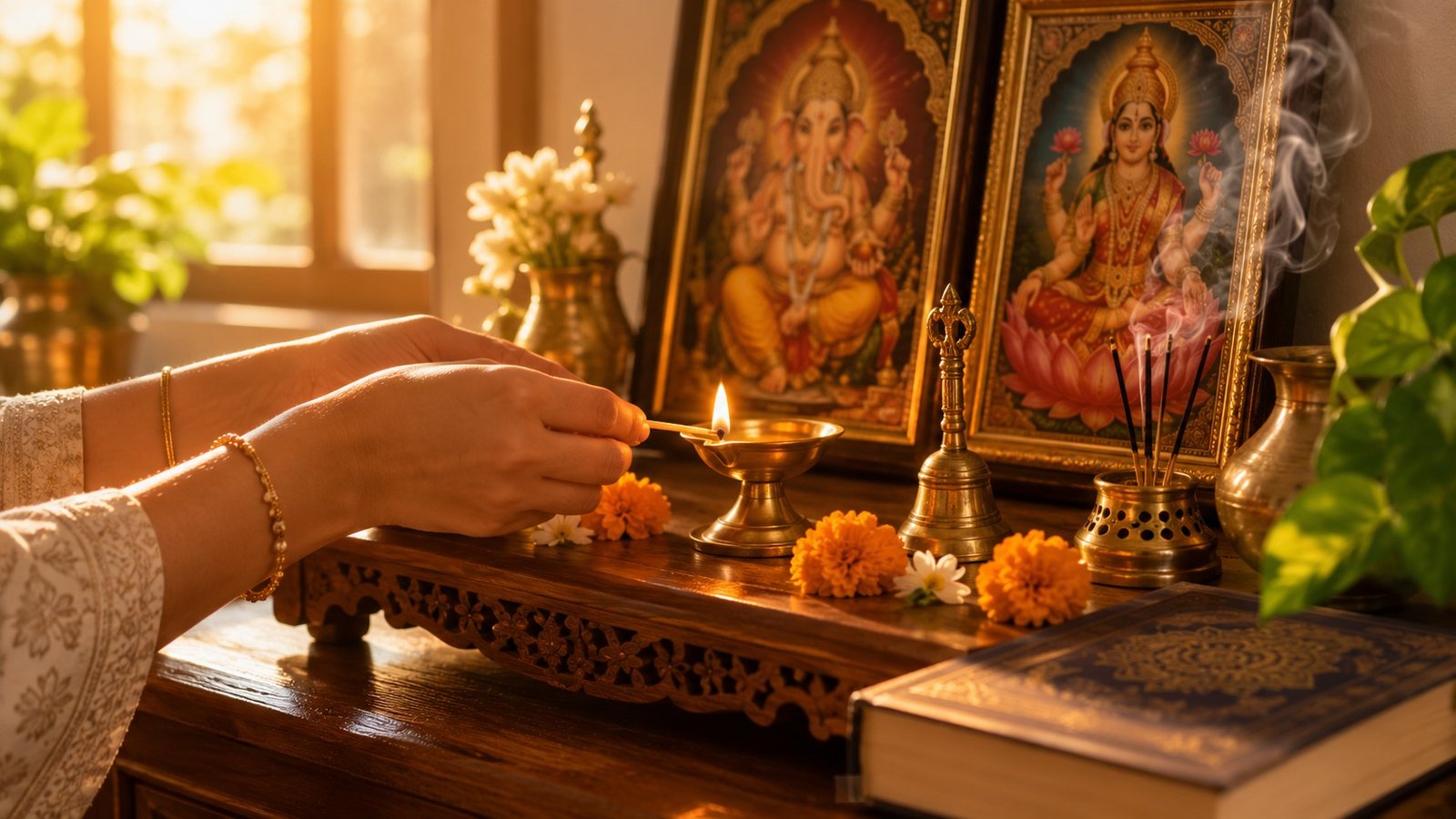
Every morning in millions of Indian homes, the same tender ritual unfolds.
The bell is rung. A small diya is lit. A stick of agarbatti sends its curl of smoke drifting upward. Someone — often the eldest woman of the house, sometimes a young mother, sometimes a grandfather at his 5 AM prayers — folds their hands, closes their eyes, and quietly starts the day with a whispered thanks to whichever deity their family holds dear.
That small corner of the home, that little pooja area with its worn brass bell and framed images of gods, might be the smallest room in the house. But energetically, it is the most powerful.
In Vastu Shastra, the pooja room is called the soul of the home — the space where the divine and daily life quietly meet. It sets the spiritual tone of the entire house. When it's placed correctly, oriented properly, and treated with reverence, it radiates a quiet peace outward into every other room. Every meal cooked, every conversation had, every child growing up in that home — all of it happens under the gentle influence of that corner.
And when it's placed incorrectly?
Even the most sincere prayers can feel like they're not landing. The house feels vaguely restless. The peace that a family should feel in their own home starts to slip away, and no one can quite say why.
So let's talk about this properly. Because if there is one Vastu topic worth getting right, it's this one.
Here is what Vastu Shastra teaches about the pooja room — where it should be, where it should never be, and how to set it up so it truly becomes the sacred heart of your home.
Why the Pooja Room Matters More Than Any Other Space
Every other room in your home has a functional purpose. The kitchen nourishes the body. The bedroom rests it. The living room hosts your loved ones. The workspace holds your ambition.
The pooja room? It nourishes your entire family's spirit.
In Vastu, this space isn't just symbolic. It's understood as an actual generator of subtle positive energy — one that radiates outward and shapes the atmosphere of the whole home. Families who set up their pooja space with care and keep it clean, active, and honored have — for generations — reported homes that feel calm, harmonious, and blessed.
Families who neglect it, place it wrong, or treat it as an afterthought often experience the opposite: restless energy, small conflicts that keep starting, a persistent sense that something is "off."
None of this is superstition. It is the accumulated wisdom of thousands of years of Indian families observing what happens when a home has its sacred anchor in the right place — or doesn't.
Let's get it right.
The Ideal Direction: North-East (Ishan Kona) 🧭
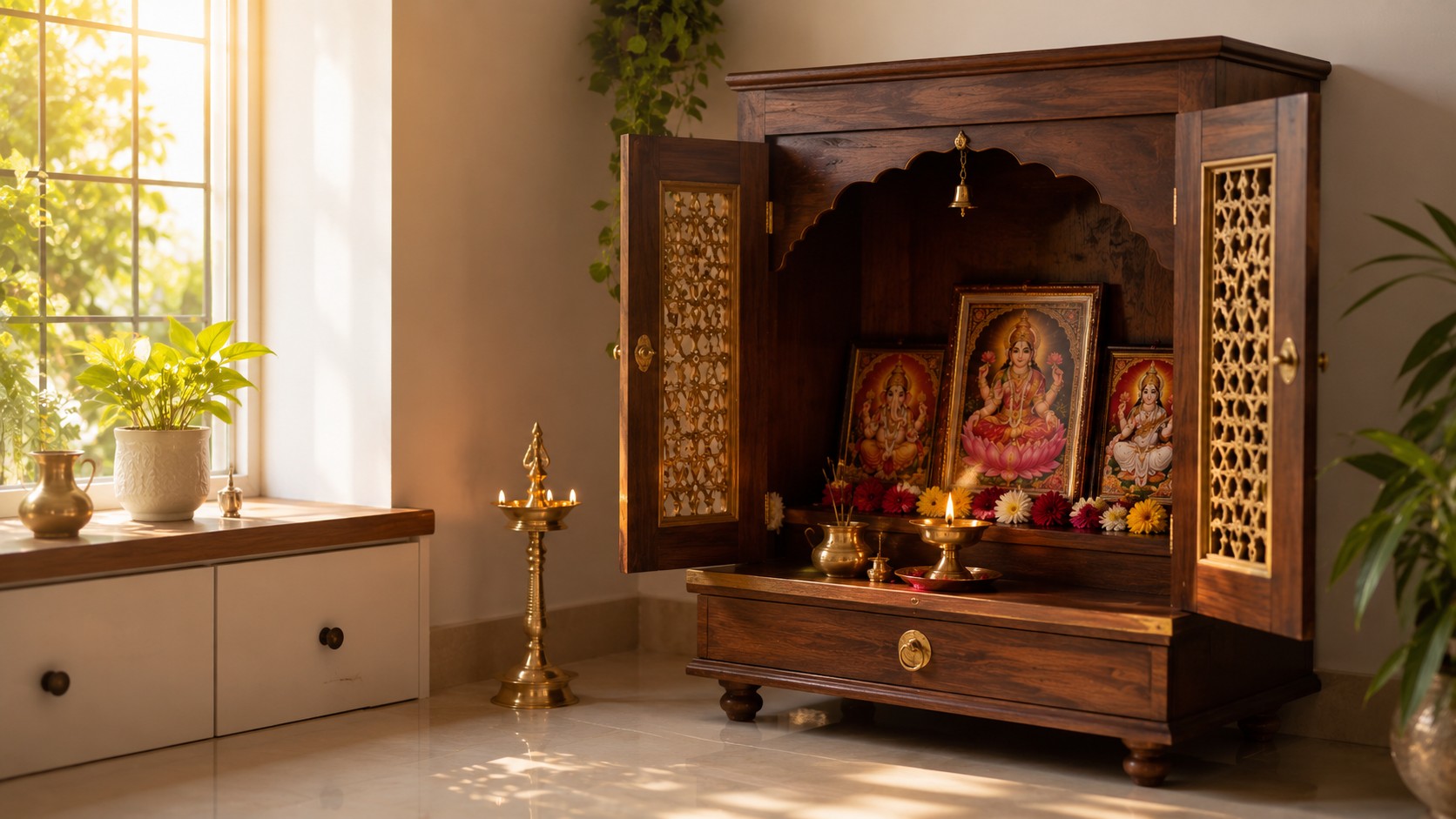
This is the single most important thing to know: the pooja room belongs in the North-East corner of your home.
The North-East is called the Ishan Kona — the corner of Ishan, another name for Lord Shiva. It is the sacred zone of the home, ruled by divine grace, water energy, and clarity. It is the most auspicious, positive, and spiritually receptive part of any dwelling.
Placing your pooja room here means aligning your sacred practice with the natural sacred energy of the home. Every prayer offered from this corner is believed to travel more easily, be received more clearly, and radiate blessings back into the home more powerfully.
Second-best directions:
- ✅ East — associated with the rising sun, fresh spiritual energy
- ✅ North — associated with wealth, wisdom, and Kubera
If a North-East pooja space isn't possible in your home, either of these directions is a strong second choice.
Directions to Avoid at All Costs ❌
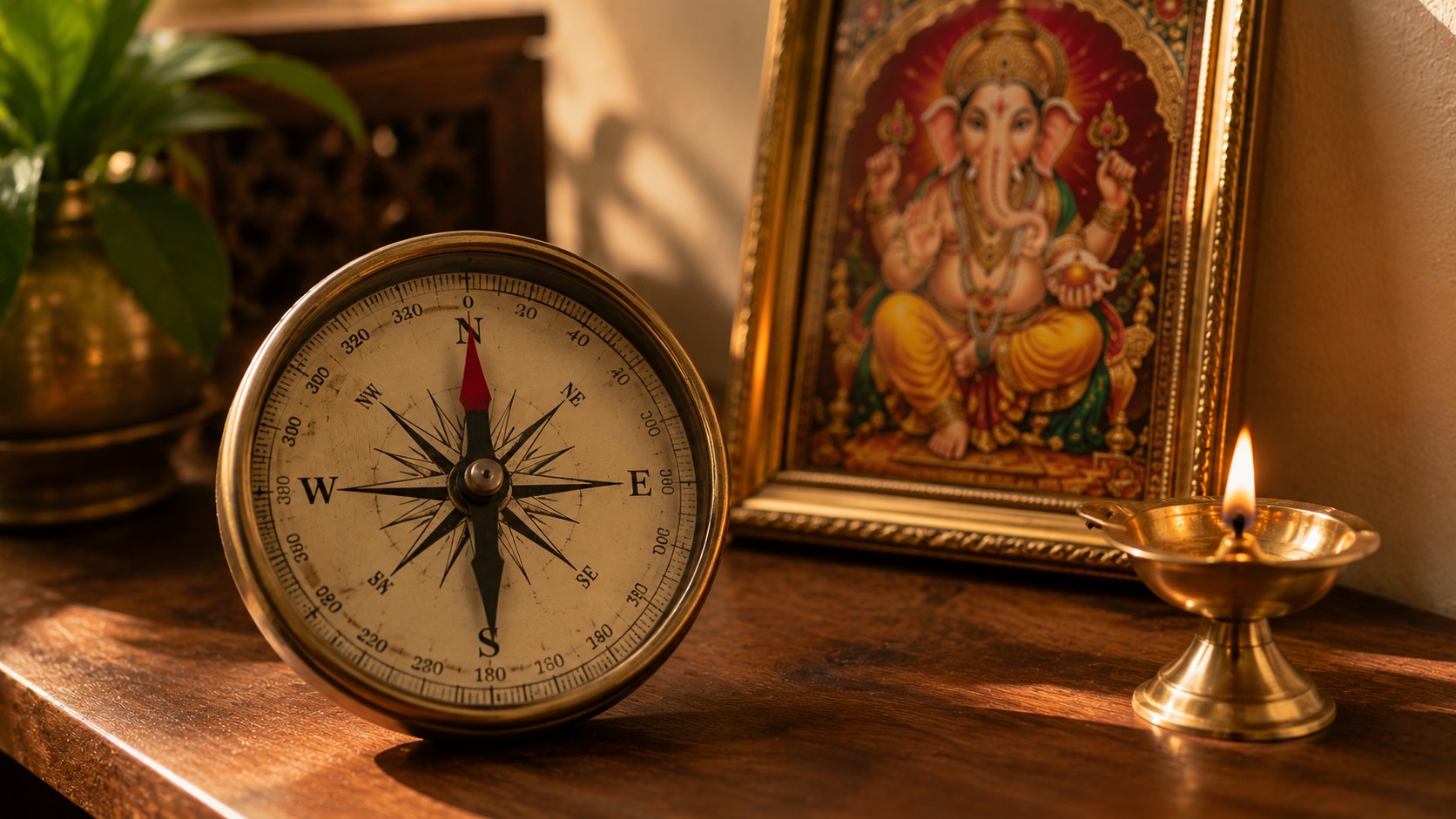
Some placements aren't just less ideal — they're considered strongly inauspicious. If your pooja room is currently in any of these locations, please read this carefully.
❌ South (or South-Facing Idols)
The South is ruled by Yama, associated with restraint, endings, and karmic accounts. It is not a direction of divine welcome. A pooja room in the South, or idols facing South (meaning the devotee prays while facing South), is considered strongly problematic. Prayers face the wrong energetic direction, and the space itself does not amplify divine energy.
❌ South-West
The South-West is the earth-grounded, heavy, stability corner of the home — ideal for master bedrooms, not sacred spaces. A pooja room here feels "trapped" in dense energy, unable to radiate outward.
❌ Under a Staircase
This is one of the most common and heartbreaking Vastu mistakes in modern homes. Families often carve out a small niche under the stairs for a pooja space because "there's no other room for it." But this placement is deeply problematic — feet walking above the deities all day is considered a serious disrespect, and the energetic weight of the staircase pressing down on the sacred space diminishes its power.
❌ Inside a Bedroom
While many Indian homes have a small pooja shelf inside a bedroom out of necessity, this is not ideal. Bedrooms are spaces of intimacy, rest, and everyday human activity — including things like intimate relations between couples and being in states of undress. Traditional Vastu considers this incompatible with a sacred space. If it's your only option, we'll cover how to handle it later in this article.
❌ Inside or Directly Adjacent to a Bathroom/Toilet
This is non-negotiable. A pooja room cannot share a wall with a toilet. The energetic contamination is severe. If this is currently your setup, please prioritize fixing it above all other Vastu changes in your home.
❌ Inside or Directly Adjacent to the Kitchen
The kitchen is fire-heavy and full of activity. A pooja space here becomes overshadowed by the intensity of cooking energy. If proximity is unavoidable, at least ensure it's not directly facing the stove.
❌ In the Center of the Home (Brahmasthan)
Counterintuitively — even though the Brahmasthan is a sacred zone — placing a fully enclosed pooja room in the center of the home is inadvisable. The Brahmasthan needs to remain open and free of heavy structures. A small altar within a larger open central space can work, but a dedicated closed pooja room in the center should be avoided.
Which Direction Should You FACE While Praying? 🙏
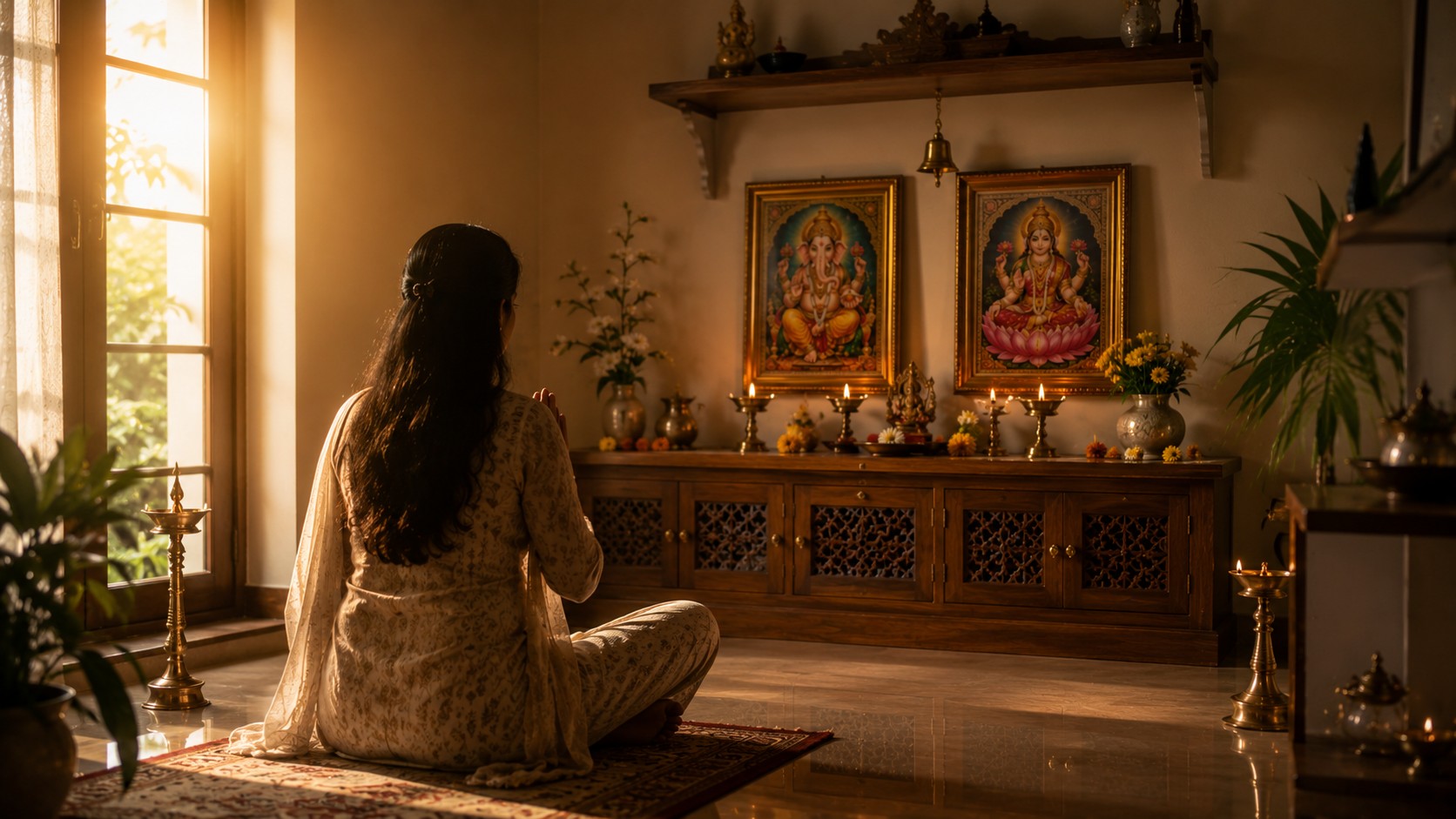
Even if your pooja room is placed perfectly, the direction you face while praying matters just as much.
Best directions to face while praying:
- ✅ East — the direction of the rising sun and highest spiritual energy
- ✅ North — the direction of wealth, wisdom, and Kubera
Directions to avoid:
- ❌ South — you should never pray facing South
- ❌ West — less ideal
The practical implication: the idols/images in your pooja room should be positioned on the West or South wall — so that when you sit facing them, you're facing East (best) or North.
This is the most common error I see in home pooja spaces: beautiful idols facing the wrong direction, meaning the devotee is praying while facing South. A simple repositioning can transform how the space feels.
The Height of the Idols Matters 📏
This is a subtle detail most families overlook.
Idols and sacred images should be placed at chest level or slightly higher when you're seated in prayer — never below waist level, and not so high that you have to strain your neck to see them.
The reasoning is both energetic and practical:
- Deities at the correct height command reverence — you're not looking down at them
- Prayer is more natural, sustained, and focused when the eye level is right
- The energy of the sacred space aligns better with the human energy field
A good rule of thumb: if you're sitting cross-legged on the floor to pray, the main idols should be roughly at your seated shoulder-to-eye height. If you stand while praying, they should be at your chest level.
What Should the Pooja Room Contain? 🕯️
A well-set-up pooja space traditionally includes:
- The primary idols or framed images of the deities your family worships — placed on the West or South wall, facing East or North
- A small brass lamp (diya) for daily lighting
- A place for agarbatti / dhoop with careful attention to ventilation
- A small kalash (water pot) on some days, especially during festivals
- A small bell for aarti
- A clean cloth used only for the pooja space (not doubled with household cleaning)
- Sacred books — Bhagavad Gita, Ramayana, or your family's tradition — kept respectfully
- A tulsi plant placed near a window if space allows (more on this below)
What should NOT be in the pooja room:
- ❌ Broken idols or damaged frames (replace or respectfully immerse them)
- ❌ Photos of deceased family members (these belong on a separate memorial wall, not in the pooja space)
- ❌ Dead flowers or old, dried-out prasad
- ❌ Everyday household clutter — no bills, no random storage
- ❌ Shoes or footwear anywhere near the entrance
- ❌ Dust, cobwebs, or stagnation of any kind
We touched on the importance of clearing broken and stagnant items in our house fights article — but nowhere is this principle more important than in the pooja space.
The Tulsi Question 🌿
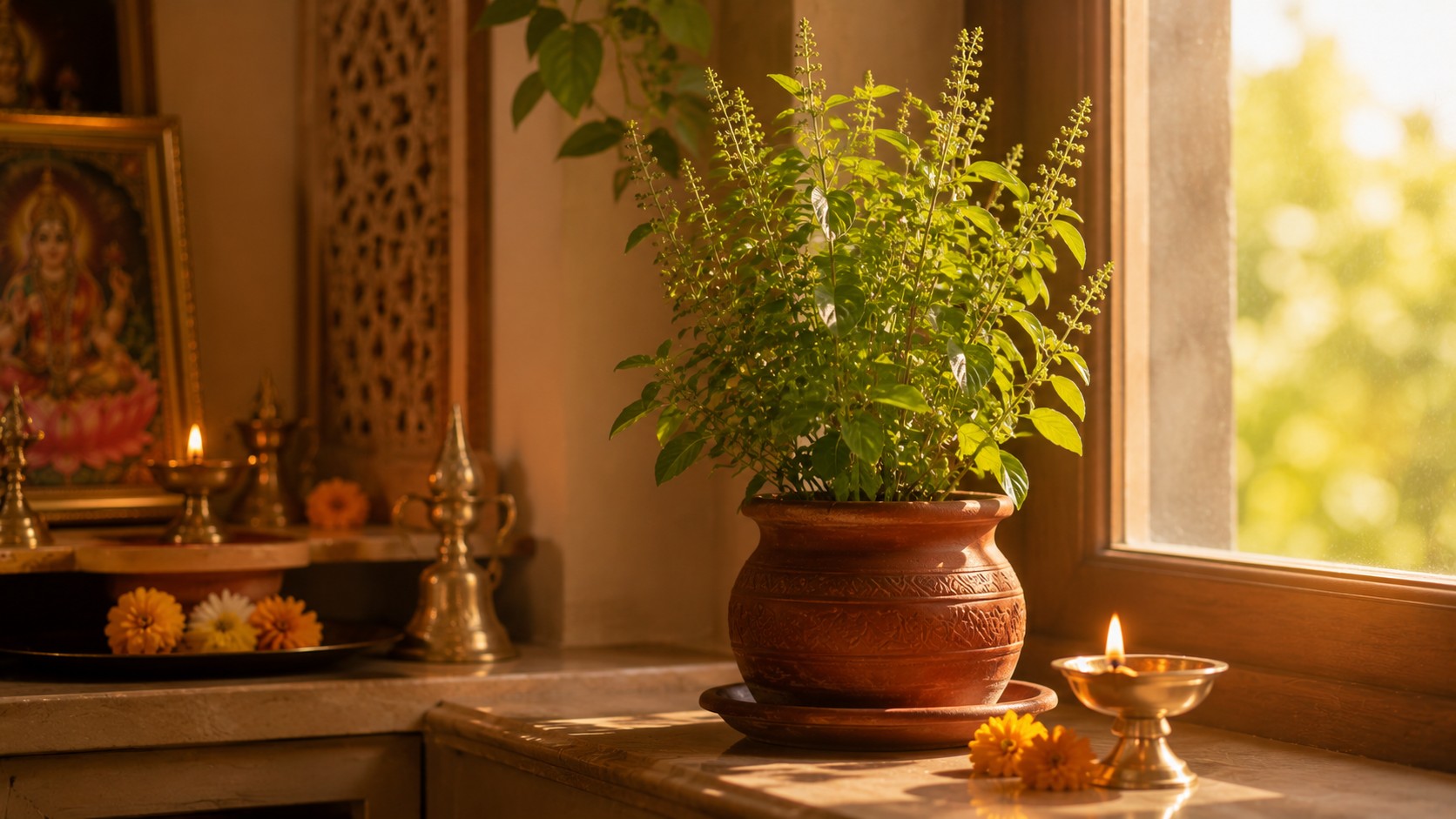
Every Indian home traditionally has a Tulsi plant — and its placement carries deep Vastu significance.
Best placements for Tulsi:
- ✅ North, North-East, or East of the home — ideally in a courtyard, balcony, or near a window
- ✅ Near the pooja room if there's a windowsill or small outdoor spot
The Tulsi plant is considered:
- A powerful purifier of the home's energy (also scientifically true — Tulsi has known antimicrobial properties)
- A protector against negativity
- A quiet blessing on the entire household
If space is tight, even a small Tulsi in a terracotta pot on a windowsill counts. What matters is that it's there, healthy, watered, and honored.
We covered the wider Vastu significance of plants in our 5 plants that attract wealth article — Tulsi is one of the most powerful of these.
What If My Home Is Small? Practical Vastu for Small Homes 🏠
This is the question I hear most often, and I understand it deeply. Not every Indian family lives in a home with an extra room to spare for a full pooja room. Many of us live in compact flats where a dedicated pooja space isn't structurally possible.
Here's the honest truth: a small, well-placed, sincerely-honored pooja space is far more powerful than a large, ill-placed, or neglected one.
If a full pooja room isn't possible:
Option 1: A pooja shelf or corner
- Choose the North-East corner of any suitable room (ideally the living room)
- Even a small wall-mounted shelf or corner platform can serve beautifully
- Face the idols so the devotee faces East or North
Option 2: A pooja mandir (wooden cabinet)
- These small wooden temple-cabinets can be placed against a West or South wall
- Position them so the doors open toward the North-East
- Wonderful option for families in rented flats — completely portable
Option 3: A pooja niche in the bedroom (last resort)
- If truly no other option exists, a small elevated pooja shelf in a bedroom is acceptable
- Place it in the North-East corner of the bedroom
- Keep it separated by a small curtain that can be closed when the space is being used for sleep or intimacy
- Never place it directly facing the bed
We covered creative Vastu solutions for tight spaces in our renters' Vastu article. The principles apply beautifully to setting up sacred spaces in small homes too.
The Daily Practice That Amplifies Everything 🕉️
Here's something that many families miss: a beautiful, perfectly-placed pooja room means nothing if it's not actively used and cared for.
Vastu isn't just about where the sacred space is — it's about how it's honored.
Daily habits that keep the pooja room energetically alive:
- Light a diya or agarbatti at least once a day, preferably at dawn or dusk
- Clean the space daily — wipe surfaces, replace withered flowers, refresh water
- Bathe or wash your hands and face before entering the pooja space
- Never enter with shoes or in soiled clothing
- Spend even 2-5 minutes in silent prayer or reflection each day
- Never eat, sleep, or lounge in the pooja space
A tiny pooja space in a rented flat that receives 5 minutes of sincere devotion every morning is worth infinitely more than a grand pooja room that's used once a month.
A Simple Pooja Room Vastu Audit ✅
A weekend check to ensure your family's sacred space is aligned:
- [ ] Is my pooja room/shelf in the North-East, East, or North of the home?
- [ ] Do the idols face East or North (with the devotee facing East or North while praying)?
- [ ] Is the space NOT under a staircase, inside a bedroom, or sharing a wall with a toilet?
- [ ] Is the space NOT directly adjacent to a kitchen or facing south?
- [ ] Are the idols at chest level or slightly higher?
- [ ] Is the space clean, uncluttered, and free of everyday household items?
- [ ] Are there no broken idols, dead flowers, or photos of deceased family members?
- [ ] Is there a healthy Tulsi plant somewhere in the home (ideally North/East)?
- [ ] Is a diya lit at least once a day?
- [ ] Does someone spend even a few minutes in the space daily?
Each "yes" strengthens the sacred energy of your home. Each "no" is a gentle invitation to reconsider.
🗺️ Find Your Home's Exact North-East Zone
Knowing the North-East is ideal for a pooja room is one thing. Knowing exactly where the North-East is in YOUR home — and whether the current pooja setup falls in a supportive or defective zone — is where this becomes truly actionable.
We built a free tool where you can upload your floor plan and instantly see your home mapped according to proper Vastu directions — including exactly where your sacred zone is, where the pooja space should ideally sit, and which spots to avoid.
👉 Upload your floor plan and find your home's sacred zone in 30 seconds
Just a photo or scan of your floor plan (PNG, JPG, JPEG) — and the ideal placement for your family's most important space becomes crystal clear. Sometimes the greatest blessing you can give your family is placing the sacred space where it truly belongs.
A Note on Reverence 🌸
I want to say something gently, especially to younger readers who may be reading this out of curiosity or as a household duty.
The pooja room is not a decorative feature. It is not a design choice to be optimized for aesthetics. It is not a "Vastu hack" to be executed for wealth gains.
It is — at its heart — an invitation. A quiet daily invitation to pause, to remember something larger than yourself, to whisper thanks to whatever divine you hold sacred, and to draw the day's actions from a place of reverence rather than reactivity.
The physical placement matters. The direction matters. The height of the idols matters. But what matters most is the care you bring to the space.
A humble corner with a single diya and a moment of sincere devotion is worth more than the grandest pooja room used mechanically. The Vastu principles in this article are meant to support your family's practice, not replace it.
Place the space thoughtfully. Then honor it daily. The rest, quite literally, follows.
Final Thoughts: The Sacred Heart of a Sacred Home 💫
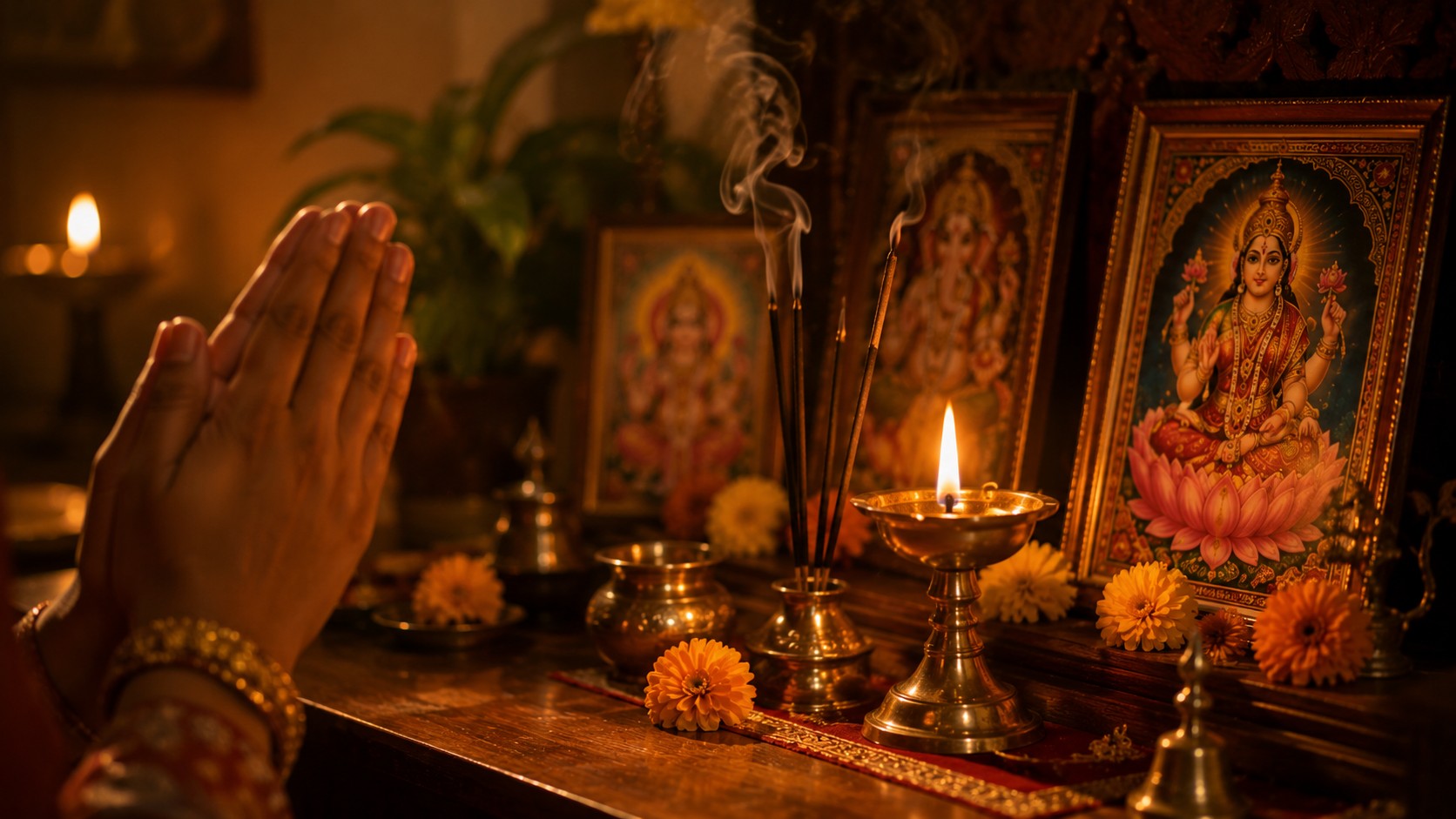
Every family, over the arc of a lifetime, wants roughly the same things. Peace at home. Health for those we love. Financial stability. Good relationships. A sense that our children will grow up well and that our elders will be at ease in their later years.
These are not small wishes. They are the deepest longings of every generation of every family.
And here is what our ancestors quietly understood: these longings are supported — silently, powerfully, invisibly — by the smallest room in the home. By that pooja corner. By that daily diya. By that whispered prayer at dawn.
Get the direction right. Honor the height of the idols. Keep it clean. Light the lamp. Say the words.
Your home has a soul. Let it live in the corner it was meant to. 🪔🌸
Do you have a dedicated pooja space in your home? Take a moment this weekend to check its direction against this guide. Forward this article to the elder in your family who holds the pooja tradition — they will honor this deeply. Sometimes the smallest corner holds the largest blessings. 🙏