

You wake up. Your alarm is screaming. You hit snooze. Five minutes later, you hit it again. Then again.
When you finally sit up, your body feels like it's been carrying bricks all night. Your head is heavy. Your eyes burn. You don't feel rested — you feel like sleep happened to you, not for you.
The strange part? You slept seven, maybe eight hours. By every external measure, you should feel fine.
But you don't. You haven't for months, maybe years.
So you do what we all do. You blame the mattress. You buy a new one. Then you blame the pillow. You buy three. Then you try blackout curtains, sleep gummies, blue-light glasses, herbal teas, sleep apps that track your every breath.
Some help a little. None solve it. Because here's a truth most people never consider:
The reason you wake up tired isn't usually your mattress, your pillow, or your phone. It's the energy of the room you're sleeping in. And no amount of memory foam can fix that.
In Vastu Shastra, the bedroom is one of the most important spaces in your entire home — not because of how it looks, but because of what your body does there. Eight hours of restoration. Eight hours of vulnerability. Eight hours of your nervous system trying to repair itself.
When the bedroom's Vastu is right, those hours genuinely heal you. When it's wrong, you spend the whole night in subtle resistance — and wake up exhausted, even after a full night's sleep.
Let me walk you through the most common Vastu reasons your sleep isn't restoring you — and the simple changes that can transform how you wake up.
Why "Tired After Full Sleep" Is a Vastu Problem, Not a Sleep Problem
If you genuinely couldn't sleep at all, that's an insomnia issue. Different category.
But "I sleep for 7-8 hours and still wake up tired" is something else entirely. It means your body is sleeping — it's just not getting the deep, restorative kind of sleep. Your nervous system is working overtime through the night, trying to compensate for an environment that's quietly disturbing it.
Modern science has a name for this: poor sleep architecture. Vastu has known about it for thousands of years. Both agree on one thing: the room itself shapes the quality of the sleep, not just the body lying inside it.
Now let's look at the most common Vastu mistakes silently draining your nights.
1. You're Sleeping With Your Head in the Wrong Direction 🧭

This is the single biggest culprit — and most people don't even know they're doing it.
In Vastu, the body has a subtle magnetic field, with the head acting like the body's "North pole." The Earth has a powerful magnetic North pole. When your head points North while sleeping, you're aligning two "same poles" — and just like magnets, they create subtle resistance all night long.
The result? Your body never fully relaxes. The brain stays slightly active. Deep sleep stages get shortened. You wake up technically rested, biologically exhausted.
The fix: Sleep with your head pointing South (best) or East (great alternative). Avoid head-North at all costs.
We covered this in depth in our sleeping direction and marriage article — but the short version is: rotate your bed tonight if needed. This single change has transformed sleep for so many people I've worked with, often within just a few nights.
2. A Mirror Is Reflecting Your Bed 🪞
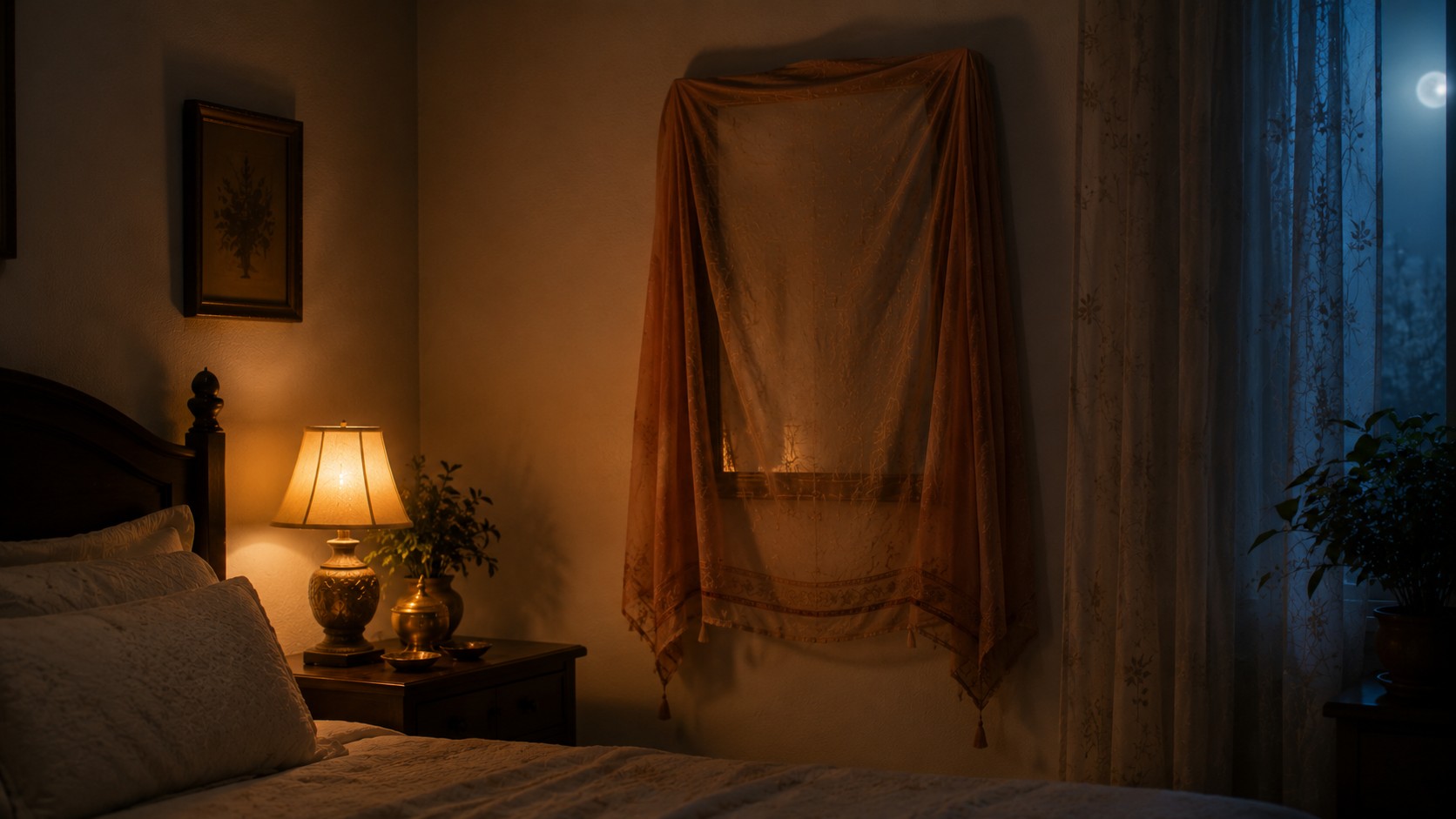
This is the silent sleep-killer almost nobody talks about.
Mirrors are powerful energy amplifiers in Vastu. Whatever they reflect, they double and circulate back into the room. Put one near a bed and it keeps the bedroom's energy bouncing around all night — exactly when it should be settling.
Worse: in the dark, the human nervous system catches glimpses of reflections in mirrors and triggers tiny micro-startle responses without you ever consciously waking up. You don't remember it. But your nervous system does, and it fragments your sleep all night.
If you wake up feeling "unsettled" or "weirdly anxious" in the mornings, this is often the cause.
The fix: Move mirrors so they don't reflect the bed from any angle. Can't move them? Cover them at night — a soft scarf, curtain, or cloth draped over the mirror is enough. We did a full deep-dive on this in our bedroom mirror article. Many people report calmer sleep within just 2-3 nights of doing this.
3. Your Bedroom Is in the Wrong Direction of the Home 🏠

Beyond which way you sleep, the bedroom's location in your home affects sleep quality more than most realize.
Best zones for the master bedroom:
- South-West — the most grounded, stable, protective zone. Gold standard for couples.
- West or South — also acceptable.
Zones that disturb sleep:
- South-East — the "fire zone." Bedrooms here often fuel restlessness, short tempers, and broken sleep.
- North-East — the sacred zone. Better reserved for prayer/meditation, not deep sleep.
If your bedroom is in the South-East or North-East, you might be sleeping in a room whose underlying energy works against the very purpose of a bedroom.
The fix: If you can swap bedrooms with another in your home, do it. If not, focus heavily on the other fixes in this article — they help compensate.
4. Electronics Around Your Bed Are Disturbing Your Sleep 📱
You've heard this before, but Vastu and modern science strongly agree on this one: electronics radiate disturbance fields that the body works around all night.
A phone charging on your bedside table. A laptop on the bed. A TV directly facing the bed. A router on the wall. Even an old-school alarm clock with a glowing display. All of them keep a subtle hum of disturbance around you while you sleep.
In Vastu terms, this disrupts the room's prana (life energy). In modern terms, it disrupts your melatonin and deep sleep cycles. Either way: your body knows.
The fix:
- Phone OUT of the bedroom. Or at minimum, at least 3-4 feet away, on airplane mode.
- No laptops, work materials, or tablets near the bed.
- No TV directly facing the bed (or cover it at night).
- Move routers and large electronics out of the bedroom if possible.
This single category of fixes is often the most transformative — and the most resisted. But the difference is usually noticeable within a week.
5. Clutter Under and Around the Bed 🗑️
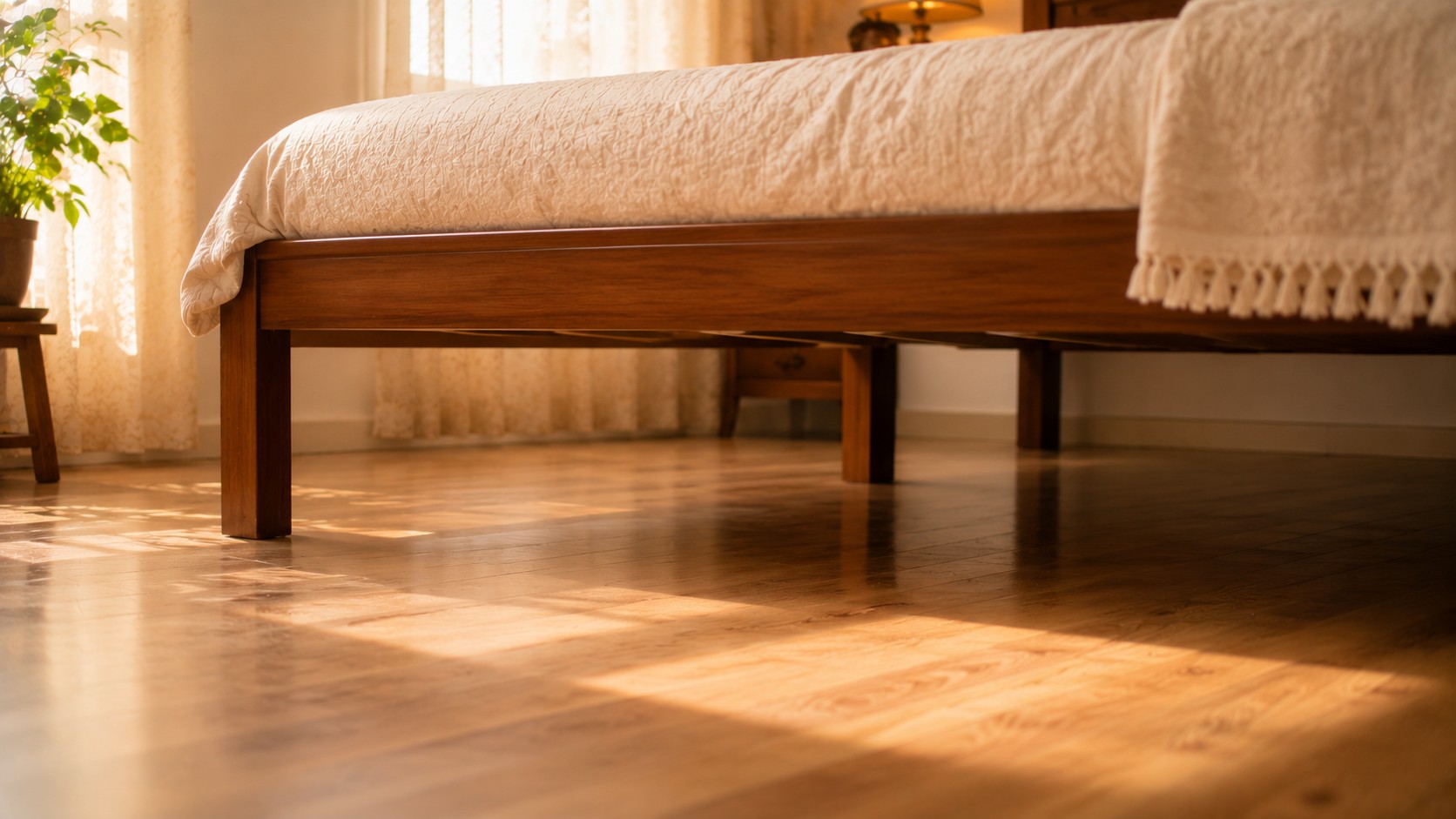
In Vastu, the area under your bed is energetically connected to your sleeping mind. Stagnant energy there directly disturbs the quality of your rest.
But this is where we all shove stuff. Old suitcases. Random storage boxes. Forgotten paperwork. Unused gym equipment.
Every night, your body is trying to restore itself while resting directly above a graveyard of stuck energy. And then you wonder why you wake up feeling heavy.
The fix:
- Empty the area under your bed. Completely if possible. If you must store something, only bedding/linens — clean, intentional items only.
- Declutter the bedroom corners, especially the South-West (the stability corner).
- No clutter on the bedside tables. A lamp, a book, a glass of water — that's it.
You'll be surprised how much lighter the room (and your mornings) feel within just a few days.
6. The Color of Your Bedroom Is Working Against You 🎨
Color is silent energy — and bedrooms are where it matters most because you absorb that energy for eight hours straight.
Best bedroom colors for restful sleep:
- Soft warm tones — peach, cream, light beige, soft pink
- Light blue or sage green — calming, restorative
- Muted earth tones — grounding without being heavy
Colors that quietly disturb sleep:
- Heavy red — overstimulating, fuels tension and restlessness
- Stark black or very dark walls — heavy, lower mood
- Bright neon shades — visually loud even when your eyes are closed (your nervous system still registers the room's color)
- Mismatched, busy patterns — keep the mind active
The fix: If repainting isn't an option, change the bedding, curtains, and key textiles to calming tones. Even just swapping a harsh-colored duvet cover for a soft cream one can change how the room feels overnight.
7. The Bed Isn't Positioned Correctly in the Room 🛏️
Beyond direction, where you place the bed within the room shapes your sleep:
Best bed placement:
- Headboard against a solid wall (not a window)
- Diagonally across from the door (the "command position") — you can see the door without being in line with it
- Some breathing space around the bed — don't squeeze it into a corner
Avoid:
- Bed directly in line with the door — the energy hits you all night
- Bed under a window — exposes your head to disturbance
- Sleeping under a beam or sloping ceiling — creates literal energetic pressure on your body
- Bed wedged between walls with no breathing room
The fix: Walk into your bedroom right now. Where does the bed sit? Is it in the command position with a wall behind your head? If not, see if rotation or repositioning is possible — even small adjustments make a difference.
8. The Bedroom Has Active "Day Energy" Inside It 💼
A bedroom is meant for rest. When you bring work, exercise equipment, study materials, or even an active hobby corner into the bedroom, you confuse the room's energy. Your subconscious associates the room with productivity, not restoration — and you sleep more shallowly as a result.
The fix:
- No work desk in the bedroom. Especially not facing the bed. We covered why in our work from home Vastu guide.
- Move treadmills, weights, and exercise equipment out (or screen them off completely).
- No piles of paperwork, bills, or to-do lists in the bedroom.
- The bedroom should signal one thing to your mind: "You're done. Rest now."
A Quick "Why You Wake Up Tired" Audit ✅
A weekend check to find the silent drains in your bedroom:
- [ ] Is my head pointing North? (Worst direction)
- [ ] Can I see my reflection from the bed?
- [ ] Is my bedroom in the South-East or North-East of the house?
- [ ] Is my phone within arm's reach when I sleep?
- [ ] Is the area under my bed full of stuff?
- [ ] Are the dominant colors in my bedroom harsh or stimulating?
- [ ] Is my bed in line with the door, or under a window?
- [ ] Are there work materials, exercise equipment, or piles of clutter in my room?
Each "yes" is a silent drain on your sleep. Fix even 3 of them this weekend, and you'll likely notice a real difference in how you wake up within 5-7 days.
🗺️ Find the Energy Drains in YOUR Bedroom
Reading about ideal bedroom directions is one thing. Knowing exactly where the South-West, North-East, and other zones are in YOUR specific home is where this becomes truly actionable.
We built a free tool where you can upload your floor plan and instantly see your home mapped according to proper Vastu directions — including which corner is the best for your master bedroom, where your bed should ideally sit, and which zones might be quietly draining your sleep.
👉 Upload your floor plan and find your ideal bedroom layout in 30 seconds
Just a photo or scan of your floor plan (PNG, JPG, JPEG) — and the most restorative sleep position for you becomes immediately clear. Stop spending money on new mattresses. Start aligning your room.
A Note Before You Go: Don't Forget Your Body 🩺
A small but important reminder, especially since we're talking about persistent fatigue.
If you've been waking up tired for months, and you've tried multiple changes without improvement, please see a doctor. Persistent fatigue can sometimes have medical causes — anemia, thyroid issues, sleep apnea, vitamin D deficiency, depression, and others. Vastu is a powerful supportive layer, but it's not a replacement for medical care.
We talked about this carefully in our home and health symptoms article — the best approach is both: rule out medical causes AND align your environment. Your body deserves both layers of care.
Final Thoughts: Your Bedroom Should Heal You, Not Drain You 💫

Here's something worth sitting with: you spend a third of your life in your bedroom. More than 25 years of an 80-year life. That's not a small thing — that's a huge part of who you become.
If that room is quietly working against you for years on end, it doesn't matter how good your mattress is, how many supplements you take, or how disciplined your bedtime routine is. The room itself has to support you. Anything else is patching a wound while standing in the rain.
The good news? Most of the fixes in this article cost nothing. Rotate the bed. Move the mirror. Empty under the bed. Take the phone out. Change the bedding to softer colors. Maybe rearrange where the bed sits in the room.
Twenty minutes of intentional work could change your next twenty years of mornings.
Try just two or three of these tonight. Notice the difference within a week. Then add more.
You deserve to wake up feeling restored — not survived. 🌅
Did this article describe your mornings? Try a few of these fixes this weekend and tell us in the comments what changes. Forward this to someone you love who keeps saying "I'm just so tired all the time" — sometimes the answer was always in the walls around them. 🙏