There is a fortnight in the Indian calendar that asks a home to hold something no other festival asks it to hold:
The presence of those who are no longer here.
Pitru Paksha 2026 runs from Saturday, September 26 to Saturday, October 10 — sixteen lunar days in which tradition says the ancestors descend from Pitru Loka and draw close to the homes where their descendants still live. The fortnight closes on Mahalaya Amavasya (October 10) — a Saturday that is also Shani Amavasya, making it among the most meritorious days of the entire year for ancestral rites.
This guide is written with the care the subject deserves. Pitru Paksha is not a festival in the way Diwali or Ganesh Chaturthi is — it carries no celebration, no decoration, no lights. It carries something older and quieter: a debt acknowledged, a meal set for those who cannot eat it, a glass of water poured for those who no longer thirst. Getting the home right for these sixteen days is its own form of love.
What Pitru Paksha Is — and What It Is Not
Before the guide, two honest framings worth holding:
What it is: a traditional period of remembrance, gratitude, and ritual offering to deceased ancestors — specifically the three generations of direct ancestors (parents, grandparents, great-grandparents) who are traditionally held to reside in Pitru Loka while their karma completes. The Shradh rituals — Tarpan, Pind Daan, and feeding — are the means by which the living express this gratitude and offer nourishment to those who gave them life.
What it is not: a period of fear, heaviness, or superstitious dread. The tradition's tone is one of love and duty — Pitru Rin, the debt owed to ancestors, repaid annually with sincerity. Families who approach these days with genuine warmth and care report feeling the fortnight as a profound connection, not a burden.
A grief note, offered gently: for families who have lost someone recently — a parent, a spouse, a child — this fortnight can surface deep emotion. That is entirely right and appropriate. If the weight becomes difficult to carry alone, please talk to someone — a family member, a trusted friend, a counselor. Grief needs witnesses as much as rituals do.
The Home During Pitru Paksha: Setting the Tone
Pitru Paksha asks the home for restraint and purity rather than display:
- No new auspicious beginnings during these sixteen days — no housewarming (Griha Pravesh), no weddings, no major purchases, no inauguration of new enterprises. This is a period of completion and acknowledgment, not new undertaking.
- Sattvic living throughout: simpler food, reduced noise, quieter evenings. The tradition asks for the same quality of attention we described in Shravan — inward, disciplined, deliberate.
- The home should be clean, especially the kitchen — the Shradh food that will be prepared for offering deserves the same pure cooking environment as any festival. The full kitchen guide.
- No tamasic food: meat, alcohol, and strongly pungent foods are avoided in the home during the fortnight — particularly on the day you perform your family's Shradh.
- Keep the home's entrance clean and welcoming: the tradition holds that ancestors visit the home during this period, and a clean threshold, a fresh toran, and an uncluttered approach honor their arrival. (Entrance principles.)
Setting Up the Ancestor Corner
This is the Vastu contribution most unique to Pitru Paksha: a temporary, dedicated space in the home for the fortnight's remembrance.
- Zone: the South (Dakshina) direction is traditional for Pitru-related rituals and offerings — the direction associated with Yama, the lord of ancestors, and the direction Tarpan water is offered toward. This is the one fortnight of the year when the South zone of the home is given active honor rather than the caution it carries the rest of the year.
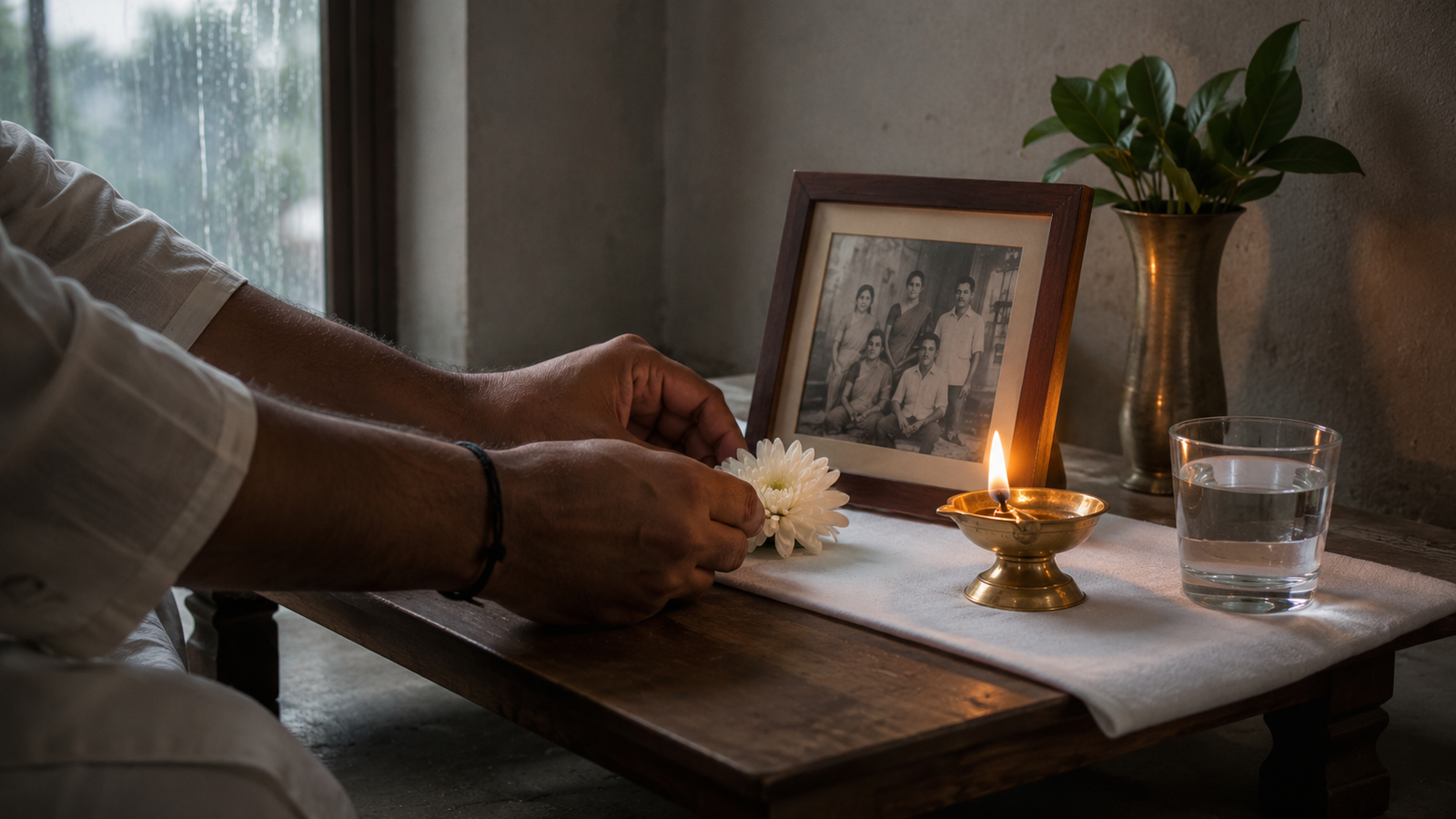
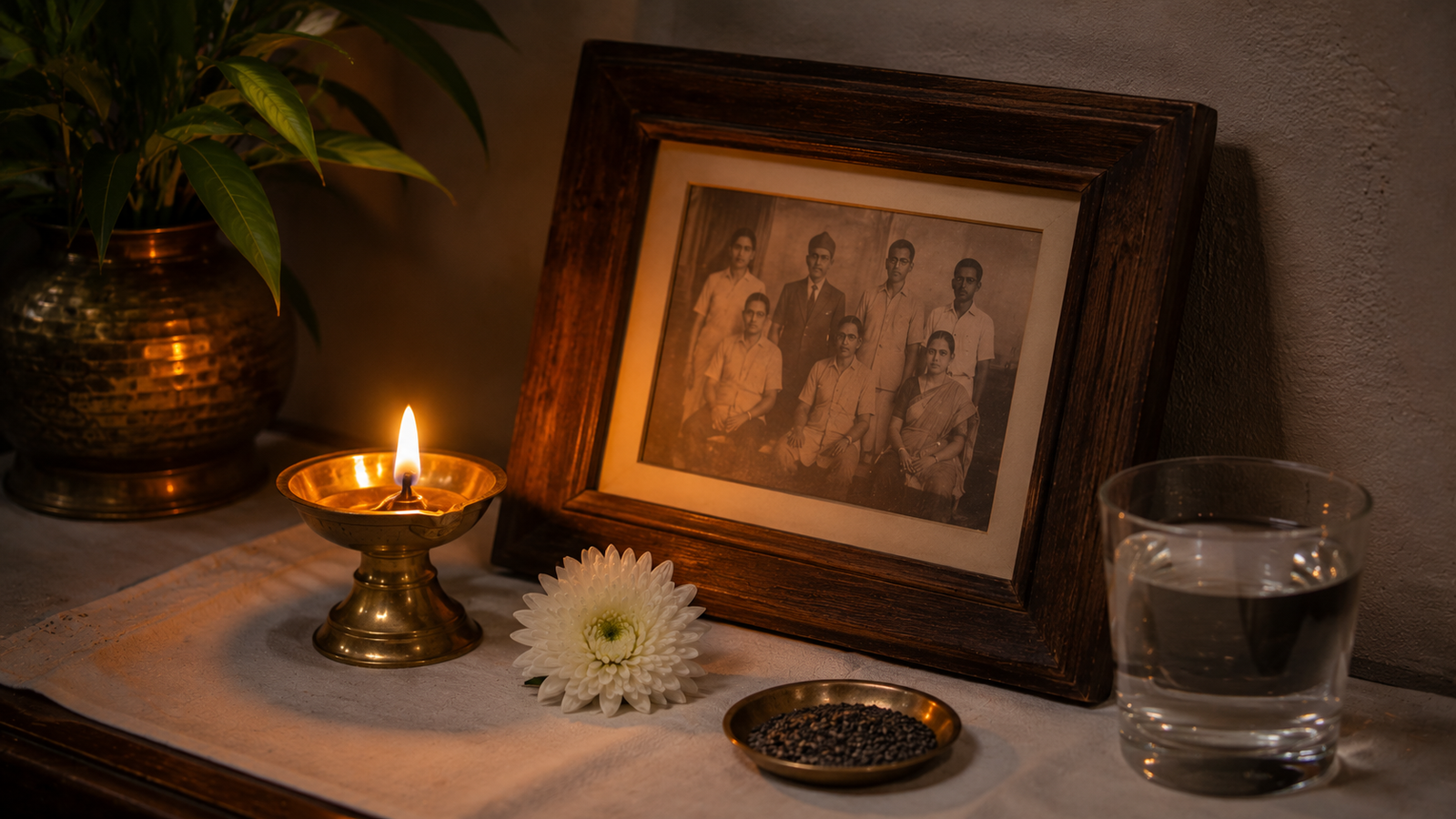
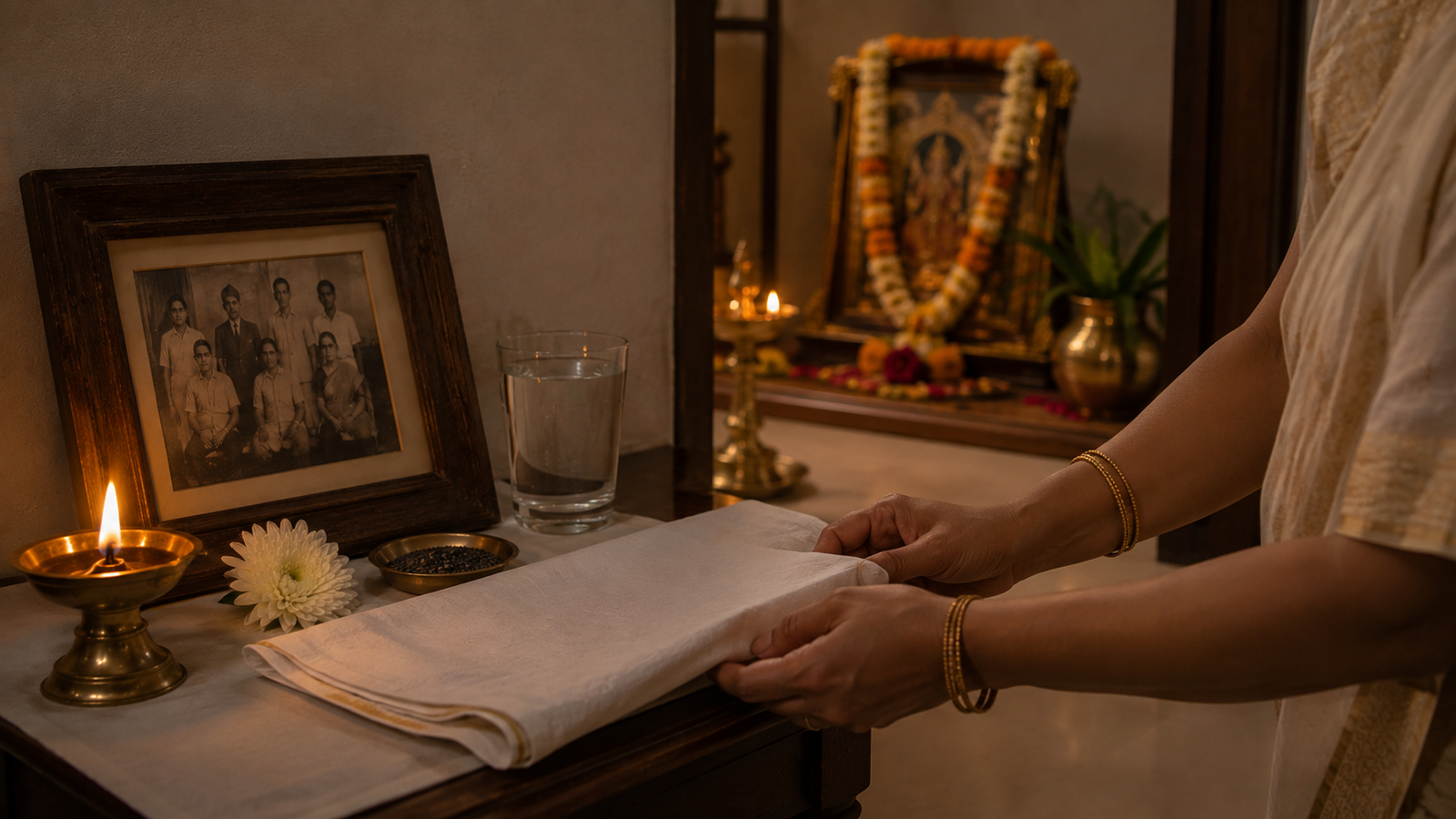
- What to place there: a photograph or simple framed image of the ancestor(s) being honored — placed respectfully on a clean cloth or small platform, never on the bare floor. Beside it: a small diya, a fresh flower, and a glass of water changed daily.
- Fresh flowers and a daily diya throughout the fortnight, tended each morning — not an elaborate display, but a living daily act of remembrance.
- Keep it separate from the main pooja space — ancestors are honored in their own zone; the deities occupy the North-East as always (Pooja Room guide).
- This corner is not a place of grief-dwelling — it is a place of gratitude. The distinction, in feeling, is everything.
Daily Tarpan: The Morning Practice
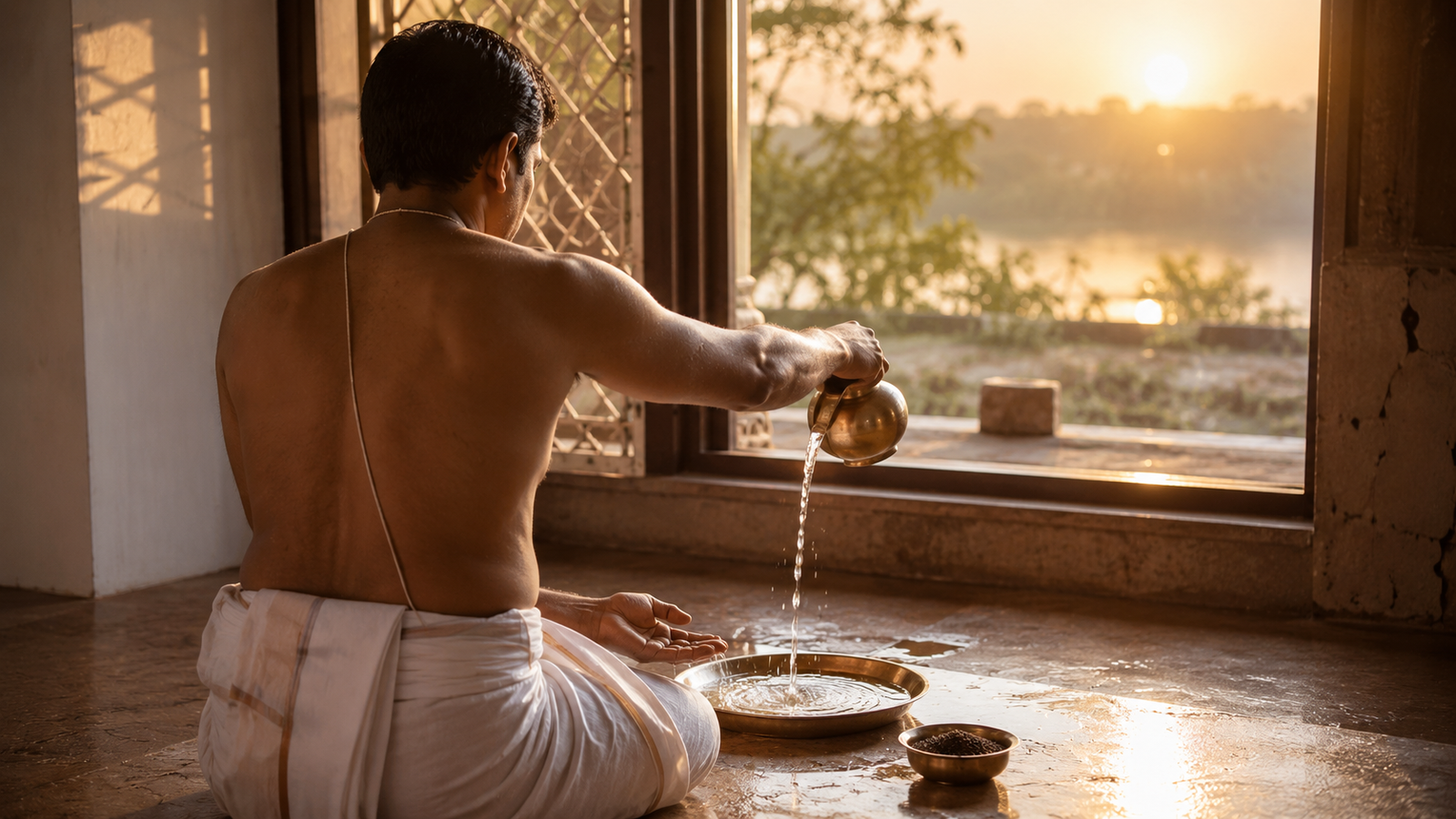
Every day during Pitru Paksha, after taking a bath in the morning, one can offer jal (water) and til (sesame seeds) while remembering the names of ancestors — this is Tarpan.
The home version, done sincerely:
- After morning bathing, at sunrise or shortly after.
- A small brass vessel (lota) of clean water, a pinch of sesame seeds (til), a small amount of barley (jau) if available.
- Face South (toward Yama's direction, the traditional direction for Pitru offerings) — this is the exception to the usual South-avoidance principle.
- Pour the water slowly through the fingers (not from the vessel directly) while mentally or verbally calling the ancestor by name and relationship — "I offer this to my grandfather [name], my father's father." Three pourings per ancestor, three generations.
- A moment of stillness and genuine remembrance after.
Shradh or Pind Daan is performed on the same tithi (lunar date) on which the ancestor passed away. If you know this date in the Hindu calendar, perform the full Shradh on that tithi. If you don't know the tithi — many modern families don't — Sarva Pitri Amavasya (Mahalaya Amavasya, October 10) is the day when Shradh can be performed for any ancestor, including those whose exact death tithi is unknown.
The Shradh: What Happens in the Home
The full Shradh vidhi traditionally involves a family pandit, Pind Daan, and feeding Brahmins. If this is not possible for your family, the home version has been considered valid across centuries of the tradition:
Prepare fresh food on the ancestor's tithi — ideally a meal they loved in life, cooked sattvically without meat, onion, or garlic. In Maharashtra, Puran Poli is cooked and a share is set out for crows, cows and dogs before Brahmins are fed.
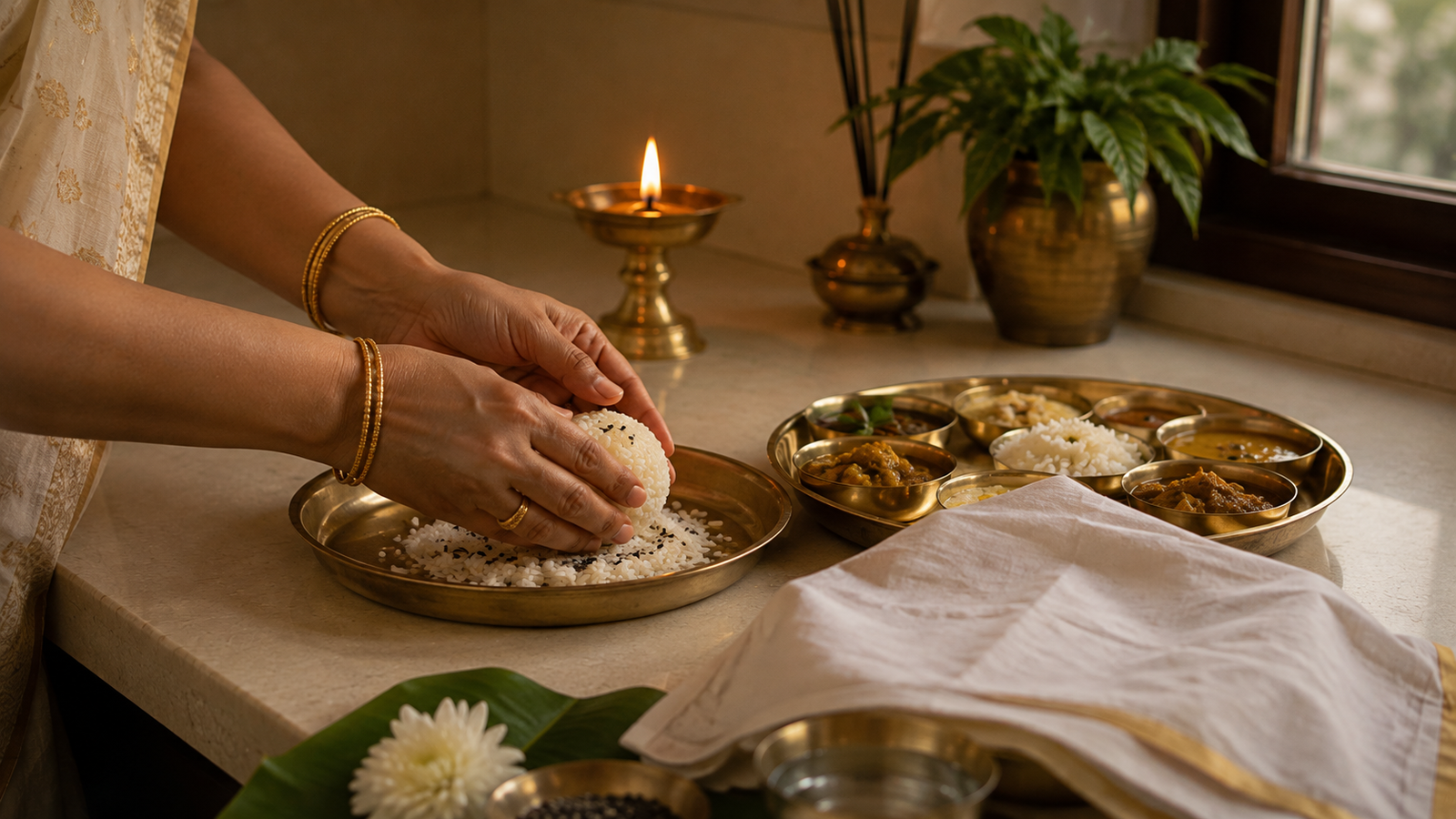
- The Kagwal (crow offering) is one of the most beautiful Pitru Paksha traditions: crows are considered messengers to Pitru Loka, and a ball of cooked rice (or a portion of the meal) placed outside for crows is among the most widely observed home practices. When a crow accepts the offering, the tradition reads it as a sign that the ancestors have received it.
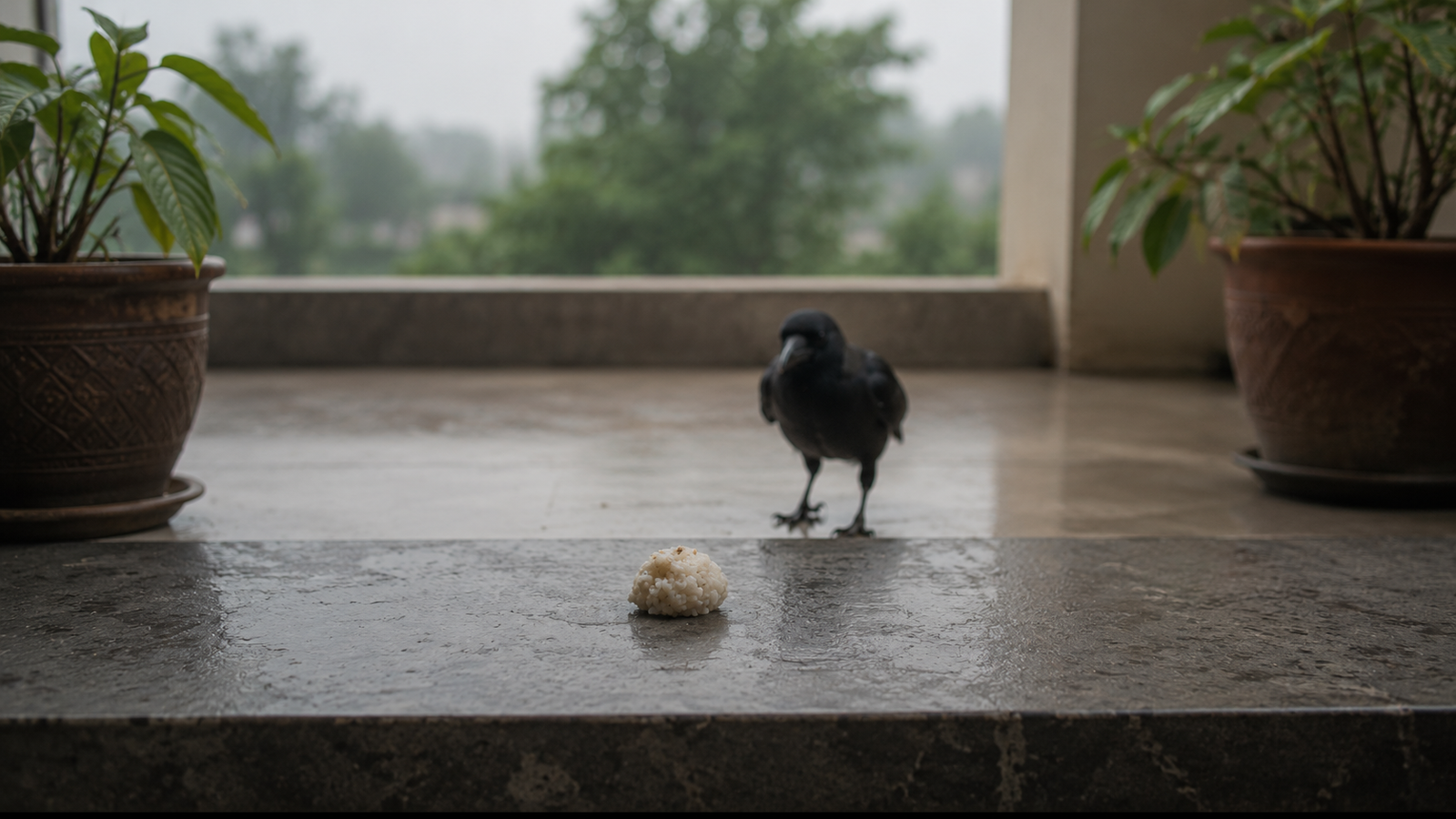
- Cow and dog feeding: along with crows, offerings to cows and dogs are traditional on Shradh days — the three animals considered particularly connected to the ancestral realm in this fortnight.
- Feeding others: whatever form it takes — Brahmin feeding, anna daan at a temple, food donated to the poor — the principle is that nourishment offered to others in the ancestor's name reaches them. This Amavasya is considered the most meritorious day for donating food, clothes, and essentials to the needy in memory of ancestors.
Mahalaya Amavasya: October 10, 2026
Mahalaya Amavasya is one of the most spiritually potent days in the Hindu calendar — on this day, the cosmic veil between the living and ancestral realms is believed to be thin, making prayers, Shradh, Tarpan, and charitable deeds profoundly impactful.
The most important day of Pitru Paksha — when ALL ancestors collectively are honored, including those whose tithi of death is unknown, those who died unnaturally, and forgotten ancestors.
In Bengal, Mahalaya carries a cultural weight beyond ritual: it is celebrated by listening to the Mahishasura Mardini broadcast at dawn, signaling the start of the festive season. In Karnataka, the same tithi is observed as Mattu Amavasya. Across Maharashtra and the rest of India, Mahalaya Amavasya is the day families who haven't yet performed Shradh complete it — and also the day the ancestors are believed to return to Pitru Loka, the fortnight of their visit complete.
Mahalaya Amavasya falls on Saturday, October 10, begins at 9:53 PM on Friday October 9, and ends at 9:34 PM on Saturday October 10 — so the full morning and afternoon of Saturday, October 10 are within the Amavasya tithi and are the primary window for Shradh and Tarpan.
Since October 10 is also Shani Amavasya (Saturday + Amavasya), performing Pitru Tarpan for all ancestors together on this day is especially meritorious.
The Home After Pitru Paksha: The Transition to Navratri
Mahalaya Amavasya closes Pitru Paksha and immediately opens Devi Paksha — the nine-day Navratri begins the very next morning. The transition is one of the most cosmologically precise moments in the Hindu calendar: ancestors honored and released, the Goddess then invoked for the world's protection.
For the home, this transition has a practical rhythm:
- On the evening of October 10: the ancestor corner can be gently closed — the photograph placed respectfully in the family's memory space (not discarded), the diya extinguished with thanks, the space cleaned.
- The North-East corner — which has been quiet through the fortnight — now comes forward for the Navratri altar (Navratri guide).
- A salt-water mop of the whole home (Negative Energy guide) between the two observances is a beautiful reset — closing one fortnight's energy and opening the next.
What Vastu Says About Grief in the Home
This may be Pitru Paksha's most important Vastu lesson, and the one almost never written about.
When a family member dies and grief enters a home, the home often absorbs it — sometimes for years. Rooms that feel heavy. A parent's chair nobody sits in. A shelf of belongings nobody moves and nobody discusses. Clothes still hanging in a wardrobe two years after.
Vastu's approach to this is gentler than most people expect. It does not say "throw everything away" — it says: every object in the home should be there with intention, not by default. A kept photo is an act of love. A preserved object chosen because it carries the person's essence is entirely right. Objects kept purely because nobody has yet had the conversation about them — these are where homes begin to carry grief as weight rather than as memory.
Pitru Paksha offers a natural annual moment to revisit this gently:
- Light the diya for the ancestor each morning of the fortnight.
- Sit with their photograph for five minutes one morning — not to grieve again but to remember with completeness.
- Ask whether there is one object whose presence in the home is now about avoidance rather than love — and consider, gently and without pressure, whether it's time.
The tradition of Shradh is, at its deepest, about this: giving the departed their proper place — honored, remembered, prayed for, and then allowed to rest — so the living can live fully in the home they share.
Common Pitru Paksha Mistakes
- Treating the fortnight with superstitious fear rather than loving duty
- Skipping daily Tarpan because it feels "too formal" — the home version is simple and entirely valid
- Not knowing the ancestor's tithi and then skipping Shradh altogether — Mahalaya Amavasya (Oct 10) exists precisely for this
- Performing Shradh but not the Kagwal (crow) offering — the small rice ball outside is the fortnight's most tangible daily practice
- Neglecting the home's cleanliness on Shradh day while elaborate ritual is performed
- Beginning auspicious new ventures during these sixteen days
- Rushing the transition to Navratri without closing the ancestor space with care
📐 Know Your Home's South Zone Before the Fortnight Begins
Pitru Paksha is the one fortnight of the year where the South of your home takes active precedence — and many families aren't sure exactly where their South zone falls.
We built a free tool where you can upload your floor plan and instantly see it mapped according to proper Vastu directions — so you know exactly where to face for Tarpan, where to place the ancestor corner, and where the South of your specific home truly sits.
👉 Upload your floor plan and map your home's directions in 30 seconds
Just a photo or scan (PNG, JPG, JPEG). The ancestors deserve to be remembered in the right direction.
Final Thoughts
Every other guide on this blog is about making a home ready for life — for wealth, for family, for festivals, for new beginnings.
This is the guide about making it ready for memory.
Pitru Paksha asks us to acknowledge, once a year, that we did not arrive here alone. That the home we inhabit stands on the foundation of choices and sacrifices made by people whose names we may not even know. That the correct response to that fact is not guilt or fear, but a glass of water, a handful of sesame seeds, a meal set out for a crow, and fifteen minutes of genuine remembrance.
Honor them honestly. Offer what you can. Let the fortnight do what it has always done:
Remind the living why the home they keep is worth keeping well.
Om Pitru Devaya Namah. 🙏