
You've spent twenty minutes on a gift website, narrowed it down to two options, and then a voice in your head (suspiciously resembling your mother) says: "Don't give a clock. It's inauspicious."
You close the tab. You open it again. You wonder whether this is wisdom or superstition.
This article is for that moment.
The tradition's guidance on gifting is one of the most consistently transmitted pieces of Indian folk wisdom — passed from generation to generation with conviction but rarely with explanation. The clock prohibition is the most famous, but the list is longer and the reasoning behind it is more interesting than "bad luck."
Here's the honest guide: what the tradition says, why it says it, which prohibitions are worth taking seriously, which are regional folklore rather than universal principle, and — for the genuinely curious — what to give instead that is both beautiful and deeply aligned.
Why Gifts Carry Energy (And Why That Matters)
The foundational principle, which we explored more fully in the borrowed objects guide: objects carry the energy of their relationship context. A gift is not just an object; it is the concentrated expression of a relationship at the moment of giving.
This means two things for gifting:
First, the spirit of the gift — the genuine warmth, or obligation, or anxiety with which it is chosen and given — is carried in the object. A gift chosen with love lands differently, in ways both people feel, than a gift chosen to fulfill a social obligation.
Second, certain categories of objects carry inherent associations — their function in the world — that the tradition weighs before recommending them as gifts. A clock governs time. Scissors cut. Shoes go to the floor. These functional associations are what the tradition is navigating, not an arbitrary list of superstitions.
With that foundation: the list.
The Gifts the Tradition Cautions Against
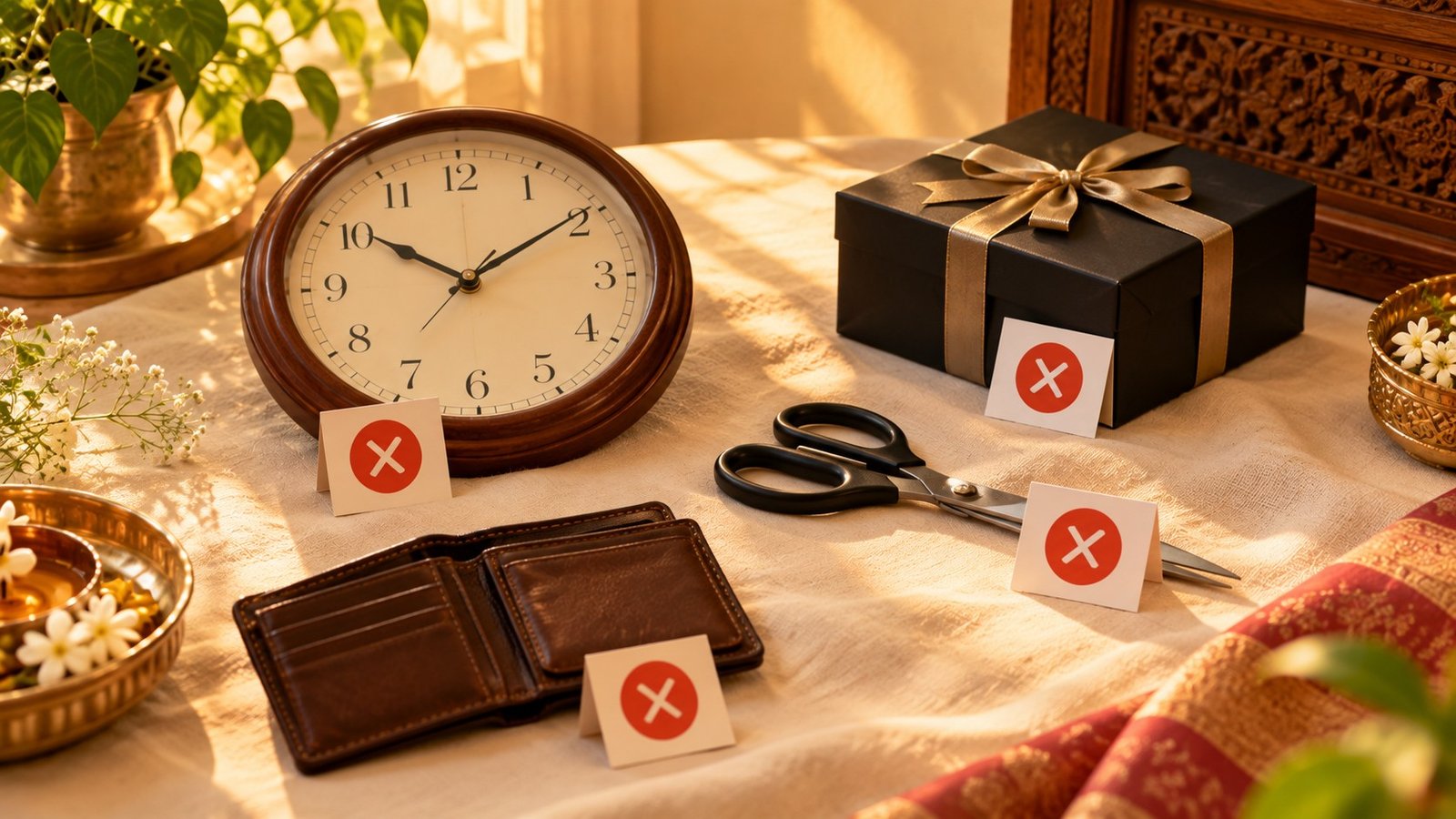
1. Clocks and Watches
The most universally known prohibition — and the one with the most consistent cross-cultural parallel (Chinese gift-giving tradition has the same caution, independently arrived at).
The reasoning: a clock given as a gift symbolically imposes your time on the recipient's life — your pace, your relationship with time, your energy around it. In Chinese, the phrase for "giving a clock" sounds like "attending a funeral." In Indian tradition, the concern is less dramatic but similarly directional: a clock given to a couple or household is another household's time governing theirs.
The honest nuance: the prohibition is strongest for significant life-event gifts — wedding gifts, housewarming gifts, and milestone birthdays. A casual watch given to a friend who mentioned needing one is not a crisis. Context and intention matter; the tradition understood this.
What to give instead: a beautiful brass urli for the entrance, a set of brass lamps, a carefully chosen piece of art — all things that enhance the home's energy rather than govern its time.
2. Scissors, Knives & Sharp Objects
Sharp objects — the most commonly cautioned category after clocks — carry the energy of cutting and severance. Given to a couple, to a new family in a new home, or at any celebratory occasion, the tradition reads them as potentially severing what should be growing.
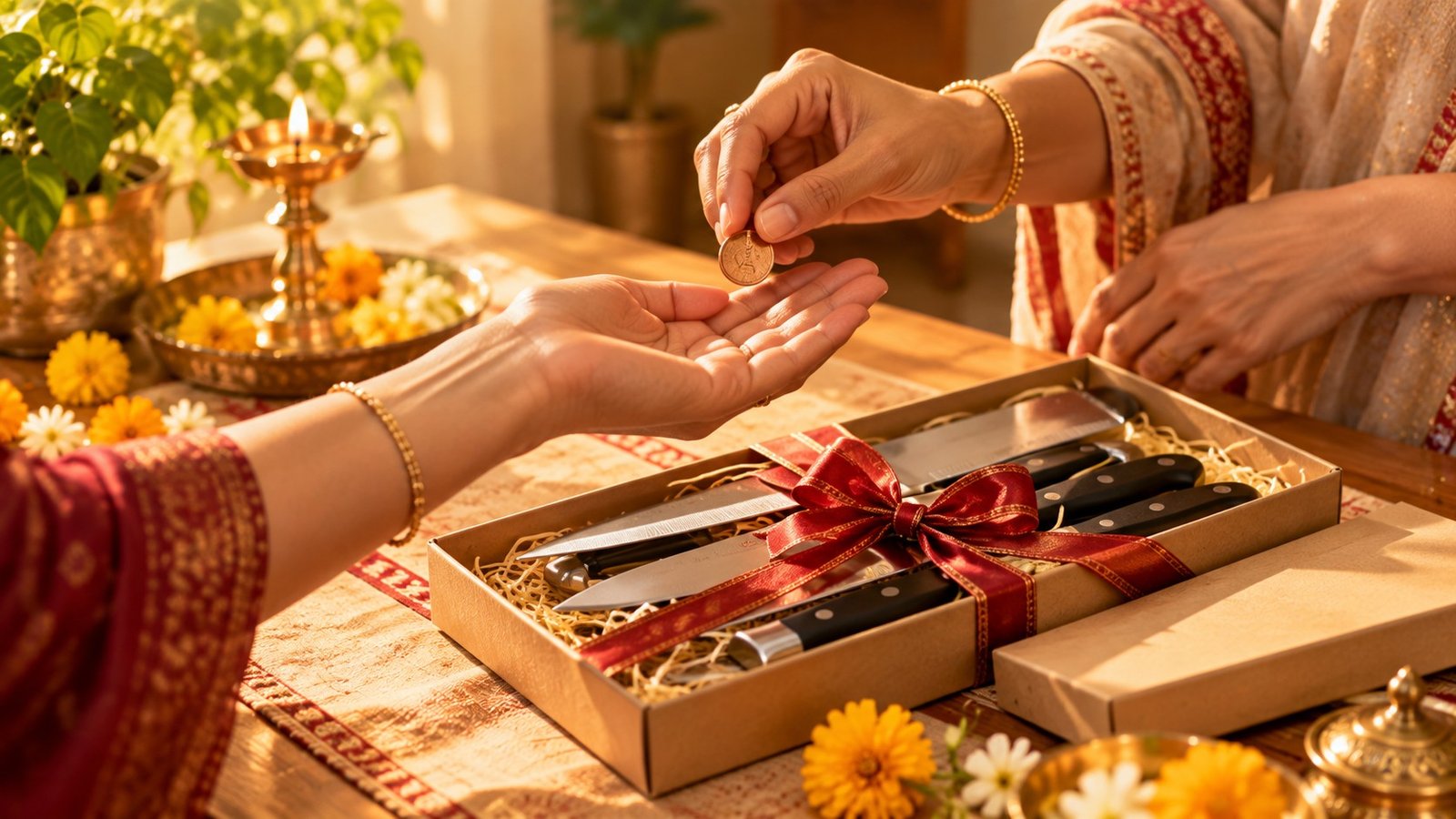
This one has a well-known folk remedy: if someone must give scissors or a knife (a very good kitchen knife set is a practical housewarming gift, after all), the recipient gives a small coin in return — symbolically "buying" the sharp object rather than receiving it as a gift, converting the exchange from gift to purchase and neutralizing the cutting association.
The coin remedy: this is one of the tradition's most elegant practical solutions. If you receive sharp objects as a gift, or if you want to give them, a single coin exchanged at the moment of gifting transforms the energetic relationship of the transaction.
3. Shoes and Footwear
Shoes carry the energy of the ground — they are the objects most associated with the lowest, most earthly energy. As a gift, they carry an implicit placing-beneath symbolism that the tradition finds inauspicious for relationships.
There's also a practical social layer: shoes are deeply personal (size, comfort, style), and an unwanted pair of shoes is one of the most common sources of gift-receiver discomfort across cultures.
The honest nuance: gifting shoes to a parent from a child, or slippers for an elder's home comfort, carries a different symbolic register than gifting shoes to a peer or superior. The tradition's caution is primarily about equal-relationship and celebratory contexts.
What to give instead: a beautiful pair of brass padukas (traditional home slippers in brass) as a symbolic, decorative gift carries none of the concern and all of the warmth.
4. Handkerchiefs
Specifically cautioned in several regional traditions as standalone gifts — a handkerchief is associated with tears and sorrow, and giving one is read as wishing grief on the recipient.
As part of a larger gift set (a beautiful trousseau kit, a wellness hamper) they are entirely fine. As a standalone gift, particularly at weddings and celebratory occasions: choose something else.
5. Black Clothing
Black as a gift color is regionally variable — in some communities entirely acceptable, in others particularly cautioned at auspicious occasions like weddings and housewarmings. The tradition generally associates black with absorption of energy (which is why it's used in protective contexts) rather than the celebratory radiance a gift is meant to express.
The honest nuance: this is the most culturally variable item on the list. For a wedding gift, lean toward warmer colors. For a birthday gift to someone who loves black — give them what they love. The intention is the primary carrier.
6. Empty Wallets or Purses
A wallet or purse given as a gift should always contain something — even a single coin or a small note. An empty wallet gifted is considered inauspicious: you are giving the recipient a home for abundance with nothing inside it to begin the abundance.
This is one of the easiest prohibitions to honor: put something in. It takes five seconds and costs almost nothing.
The Gifts the Tradition Actively Encourages
1. Brass and Copper Objects
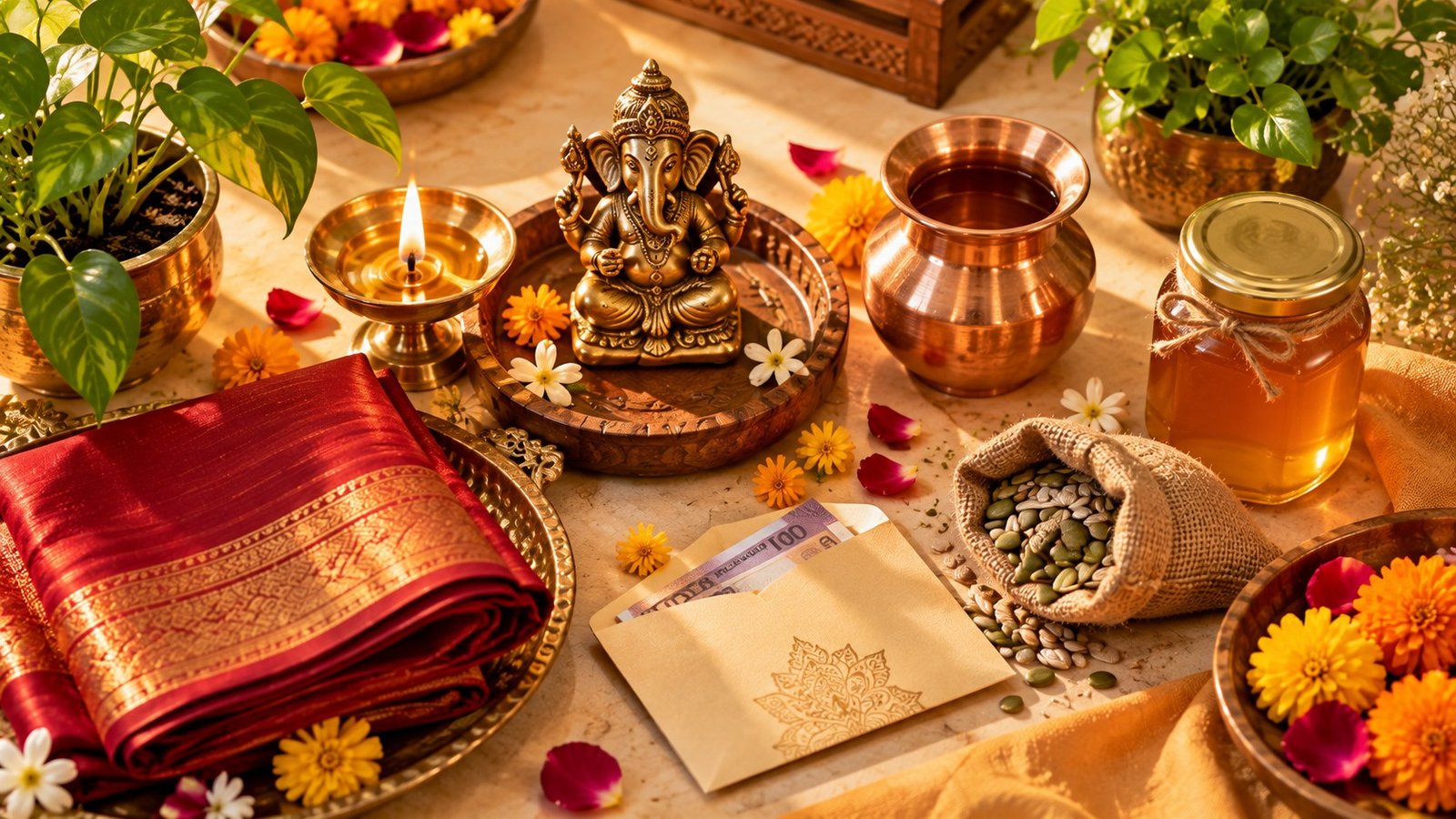
Brass and copper are Vastu's most consistently valued materials — sattvic (pure, life-giving), associated with prosperity and health, and genuinely beautiful. A brass diya, a copper water vessel (the traditional lota), a brass Ganesha or Lakshmi, an engraved brass thali — these are gifts the tradition considers genuinely auspicious in almost any context.
A well-chosen brass piece is also likely to be used, displayed, and kept — the practical immortality of a good gift.
2. Plants and Seeds
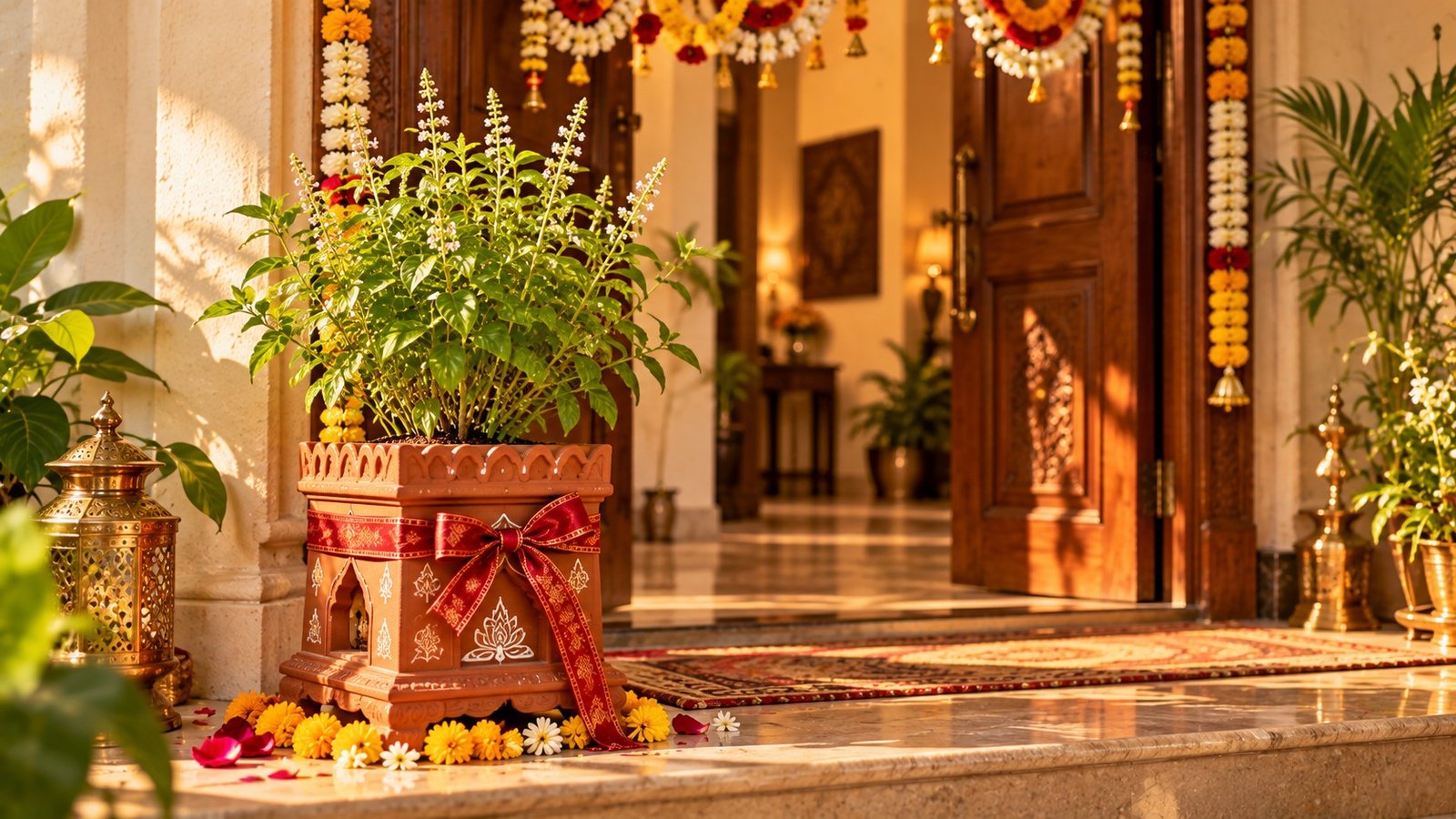
A healthy, growing plant is perhaps the most Vastu-aligned gift possible — it is literal life, growth, and the ongoing relationship of care. A Tulsi plant for a new home, a money plant for a new office, a carefully chosen indoor plant for a housewarming — all carry the tradition's blessing and the very practical advantage of becoming more beautiful over time rather than less.
Seeds — of any herb, plant, or tree — as a gift carry the energy of potential: everything that plant will become, given to the recipient as possibility. A small packet of herb seeds for a new home is one of the most genuinely aligned and genuinely thoughtful gifts possible. (Full plant guide.)
3. Honey, Ghee, and Sweet Things
Food gifts of sweet, nourishing, sattvic foods — honey, ghee, jaggery, pure sugar — carry abundance energy directly. They are used, enjoyed, and shared; they nourish the household; and the tradition associates sweetness with prosperity in the most literal way. A beautiful glass jar of high-quality honey is one of the most aligned housewarming gifts you can give.
4. Books
Knowledge and wisdom, as we noted in the borrowed objects guide, are encouraged to move from home to home. A chosen book — genuinely selected for the recipient, not a remainder-shelf impulse buy — carries the giver's thought and care most legibly of all gifts. The tradition has always honored the movement of wisdom.
5. A Diya or Lamp
Fire is Vastu's most energetically activating element — a gift of a beautiful diya, oil lamp, or brass lamp is a gift of warmth, light, and the daily ritual of tending a flame. For a housewarming especially, a well-chosen lamp is the gift the tradition would most enthusiastically design: it activates, it warms, it makes a home feel inhabited and honored.
6. Water Vessels: The Copper Lota
A copper or brass water vessel — the traditional lota or a modern equivalent — is one of the most thoughtful and aligned housewarming gifts possible. It is used daily, carries genuine health properties (the Ayurvedic practice of storing water in copper), and honors the water element in the new home. Beautiful engraved copper vessels are widely available and genuinely lovely.
7. A Red Cloth or Fabric
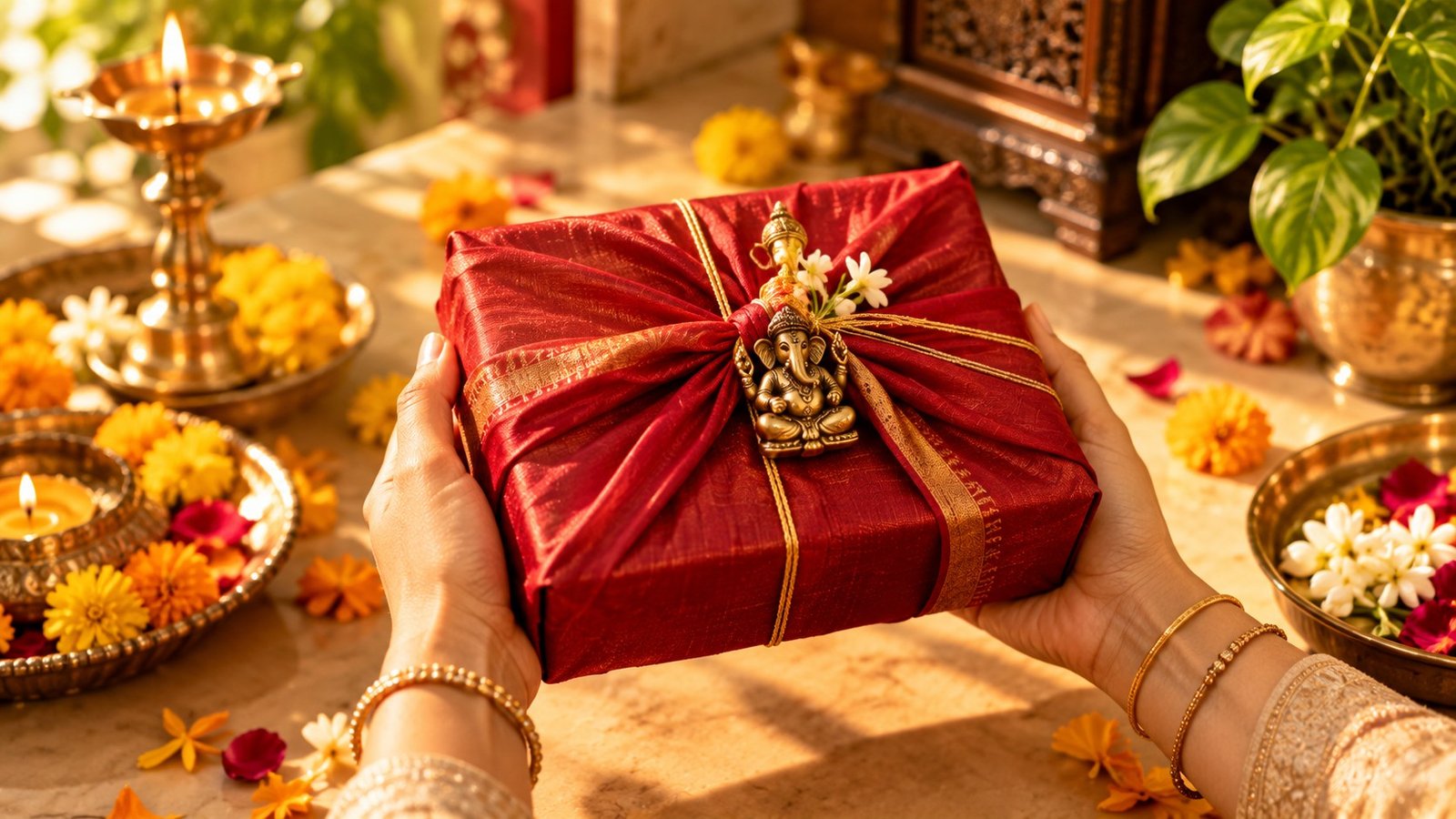
Red fabric — particularly silk — is considered among the most auspicious gifting materials in Indian tradition, associated with Lakshmi, prosperity, and celebration. Wrapping any gift in red or silk immediately elevates its energy in the tradition's reading. And a length of beautiful red silk fabric as a standalone gift, particularly for a new bride or a Griha Pravesh, carries its own deep auspiciousness.
8. Cash: The Most Practical Alignment
When in doubt, the tradition is entirely supportive of gifting money — particularly in envelopes at auspicious occasions. Cash is unencumbered, chose by the recipient, and carries the giver's warmth without the giver's energy imposed through an object. The only guidance: give an odd amount ending in one (₹101, ₹501, ₹1001, ₹5001) — the "1" representing the auspicious beginning and the completeness of the gift. Never round numbers alone.
The Housewarming Gift: A Special Category

The Griha Pravesh gift deserves its own note — it is the tradition's most symbolically significant gifting occasion, because you are contributing to the energy of a home that is being established.
The ideal Griha Pravesh gift: something that activates the home rather than decorates it. A brass lamp. A copper water vessel. A Ganesha for the entrance. A healthy Tulsi plant. A beautiful set of diyas. A jar of honey and a length of red silk. These are the gifts that the tradition most consistently recommends for a new home — each one functional, each one energetically active, each one beginning to do its work the moment it enters the space.
What to avoid at Griha Pravesh specifically: clocks (don't impose your time on a new beginning), empty containers (nothing that begins the home empty), and heavily decorative objects with no function (the new home needs activation, not ornamentation).
The Diwali Gift: Festival Gifting Done Right
With Diwali approaching — and with the Indian corporate gifting industry sending millions of boxes in every direction — a brief Vastu filter for the season:
Best Diwali gifts (Vastu-aligned): dry fruits and sweets (nourishment and sweetness for the new year), a beautiful brass diya set, a copper or silver coin (the Dhanteras gold/silver tradition extended), home fragrance items (agarbatti, camphor, natural incense — purifying and activating), and honey.
Common Diwali gifts to reconsider: synthetic candle collections in plastic packaging (not sattvic), heavily synthetic fragrance items, purely decorative objects with no function, and anything in black packaging at an abundance festival.
The corporate gifting note: when buying in bulk, the brass item, the dry fruit box, and the quality sweet tin are the tradition's choices — they are used, shared, nourishing, and carry no awkward associations. The branded merchandise in polyester bags is aesthetically neutral and energetically inert — fine, but not meaningful.
The Gift You've Already Given That Was Inauspicious
A gentle reassurance: the tradition is not punitive. If you gave a clock last Diwali, or scissors as a wedding gift, or an empty wallet — the concern is not a curse, it is a directional note. For the clock already given: the coin remedy applies retroactively (slip a coin in next time you see the recipient). For the scissors: the relationship is fine; choose differently next time. The tradition's guidance on gifting is about care and intentionality in the future, not anxiety about the past.
📐 Moving Into a New Home? Map It Before You Gift It
The best housewarming gift for someone who loves Vastu? A mapped floor plan showing them exactly where their sacred corner should be, where the wealth zone sits, and where their new home's energy is strongest.
We built a free tool where you can upload a floor plan and instantly see it mapped according to proper Vastu directions — a genuinely useful, genuinely unique gift for any family setting up a new home.
👉 Upload a floor plan and gift them their home's Vastu map in 30 seconds
Just a photo or scan (PNG, JPG, JPEG). The most thoughtful housewarming gift you've never thought of before.
Final Thoughts
The tradition's gifting guidance is, at its heart, a practice of conscious giving — of pausing before purchase to ask not just "will they like this?" but "what am I actually sending into their life?"
A clock imposes your time. Scissors risk severing. An empty wallet begins nothing. A plant grows. A lamp lights. A copper vessel nourishes daily. Honey sweetens the new year.
These are small distinctions. But gifting is one of the places where small distinctions — chosen with intention rather than convenience — accumulate into relationships that feel genuinely cared for.
Choose with that care. Wrap it in red if you can. And if you're genuinely stuck: ₹501 in an envelope, given with warmth, is never wrong. 🎁🙏