

Here is a Vastu question that has confused more home-builders than any other:
"You said the North-East is the water zone — so why did the consultant put our overhead tank in the South-West?"
Because both placements are correct — and the distinction between them is the single most misunderstood rule in practical Vastu. Water below lives in the North-East. Weight above lives in the South-West. An underground sump in the Ishanya corner is among the most auspicious features a plot can have; an overhead tank perched on that same corner is a genuine defect. Same element, opposite answers — because one rule is about water, and the other is about mass.
This guide untangles the whole subject, source to drain: underground tanks and borewells, overhead tanks, the septic distinction (waste water plays by different rules entirely), the kitchen's drinking-water corner, RO units, aquariums, fountains, pools, drainage slopes — and the leak doctrine that runs through all of it.
Water is Jal — one of the five elements, the carrier of flow, wealth, and clarity in the tradition's language. Few things reward correct placement more. Few things punish careless plumbing longer.
The Master Rule: Water Below vs. Weight Above
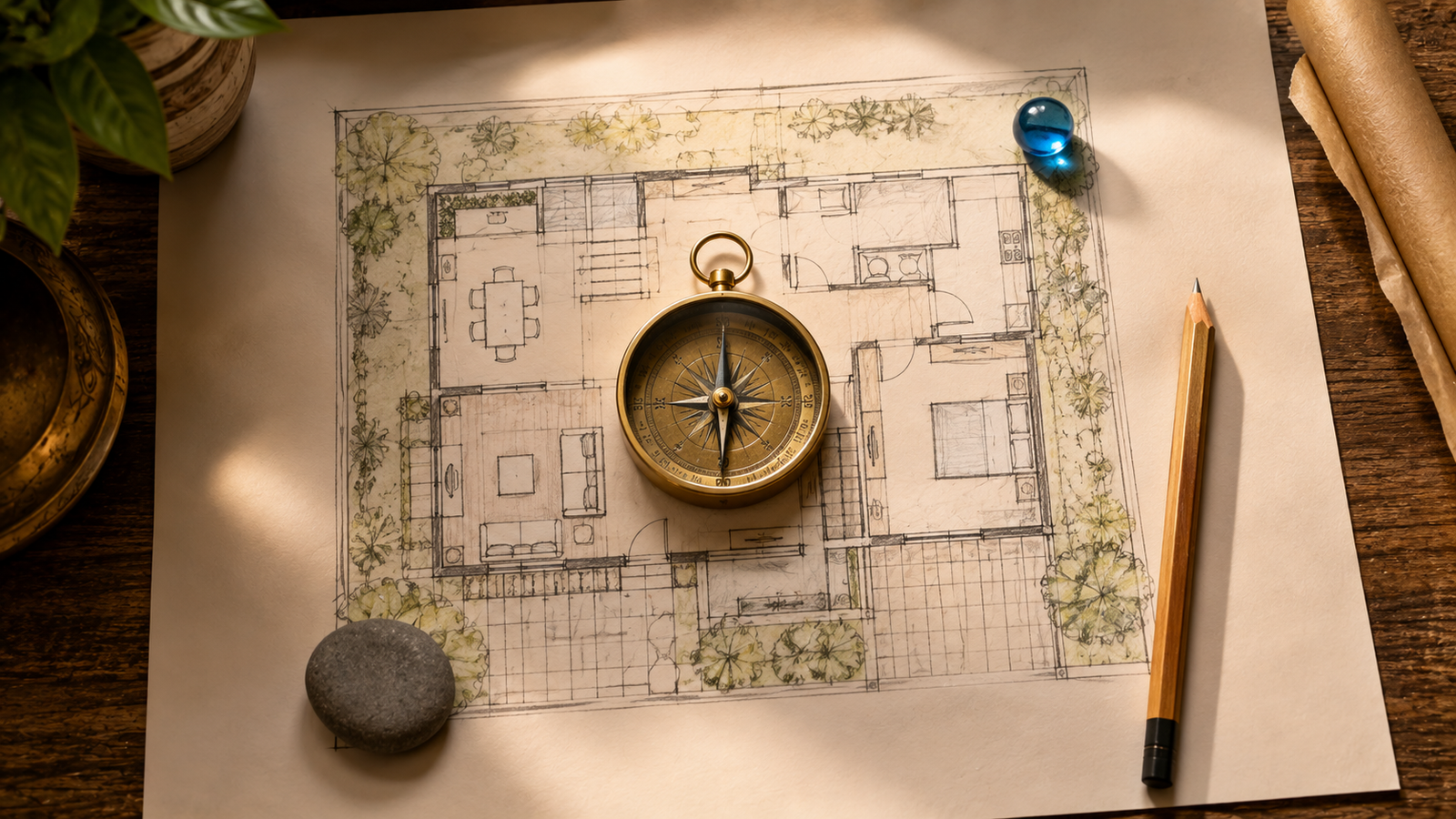
Fix this distinction once and every water decision becomes easy:
- Water stored at or below ground level — sumps, underground tanks, borewells, wells — belongs in the North, North-East, or East. Deep water in the light zones is the classical ideal; traditional homes dug their wells in the Ishanya corner for millennia.
- Water stored overhead — the rooftop tank — is first and foremost weight, and weight belongs in the South-West or West. An overhead tank there actually strengthens the heavy quadrant (mass on top of the anchor zone is a feature, not a bug).
- The two cardinal errors, therefore: an underground sump dug in the South-West (a pit in the zone that must stay heavy and whole), and an overhead tank mounted over the North-East (a crushing load on the zone that must stay light). Both are common. Both are exactly backwards.
Underground Tanks, Sumps & Borewells
- Best zones: North-East first, then North, then East. If the plot's Ishanya corner can hold the sump or borewell, that is the classical jackpot.
- Keep the NE water clean water: this zone is for storage and source — never for waste. And keep the area above the sump uncluttered and light; a junk pile over the auspicious water undoes half the benefit.
- Borewell note: never in the South-West or the Brahmasthan (a deep shaft through the home's center is a serious defect at the drawing stage — flag it before drilling, not after).
- Wells (for those blessed with them): North-East, maintained, covered safely, and honored — the traditional well was the home's most respected utility for a reason.
The Overhead Tank
- Best zones: South-West (ideal) or West; South acceptable.
- Never over the North-East — and also not directly over the pooja room, the kitchen, or the master bed if the structure allows a choice.
- Maintenance is the ritual: a cracked, leaking, permanently open, or algae-lined overhead tank drips its problems through the whole home — literally and in the tradition's reading. Clean it on schedule, fix the ball-valve, keep the lid closed. (Your terrace inspection from our Sankranti reset covers this annually.)
- Color note: tanks in dark colors absorb heat; light-colored tanks in the heavy zones keep both the water and the reading of the zone cooler. Where society rules allow, choose light.
The Septic Distinction: Waste Water Is Not Water
Here the tradition is emphatic, and confusion is costly: the septic tank is not a "water feature." It is waste, and it follows waste rules:
- Acceptable zones: North-West or West of the plot, per the layout's specifics.
- Never: North-East (this is the gravest version of the NE-contamination defect — worse than the NE toilet, and, like it, effectively non-remediable once built), never the Brahmasthan, never touching the compound's Ishanya corner.
- Keep septic and sump well separated — the tradition demands it symbolically, and every plumbing code on earth demands it literally.
- Drainage runs and waste-water outlets ideally exit the plot toward the North or East in terms of slope (flowing toward the light zones as clean gradient), while the tanks that hold waste sit in the West/North-West. If you're at the drawing stage, this is a ten-minute conversation with the plumbing contractor that families skip and then live with for decades.
The Kitchen's Water Corner: Drinking Water, RO & the Matka
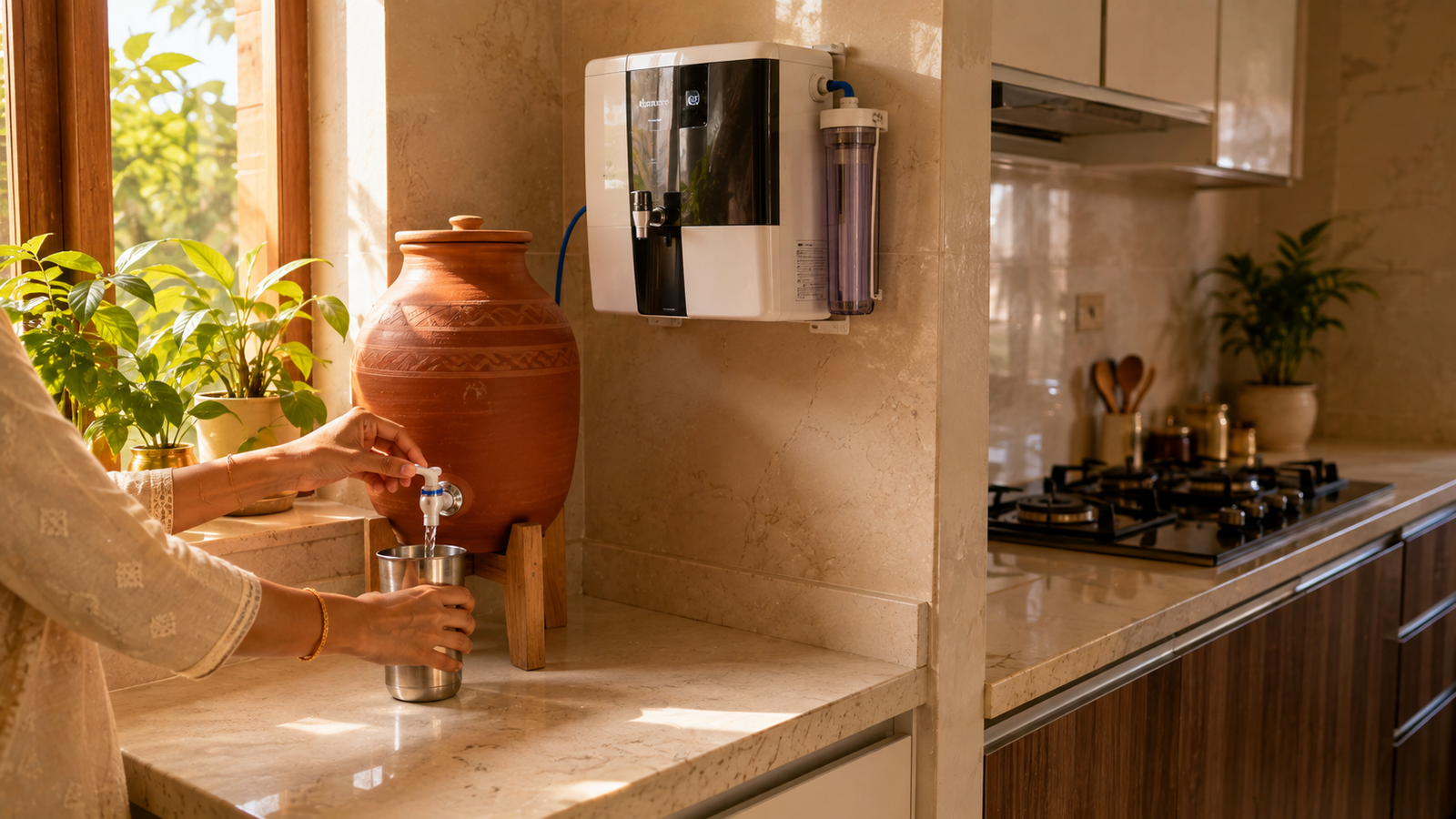
Inside the home, the kitchen holds the most important daily water decisions:
- Drinking water station — the matka, filter, or dispenser — belongs in the North-East of the kitchen. The traditional clay matka in the kitchen's Ishanya corner is the rule in its oldest form; the RO unit is simply its modern descendant and follows the same corner.
- Stove and water stay separated: the sink, the RO, and the water station should not sit flush against or directly opposite the burners — fire and water quarrel when adjacent (the full kitchen map).
- RO maintenance is water hygiene is Vastu: a purifier past its filter date is stale water served daily. Service on schedule; the tradition's clean-water insistence and the appliance manual agree completely.
- The matka's quiet wisdom: families who keep one know — water poured for family and guests from a clean, dedicated, honored vessel carries a different care than a bottle grabbed from the fridge door. That care is the point.
Aquariums: Living Water
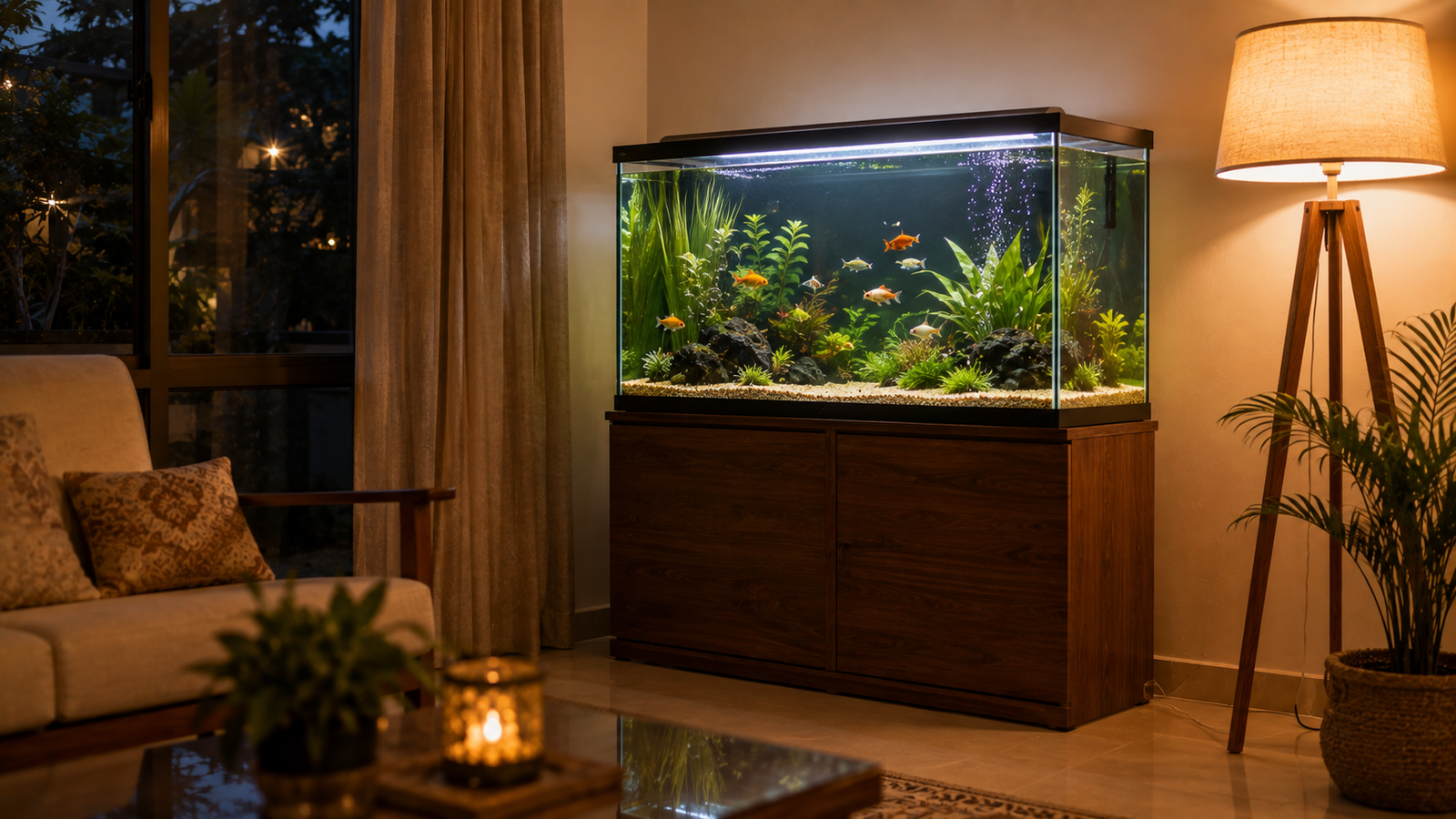
An aquarium is the richest water feature a home can hold — water, life, movement, and light in one object — and the tradition places it accordingly:
- Zones: North (the classical wealth-flow placement), North-East, or East — of the living room. This is social-zone living water.
- Never in the bedroom (movement and light in the rest zone all night) and never in the kitchen (water feature amid Agni).
- The non-negotiable: a thriving aquarium is auspicious; a neglected one — cloudy water, struggling fish, broken filter — is the opposite, and visibly so. The tradition's position mirrors the plant rule exactly: alive and tended beats everything; neglected living things are the worst décor there is. Keep an aquarium only if the family will genuinely keep it — the fish are residents, not remedies.
Fountains, Urlis & Indoor Water Features
- Small indoor fountains: North or North-East of the living room — gently moving water in the flow zones. Keep it running and clean; a dry, dusty fountain is a monument to a good intention (see: dead plants).
- The brass urli — the shallow vessel with fresh water and floating flowers — is the tradition's simplest and perhaps most perfect water feature: North-East corner or entrance console, water changed daily, flowers fresh. Total cost of upkeep: two minutes. It appears throughout our guides for a reason.
- Waterfall pictures and water symbolism: fine on North walls if you love them; never a substitute for actual maintained water, and never images of stormy, turbulent water in rest zones.
- Swimming pools (for the fortunate): North or North-East of the plot, kept clean and maintained — a large water body in the light zones is classical excellence; a green neglected pool is the defect version of the same feature.
The Leak Doctrine
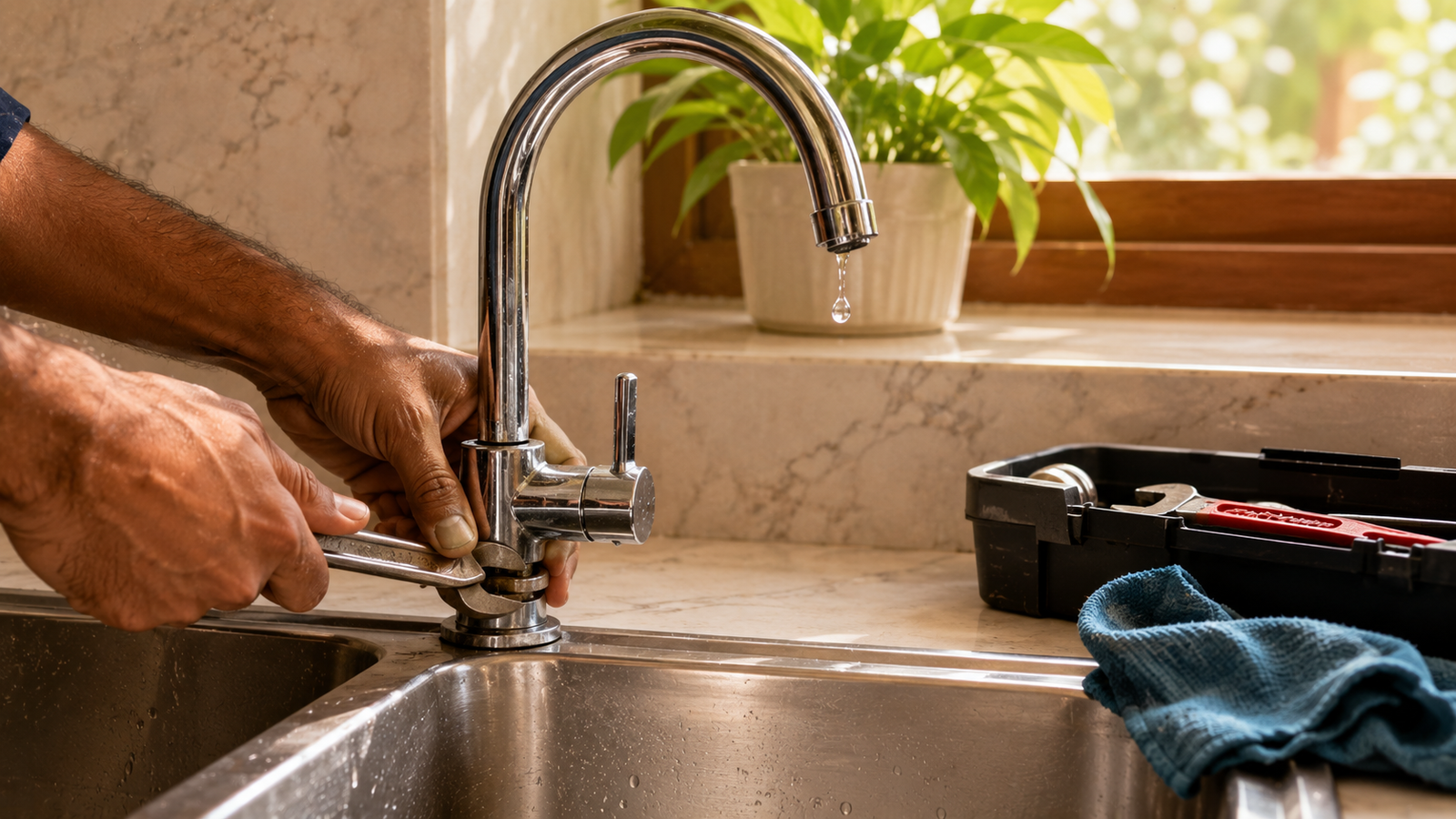
If our blog has one recurring law, it is this, and this article is its home:
A dripping tap is wealth leaking — fix it the day you notice it.
The tradition's metaphor is ancient; the household reality is precise. Leaks waste the element of flow drop by drop, breed dampness (and dampness breeds every problem a home can host), and — most tellingly — announce a household that has stopped noticing. The weekly walk-through: every tap, the flush mechanisms, under-sink joints, the RO's reject line, the overhead tank's overflow. Ten minutes. The single highest-return maintenance habit in all of Vastu (why neglect compounds: our Negative Energy guide).
Rainwater harvesting deserves its honored mention here: directing the sky's water into the earth of your own plot — ideally recharging toward the North/North-East — is the rare practice that classical Vastu, modern sustainability, and municipal law all applaud at once (the eco framework).
Common Water Mistakes
- Overhead tank mounted over the North-East ("that's the water corner, no?") — the master confusion
- Underground sump dug in the South-West
- Septic tank touching the North-East — the gravest, least-fixable version
- Borewell through the Brahmasthan
- RO or matka parked beside the stove
- The neglected aquarium and the dry decorative fountain
- Leaks tolerated for months — the anti-Vastu habit
- Drinking water and waste lines planned by the plumber alone, with no zone map on the table
📐 Plan Your Water Map Before the Pipes Are Laid
Sump, borewell, overhead tank, septic, kitchen water corner — every one of these is a zone decision first and a plumbing decision second, and most are irreversible once built.
We built a free tool where you can upload your floor plan and instantly see it mapped according to proper Vastu directions — so the water conversation with your architect and plumber happens with the zones on the table.
👉 Upload your floor plan and map your water zones in 30 seconds
Just a photo or scan (PNG, JPG, JPEG). Water flows for fifty years exactly where the pipes are laid this month. Lay them knowingly.
Final Thoughts

Water in the tradition is the element of flow — of wealth that moves, clarity that renews, life that continues. Everything in this guide reduces to three verbs:
Source it in the light (the North-East sump, the kitchen's Ishanya corner). Carry its weight in the heavy zones (the South-West tank). And never, ever let it leak.
Get those three right, keep the fish fed and the urli fresh, and the home's water will do what water has always done for the households that respect it: flow, quietly, in your favor.
Fix that tap today. 💧