
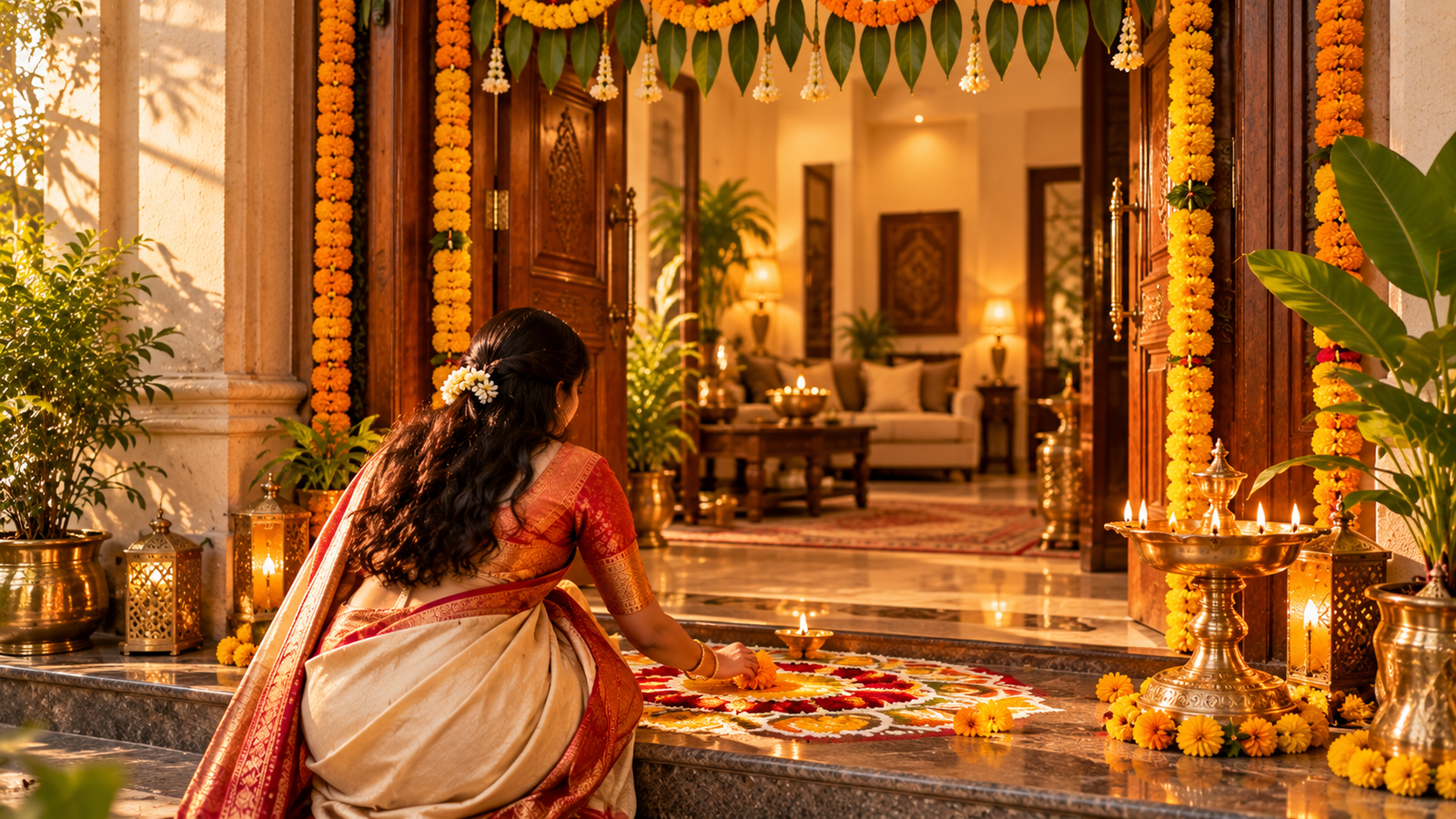
Navratri's nine nights of devotion build to a single morning: Vijayadashami — Tuesday, October 20, 2026.
The tenth day. The day Durga defeated Mahishasura. The day Rama slew Ravana. The day the tradition declares, without ambiguity, that good has won — and that this is the moment to begin whatever you have been waiting to begin.
Dussehra is unique among Indian festivals in that its primary Vastu gift is not a prescribed ritual or a specific direction, but something rarer: an auspicious beginning. The tradition holds Vijayadashami as one of the most powerful days of the entire year to start a new venture, learn a new skill, make a significant purchase, or take a step you have been postponing. The victory energy of the day attaches to whatever is begun under it and carries it forward.
This guide covers the home's role on that day: the Aparajita Puja that gives the festival its deepest Vastu meaning, the Shastra Puja, the home's directional blessing, and how to use the festival's "beginning" energy for your home and your life.
The Date and the Vijay Muhurat
Vijayadashami / Dussehra 2026: Tuesday, October 20.
The Vijay Muhurat — the "victory moment" — falls typically in the midday window and is the tradition's most auspicious time slot of the entire year for new beginnings. Check your local panchang for the exact timing in your city. If there is one day and one time to begin the project, the learning, the business, or the purchase you have been holding: this is it.
The Home on Dussehra: The Three Rituals
1. The Aparajita Puja: The Festival's Deepest Vastu Ritual
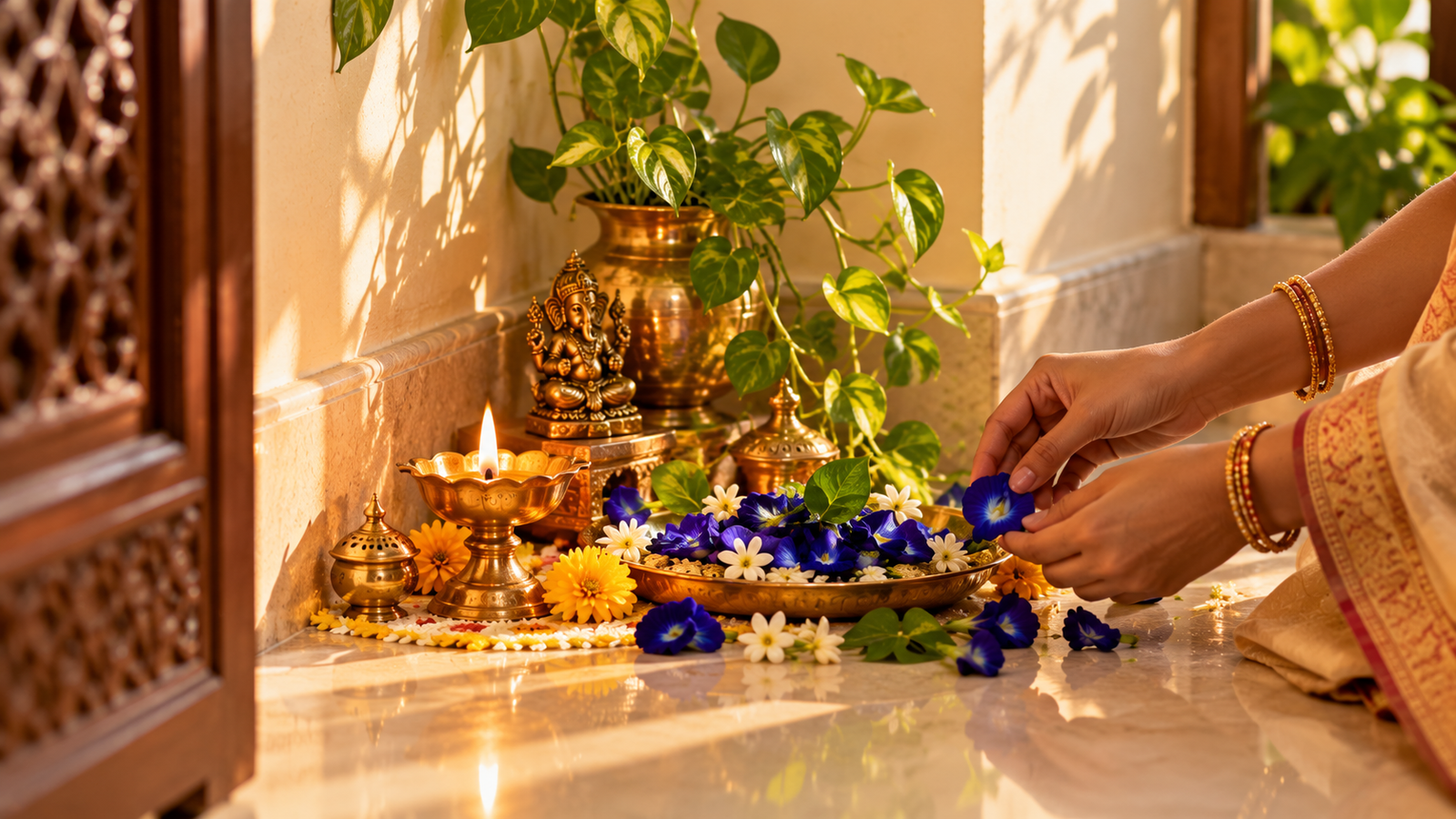
The Aparajita Puja is Dussehra's most specifically Vastu-connected ritual — and the one least often written about outside tradition-observing households.
Aparajita ("the unconquered one") is an aspect of Durga worshipped specifically at the North-East corner of the home on Vijayadashami — a ritual of blessing the home's most sacred zone at the year's victory moment, asking that the home and family remain unconquered by negativity, illness, and misfortune through the year ahead.
The ritual, step by step:
- After the day's main worship, obtain an Aparajita plant (also called Butterfly Pea or Aparajita Neelam). If unavailable, fresh flowers in blue or white — Aparajita's colors — serve the same purpose.
- Go to the North-East corner of your home or compound.
- Place the flowers there with a lit diya and offer a brief prayer: "May this home and all who live in it remain unconquered."
- Many families tuck a sprig of Aparajita above the home's main doorframe before leaving for Ravan Dahan — blessing the threshold with the day's victory energy.
Even in an apartment with no compound, the North-East corner of the living room for this brief ritual honors the tradition completely. The North-East is Vastu's Ishan corner — the zone of divine energy, clarity, and protection. Blessing it on the year's victory day is among the most aligned home rituals in the calendar.
2. The Shastra Puja: Blessing the Tools of Your Craft
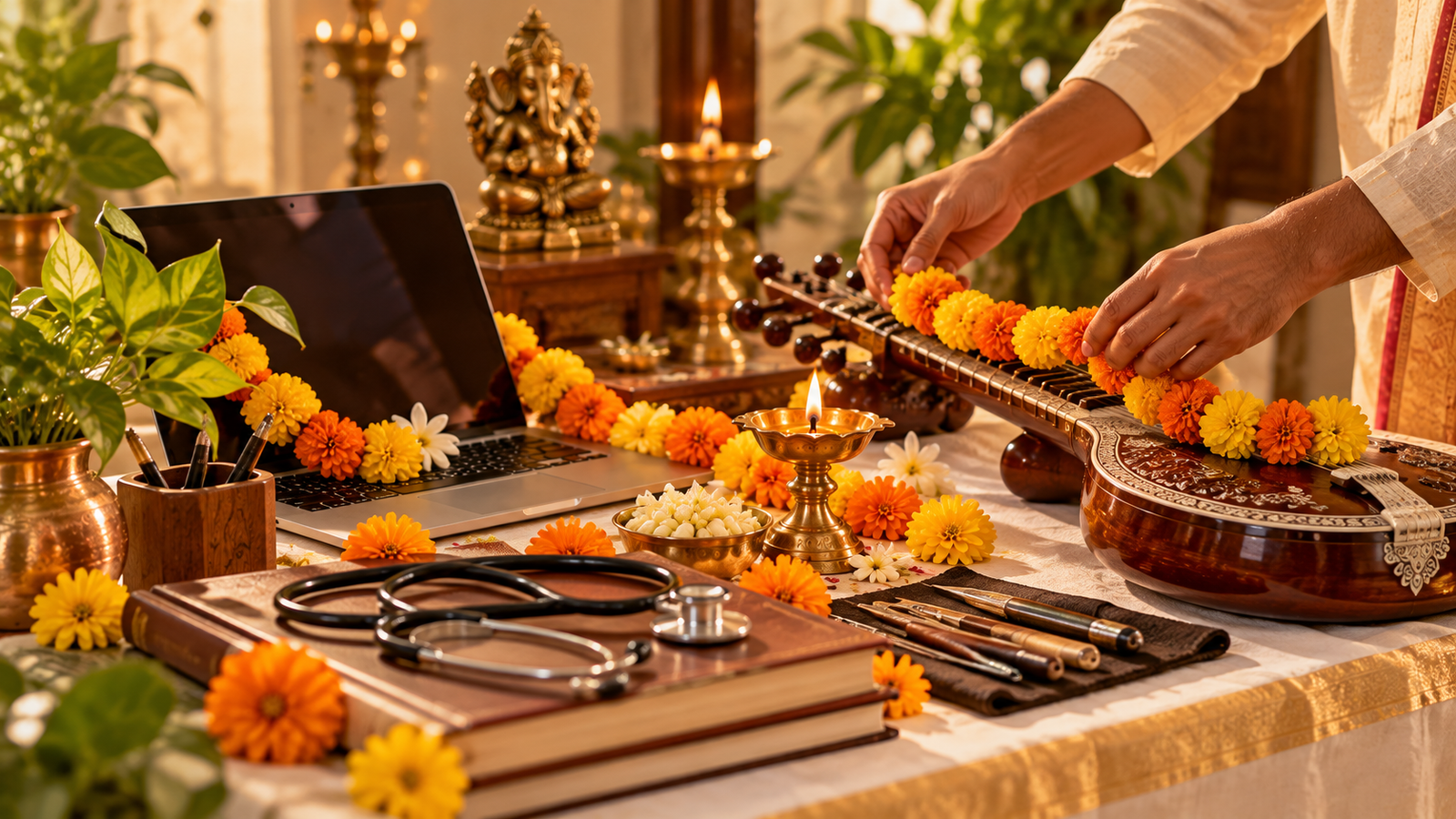
Shastra Puja — the worship of weapons and tools — is Dussehra's most widely observed home ritual, connecting directly to the Vishwakarma Puja principle from Article #55: on auspicious days, the tools of your craft become sacred objects worthy of reverence.
On Vijayadashami:
- Traditional households bring out weapons — ceremonial swords, if kept — and worship them.
- Modern households bring out the instruments of their profession and significant personal tools: the doctor's stethoscope, the engineer's laptop and instruments, the musician's instrument, the chef's finest knife set, the student's textbooks, the businessperson's account ledger or laptop.
- Items are cleaned, arranged on a clean cloth or raised platform, worshipped with a diya and fresh flowers, and not used until after the puja.
- Vehicle puja: cars, bikes, and vehicles are traditionally worshipped on Dussehra as well — cleaned, garlanded, and blessed. This is also an excellent day to combine the blessing with the practical: checking tires, scheduling service, reviewing basic safety.
The principle underneath Shastra Puja is one of Vastu's most beautiful: your tools are extensions of your craft, and your craft is an expression of Vishwakarma's gift. Honoring the instruments through which you meet the world is not superstition. It is gratitude made physical.
3. The Private Ravan Dahan: Releasing What You're Burning
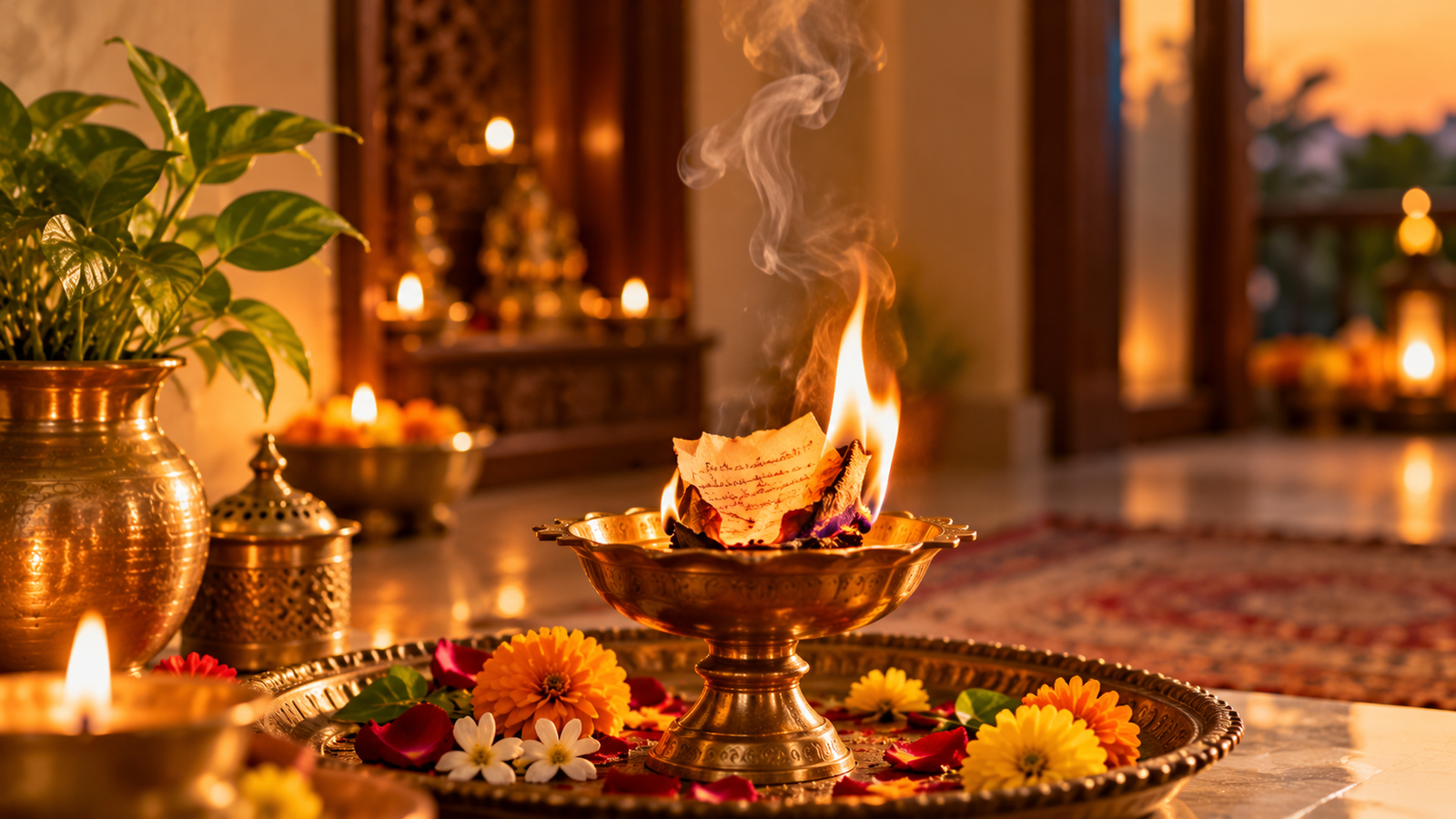
The burning of Ravana's effigy — Ravan Dahan — is Dussehra's great public ritual. For the home, it has a private parallel that the tradition has always understood but rarely made explicit:
Write it, then release it. On a small piece of paper before you leave for the celebrations, write what you are releasing from your life — a habit, a fear, a pattern that has run long enough, a grudge that has outlasted its usefulness. When you return from Ravan Dahan, burn the paper safely (over a diya flame, into an incense holder, anywhere controlled). The home participates in the festival's release energy privately, as a complement to the public burning.
This is the Vastu principle of shuddhi — purification — made into a home ritual. The external Ravana burned in the field and the internal Ravana burned in the home are the same act at different scales.
The day after Dussehra: the Navratri mandap or altar, which has been a temple for nine nights, now transitions back. Follow the same graceful closing sequence as after any deity installation — thank the Goddess, gently dismantle the space, allow the room to breathe again. The energy of the nine nights remains in the home; the mandap's physical presence is no longer needed to hold it.
What to Begin on Vijayadashami
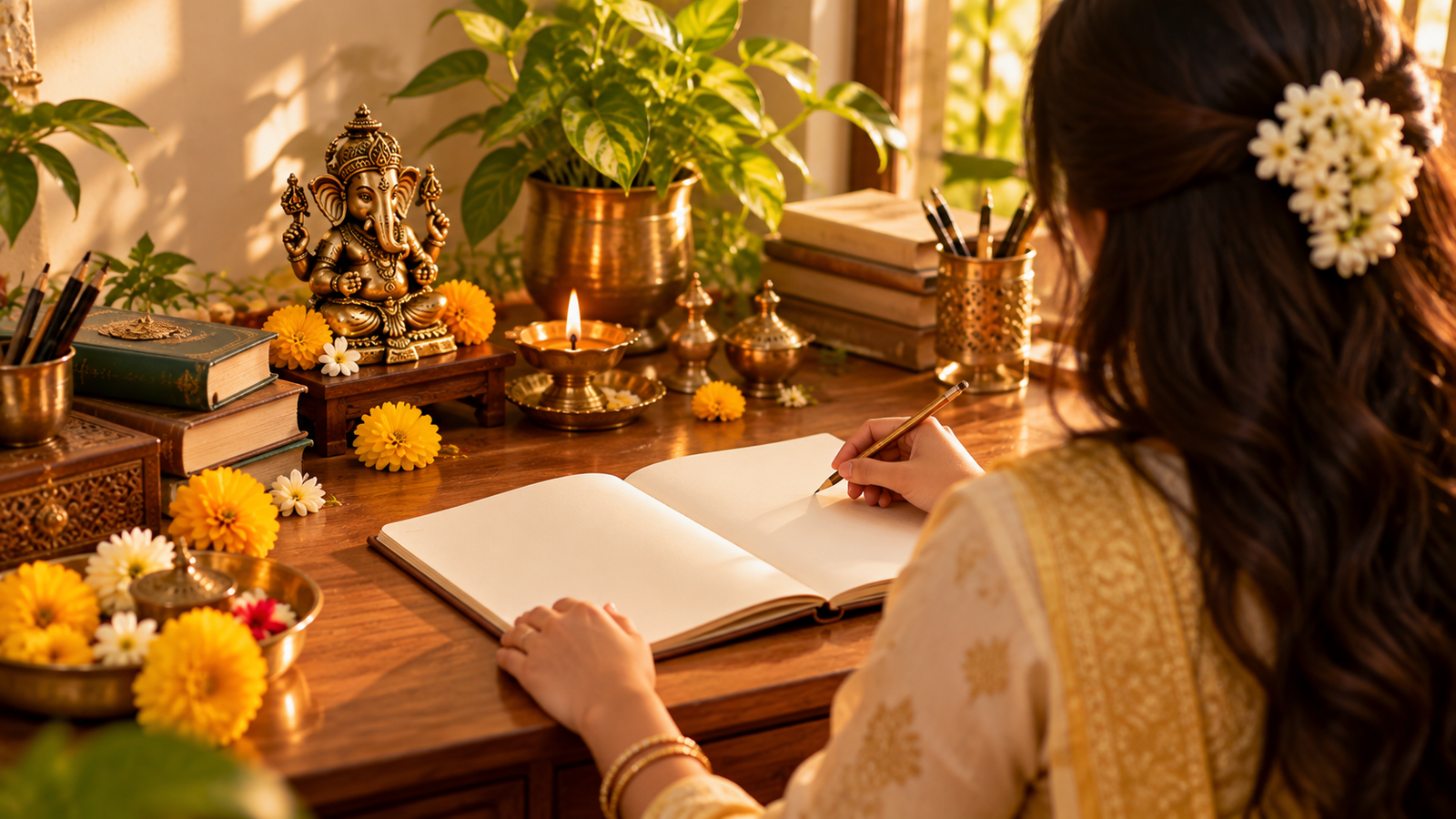
The tradition's list of what is most auspicious to begin on Dussehra is both specific and remarkably practical:
Vidyarambha — beginning a new course of learning. A new subject, a new skill, a new language, a new instrument. Children in many communities are introduced to their first letters on this day. The tutor's first lesson, the new enrollment, the first page of the new notebook — all begin here. If you have been meaning to learn something, begin today.
A new business or enterprise. The first entry in a new account book. The signing of a new contract. The launch of a new product. The registration of a new company. Businesses launched on Vijayadashami carry, in the tradition's reading, an unusually strong foundation for growth.
A significant purchase. Gold, silver, vehicles, property, or any major acquisition. Many families time major decisions specifically to this day for this reason.
A journey. Beginning work in a new city. The first day of a new role. The start of a significant relocation. The tradition considers departures on Vijayadashami particularly auspicious.
A home decision. Not the Griha Pravesh itself — which follows its own sequence — but the decision to renovate, the signing of a purchase agreement, the first discussion with an architect. The beginning of the home's next chapter.
What not to begin on Dussehra: the tradition offers no caution list for this day. Vijayadashami is the year's most unambiguously auspicious muhurat. Begin.
The Directional Blessing: Your Home's Victory Axis
Dussehra's victory energy aligns most naturally with the home's East-to-West axis — the arc of the sun's daily journey, from the East (Indra's direction, initiative, new beginning) to the West (Varuna's direction, completion, harvest).
Rama's victory and Durga's triumph both follow this axis in the tradition's reading: the battle was fought, the victory moved from East to West.
The practical application:
- The East entrance of the home receives a particularly strong blessing on Dussehra — a fresh toran, a rangoli, a lit diya at the threshold as you leave for and return from the day's celebrations.
- The West zone of the home is a good zone to acknowledge what you are completing this year: a project finished, a goal marked done, a chapter consciously closed.
- The East zone receives what you are beginning: the new notebook, the new enrollment, the new instrument of your next chapter.
- The North-East receives the Aparajita Puja — protection and divine grace for the whole home through the year ahead.
Connecting Dussehra to What's Coming: Diwali Is 19 Days Away
From Vijayadashami to Diwali is 19 days — the tradition considers this the natural preparation window for the festival of light. If you've read the Diwali Vastu guide, this is the week to begin:
- The pre-Diwali deep clean and declutter
- Repairs to anything broken, dim, or leaking
- Decisions about what will change in the home before Lakshmi arrives
Dussehra starts the preparation. Diwali completes it. The days between are the home's own preparation — the active part of the festival season, where the inner work of Navratri meets the outer renewal of Diwali.
Karva Chauth falls on October 29 — nine days after Dussehra. We'll cover it in Article #63.
Common Dussehra Home Mistakes
Skipping the Aparajita Puja. It is the ritual most specifically connected to blessing the home on this day — and the one most often forgotten outside tradition-deep households. Five minutes in the North-East corner, a flower, a diya, a prayer. It costs almost nothing and carries the full weight of the ritual.
Performing Shastra Puja without first cleaning the tools. The cleaning is the puja's preparation, not its afterthought. A dusty laptop, an unclean stethoscope, a grimy vehicle — the puja asks to be received by an object that has been honored first. Clean before you worship.
Beginning important ventures on Navami (day nine) rather than Vijayadashami (day ten). The ninth day carries its own power but is not the Vijay day. The victory muhurat is specifically the tenth.
Watching Ravan Dahan without the private home parallel. The public burning without the personal one addresses the external Ravana without naming the internal one. Both are part of the complete festival.
Closing the Navratri space too hastily. The mandap has been a temple for nine days. It deserves a graceful closing — not an abrupt dismantling the moment the puja ends.
📐 Map Your Victory Corners Before Dussehra
The Aparajita Puja goes to the North-East. The East threshold receives the blessing toran. The West holds your completions. Knowing exactly which wall, corner, and zone belongs to which direction in your specific home makes each of these rituals land precisely where they belong.
We built a free tool where you can upload your floor plan and instantly see it mapped according to proper Vastu directions — so your Dussehra rituals are placed in the right zones from the start.
👉 Upload your floor plan and map your victory corners in 30 seconds
Just a photo or scan (PNG, JPG, JPEG). The Vijay Muhurat is Tuesday. Know your home before it arrives.
Final Thoughts

Dussehra asks one question of everyone who celebrates it:
What are you beginning?
Not what you plan to begin eventually. Not what you began last year and let trail off. What are you beginning — on the day the tradition declares the most auspicious of the year for exactly that purpose?
The Aparajita Puja blesses the corner. The Shastra Puja blesses the tools. The private release burns what's over. And then — the real festival work begins: the skill you start learning, the page you write in the new notebook, the conversation you finally have, the project you finally launch.
The tradition has given you the day. The day is Tuesday, October 20.
Jai Shri Ram. Durga Mata ki Jai. 🏹🪔